For most local business owners, a website often feels like a digital checkbox, something you build once and rarely touch again. You might view it as a digital business card, a place where people can find your phone number or your address. However, in the competitive landscape of 2026, treating your website as a static brochure is a missed opportunity. Your website should be your most productive employee, working 24/7 to turn strangers into qualified leads.
If your site isn’t actively generating phone calls, form fills, or appointments, the problem usually isn’t your traffic; it’s your hub. A high-conversion website strategy focuses on removing friction and guiding the visitor toward a single, clear action. Whether you are running a dental practice, a law firm, or a home restoration company, the mechanics of conversion remain remarkably consistent.
The Three-Second Rule and the Hero Section
You have approximately three seconds to convince a visitor they are in the right place. When a potential customer lands on your site, they are looking for the answers to three fundamental questions: What do you do? Can you solve my specific problem? How do I get started?
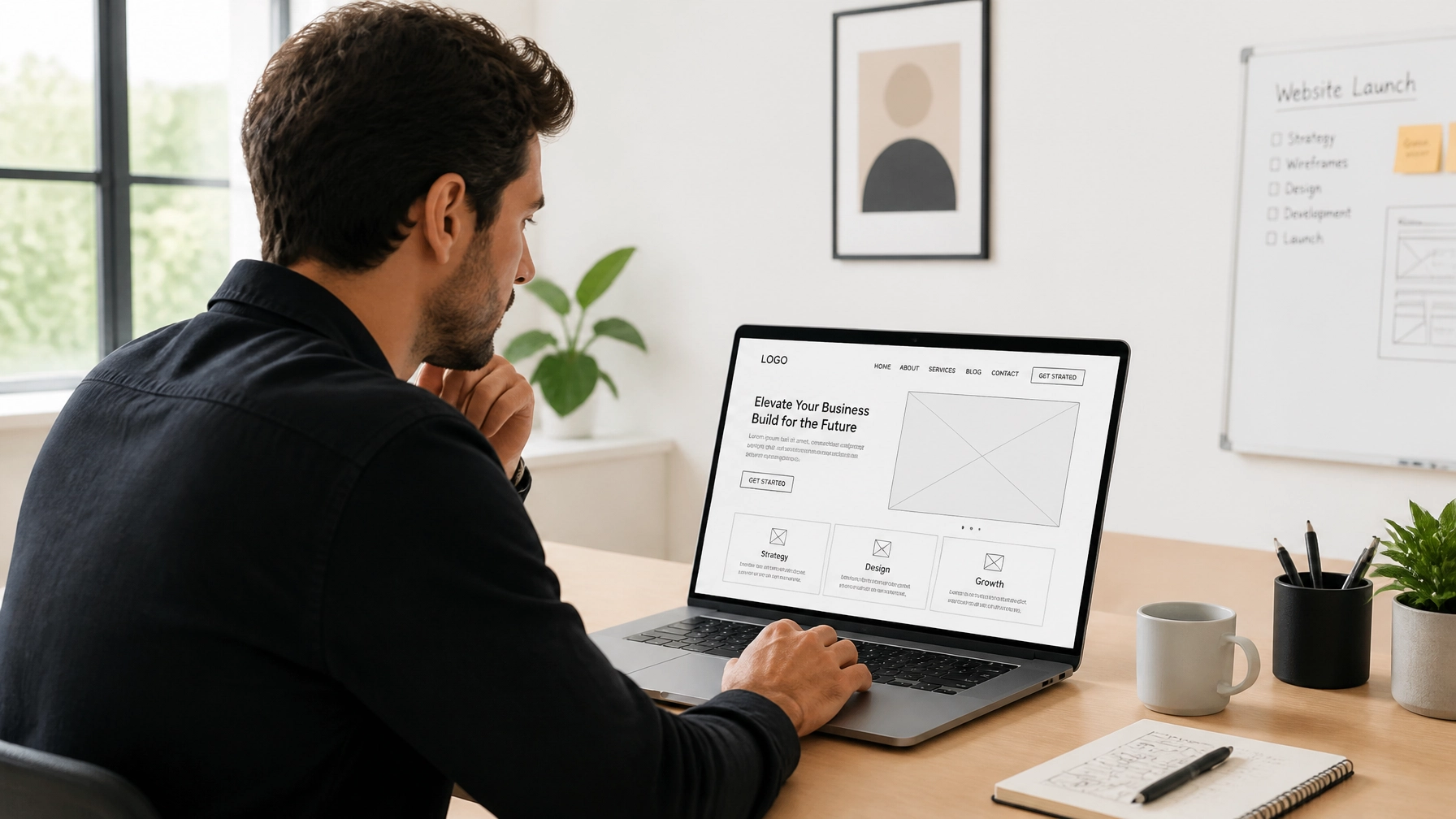
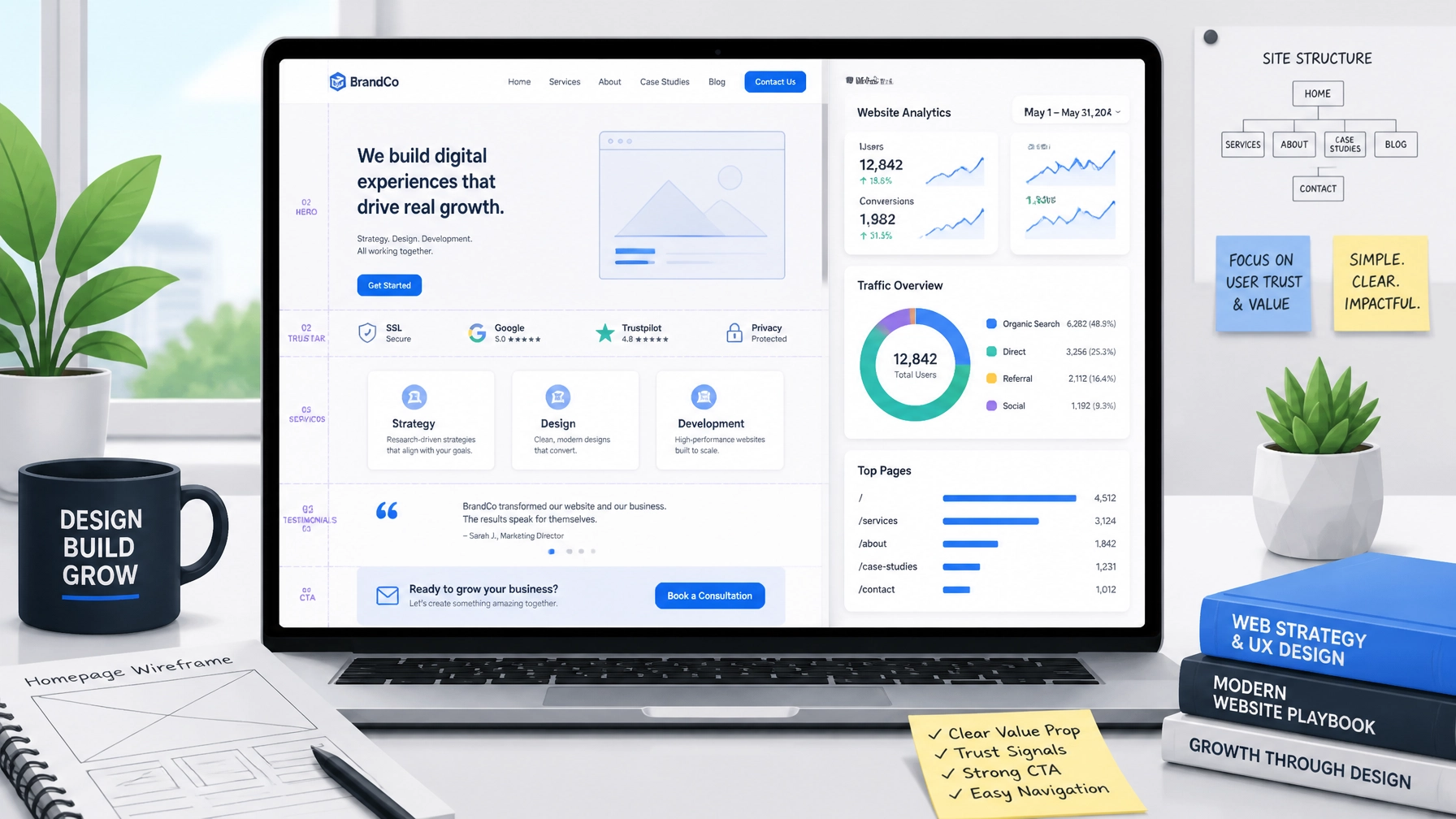
If a user has to scroll or hunt through a complex menu to find these answers, they will likely leave. This is where your “Hero Section”, the area visible before anyone scrolls, becomes the most valuable real estate on your digital property. A successful hero section combines a clear headline, a sub-headline that explains your unique value proposition, and a prominent Call to Action (CTA).
“A compelling hero section that communicates who you are, what you do, and why it matters within three seconds is critical. If visitors have to scroll to understand your value, you’ve already lost them.” , Conversion Optimization Research, 2025
Mobile-First is No Longer Optional
The majority of local searches happen on mobile devices while people are on the go. If you are a contractor or a local clinic, your customers are often searching for you from their smartphones. A site that looks great on a desktop but is difficult to navigate on a phone will actively drive revenue to your competitors.
Research shows that mobile-friendly sites generate 67% more purchases than those that aren’t optimized for the small screen. Furthermore, 61% of users are likely to abandon a mobile site if they can’t find what they’re looking for immediately. Optimization isn’t just about resizing images; it’s about “thumb-friendly” navigation and click-to-call buttons that make it effortless for a lead to contact you.

Speed as a Revenue Driver
In the world of web design, speed is a feature, not a technicality. Every second of delay in your page load time creates a “friction tax” on your conversion rate. When a site takes longer than three seconds to load, the bounce rate skyrockets. This is particularly true for local service businesses where the need is often urgent, like a burst pipe or an emergency dental visit.
| Metric | Impact on Business | Action Required |
|---|---|---|
| Load Time | 2% conversion increase for every 1s improvement | Optimize images and use high-performance hosting |
| Mobile Bounce Rate | 61% of users leave if navigation is difficult | Implement responsive design and simplified menus |
| CTA Click-Through | 26% improvement with visual cues (like arrows) | Use contrasting colors and clear button placement |
| Trust Signals | 70% more likely to attract visits | Embed Google Reviews and project galleries |
By focusing on technical optimization, you ensure that the traffic you work so hard to get through local SEO keyword tools doesn’t go to waste.
Moving Beyond the “Services” Page
One of the most common mistakes in local business web design is having a single, generic “Services” page that lists everything you do in a bulleted list. This is a missed opportunity for both SEO and conversion.
Instead, you should build dedicated landing pages for each primary service you offer. For example, an HVAC company shouldn’t just have a “Heating and Cooling” page; they should have specific pages for “AC Repair,” “Furnace Installation,” and “Duct Cleaning.” This allows you to speak directly to the visitor’s specific pain point and provides a clear destination for your digital marketing agency for small business to send targeted ad traffic.
Establishing Trust with Social Proof
In a local market, trust is the primary currency. Before a customer calls you, they want to know that you are a legitimate, reliable professional. Your website must provide that reassurance through social proof. This includes:
- Google Reviews: Don’t just link to them; embed them directly on your high-traffic pages.
- Project Galleries: High-quality photos of your actual work (not stock photos) prove your competence.
- Certifications: Displaying local chamber of commerce badges or industry-specific certifications builds immediate authority.
“Businesses with complete and accurate Google Business Profiles are 70% more likely to attract visits from local searches and 50% more likely to lead to purchases.” , Google Small Business Insights
If you find that you’re getting traffic but no calls, it might be that your site lacks the “trust signals” necessary to push a visitor over the finish line. You can learn more about this in our guide on why local SEO isn’t generating leads.

Strategizing Your Call to Action (CTA)
The ultimate goal of your website strategy is to lead the visitor to a specific action. That action should be obvious. If you want people to call you, your phone number should be in the top right corner of every page and should be “sticky” on mobile. If you want them to book an appointment, the “Book Now” button should be a high-contrast color that stands out from the rest of the page design.
In practice, you should place a CTA at the end of every major section of your website. Don’t assume the visitor will scroll back to the top once they’ve finished reading about your process. Make it easy for them to say “yes” the moment they feel convinced.
The Conversion-First Framework
Building a website that works requires a shift in perspective. You aren’t just building a site for yourself; you’re building a tool for your customers. By prioritizing user experience (UX) and conversion over “flashy” design elements that slow down the site, you create a hub that actually drives growth.
| Feature | Standard Brochure Website | High-Conversion Hub |
|---|---|---|
| Primary Goal | Displaying information | Capturing qualified leads |
| Navigation | Complex and multi-layered | Simple, goal-oriented |
| Content | Generic “About Us” focus | Problem-solution and service-specific |
| Performance | Slow, image-heavy | Fast, optimized, and mobile-first |
| Trust | Few or hidden reviews | Prominent social proof and case studies |
Implementing these changes can feel overwhelming, but the ROI of a well-optimized site is undeniable. When your website becomes a lead machine, your reliance on expensive, inconsistent advertising decreases. You can find more tactical advice on this transition in The Conversion-First Blueprint.
Conclusion
Your website is the foundation of your entire digital presence. No matter how much you spend on ads or how much content you produce, a leaky website will always stifle your growth. By focusing on mobile optimization, page speed, specific service landing pages, and prominent trust signals, you transform your site from a passive expense into an active revenue generator.
Does my website need to be updated every year?
While you don’t need a full redesign every year, you should perform a conversion audit every 6 to 12 months. Web standards and user expectations change quickly; keeping your site fast and mobile-responsive is an ongoing process.
What is the most important element for local business conversion?
The most important element is a clear, immediate Call to Action (CTA) combined with social proof. Visitors need to know exactly what to do next and see evidence that other local customers have had a positive experience with you.
How many service pages should I have?
You should have a dedicated page for every major service that has its own search intent. If people search for “emergency roof repair” differently than “shingle installation,” you should have separate pages for both to capture that specific traffic.
Will a better website design help my SEO?
Yes. Google measures “user signals” like bounce rate and time-on-page. A well-designed site that keeps users engaged and provides a good mobile experience will naturally rank higher in local search results over time.