Getting the click was once the finish line. Now it’s the starting gun for a background check.
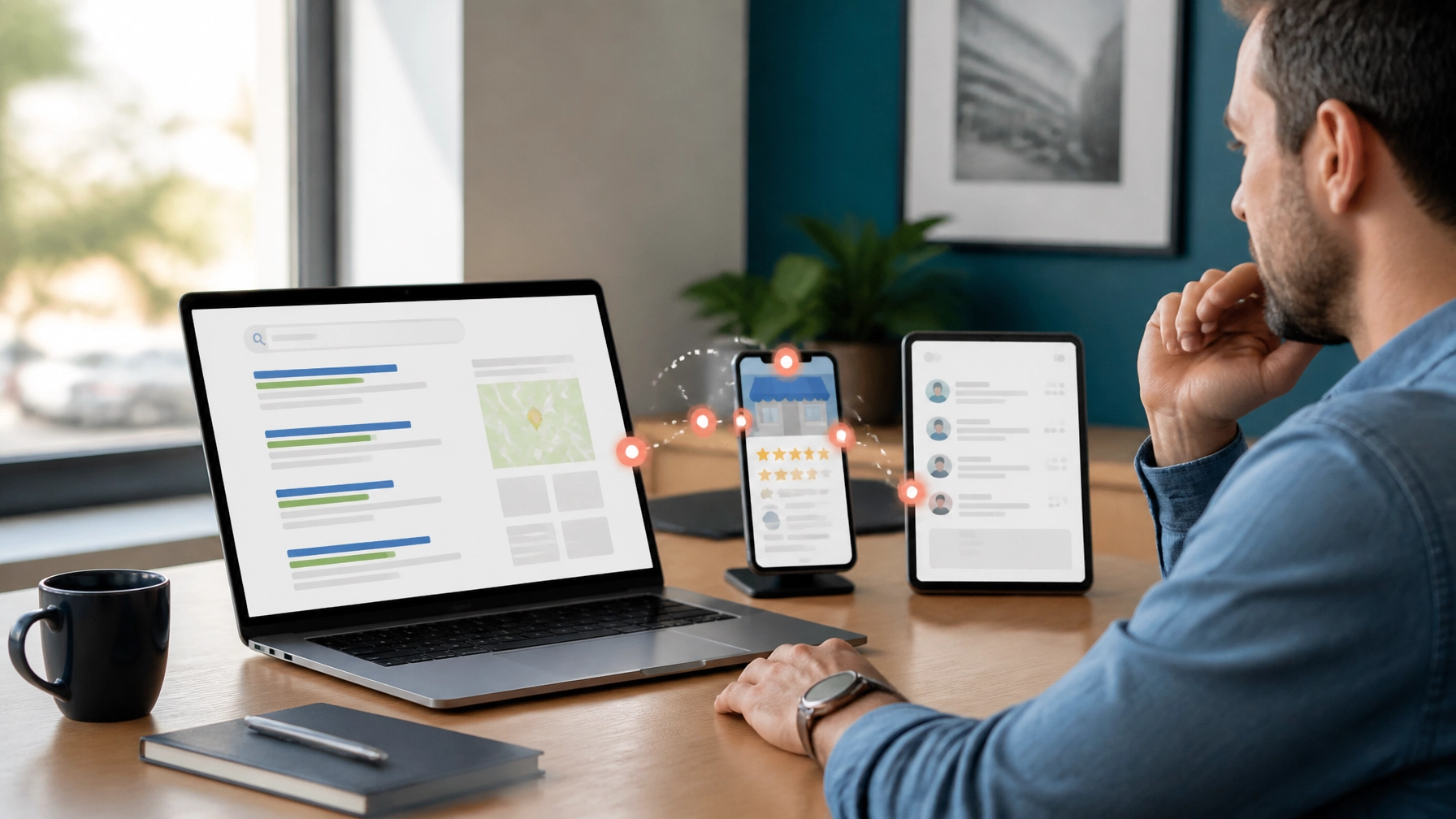
A searcher may discover your business through Google, an AI summary, or a product result. Then they open another tab. They check reviews, scan your social profiles, compare competitors, read community conversations, and look for signs that your claims hold up elsewhere.
This behavior creates a new SEO challenge: the verification search.
Modern SEO is no longer only about earning visibility on one results page. It is about making your business easy to confirm across the sources people use before they act.
What is a verification search?
A verification search is the multi-step process a buyer follows after discovering a business, product, or service online.
The pattern usually looks like this:
- Discover: The searcher finds your brand through a result, map listing, AI answer, ad, or social post.
- Investigate: They visit your website to understand your offer, expertise, pricing, process, or product details.
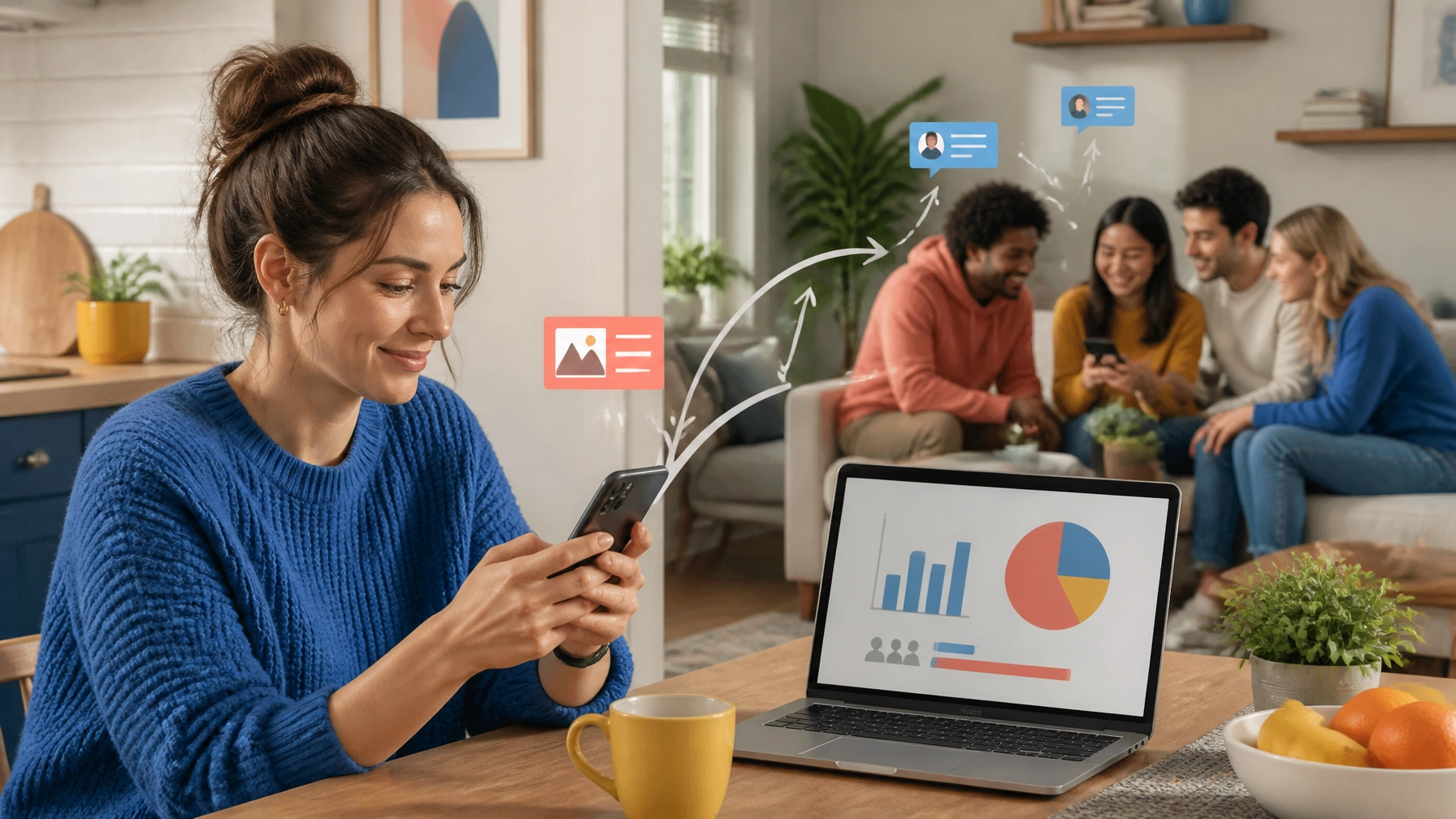
- Validate: They compare your claims with reviews, directories, social proof, Reddit discussions, competitor pages, and other independent sources.
- Decide: They contact you, make a purchase, request a quote, or leave.
Most SEO programs focus heavily on the first step. However, the decision often happens at the third.
That changes the job of SEO. Ranking remains important, but ranking alone is not enough. Your visibility must connect to consistent information and credible proof wherever the searcher continues researching.
“Only 15% of U.S. adults say they trust AI search results ‘a lot,’ while 63% say they double-check AI search results against trusted sources.”
Yelp and Morning Consult research summarized by PPC Land
Other research points in the same direction. A Search Engine Journal analysis of YouGov data reports that 28% of U.S. online searchers trust information from an AI assistant, compared with 70% who trust a traditional search engine.
The important point is not that people have stopped using AI or search engines. They use them constantly. The important point is that they do not necessarily treat the first answer as sufficient proof.
Why is search behavior becoming more skeptical?
Search has become faster, more fragmented, and more automated. As a result, people have more ways to discover information: and more reasons to question it.
AI summaries can answer a basic question quickly. They can also introduce uncertainty when the source is unclear, the information is outdated, or several businesses appear similar. Searchers then move between platforms to establish confidence.
For example, someone looking for a local accountant may:
- Find a firm through an AI recommendation.
- Visit the firm’s website to review its services.
- Check Google reviews for recent client experiences.
- Search LinkedIn to confirm the team’s credentials.
- Compare pricing language and specialties with two competitors.
- Look for community discussions or independent opinions.
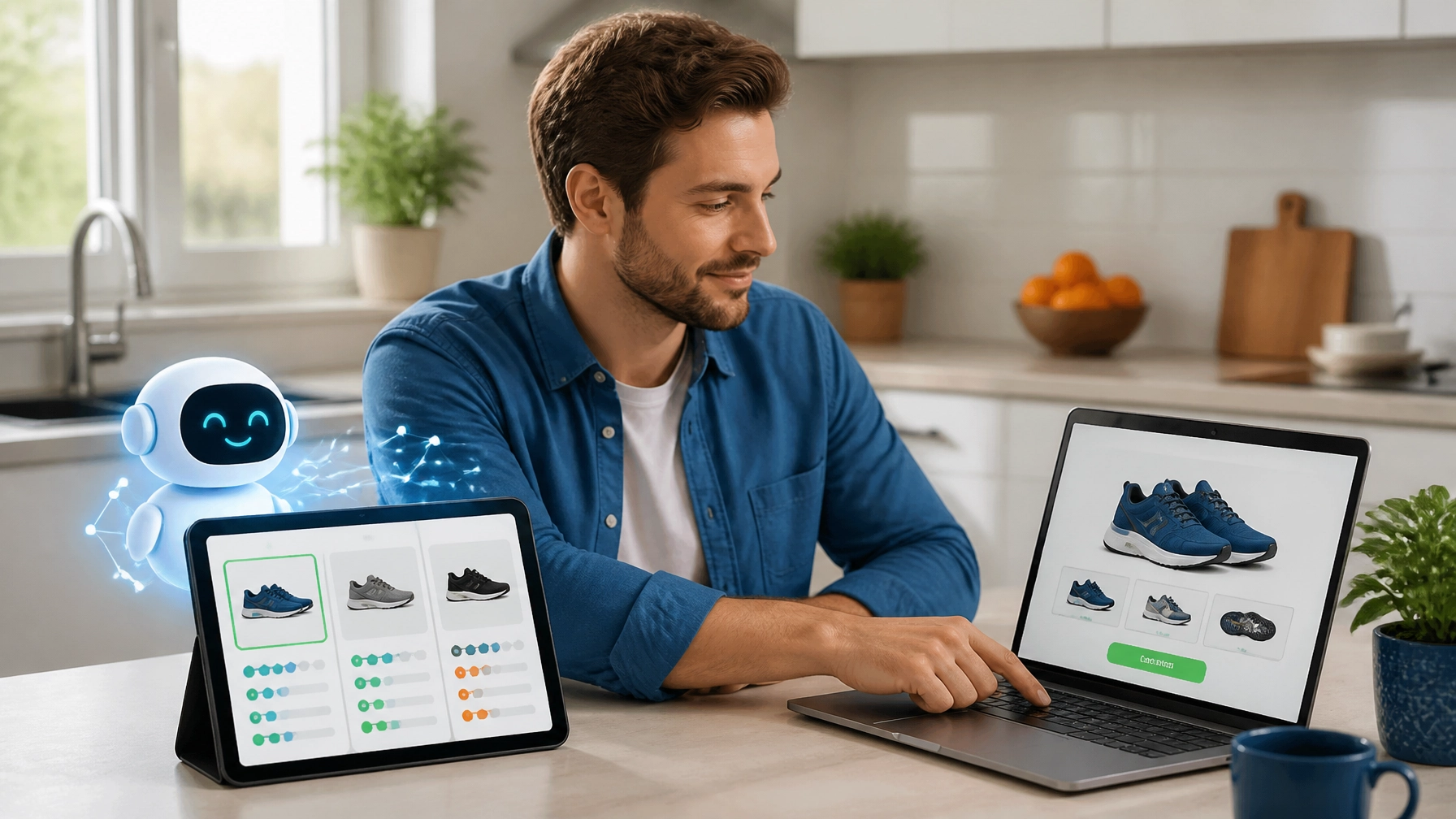
An ecommerce shopper may follow a similar path. They discover a product through search, read the product page, check reviews, compare specifications on another retailer’s site, and search Reddit for long-term ownership feedback.
Research from Yext found that 93% or more of AI users take at least one verification step before acting, while 48% cross-check AI answers across multiple platforms.
That is why modern discoverability requires more than keyword alignment. Your business needs a coherent footprint.
Where does the verification loop happen?
The verification loop usually includes three connected stops.
1. Discovery: the search result
This is where traditional SEO still plays a central role. Your business needs to appear for the searches that reflect your products, services, locations, and customer problems.
At this stage, searchers may encounter:
- Organic listings
- Local map results
- Product results
- AI-generated summaries
- Featured snippets
- Social profiles
- Industry directories
The goal is not simply to rank for more keywords. It is to appear clearly for the right intent.
A dental practice, for example, should not only target “dentist near me.” Its content and business data should also clarify emergency appointments, accepted insurance, procedures, locations, and patient experience.
2. Deep check: your website and content
Once a searcher reaches your website, clarity determines whether the initial interest continues.
Your site should answer the questions that naturally follow the search:
- What exactly do you offer?
- Who is it for?
- Where do you operate?
- What makes your approach credible?
- What evidence supports your claims?
- What should the visitor do next?
This is where business clarity becomes an SEO advantage. Clear service pages, useful product specifications, author information, case studies, process explanations, and current contact details help both people and search systems understand what your business actually does.
3. External validation: proof beyond your domain
The final stop is often outside your control: but not outside your influence.
Searchers may examine:
- Google Business Profile reviews
- Yelp, industry directories, or marketplace profiles
- Reddit and other community discussions
- LinkedIn and social media profiles
- Comparison websites
- Customer testimonials
- Press coverage and partner mentions
- Competitor pages
This is where inconsistencies become expensive. A website may claim ten years of experience while an outdated directory lists five. A product page may promise one specification while retailer listings show another. A service business may have strong recent work but a review profile dominated by unresolved older complaints.
The searcher does not experience these as separate marketing problems. They experience them as one question: Can I trust this business?

How is verification-ready SEO different from click-optimized SEO?
Click-focused SEO is not obsolete. It is incomplete.
| Area | Click-Optimized SEO | Verification-Ready SEO |
|---|---|---|
| Primary goal | Earn the visit | Earn confidence after the visit |
| Content | Match a query and attract attention | Explain the offer and support important claims |
| Proof | Rankings, traffic, and impressions | Reviews, credentials, evidence, and consistent third-party information |
| Cross-channel work | Treat directories and social as separate channels | Align website, profiles, listings, communities, and content |
| Measure of success | Click-through rate and sessions | Qualified conversions, assisted conversions, branded searches, and trust signals |
Verification-ready SEO treats every important claim as something a customer may check.
If you say your firm specializes in complex commercial litigation, show the relevant experience. If you say your product lasts longer, explain how that claim is supported. If you promote same-day service, make sure your business listings and customer reviews do not suggest otherwise.
What should your business do to survive the verification loop?
Start with the claims that most influence a buying decision. You do not need to audit every sentence on the internet at once.
1. List your highest-value claims
Identify the statements that help a prospect choose you:
- Service expertise
- Product performance
- Location coverage
- Pricing or guarantees
- Turnaround times
- Certifications
- Customer outcomes
- Support policies
Then ask whether each claim is clear, current, and supported.
2. Align your core business information
Check your name, address, phone number, hours, service areas, product specifications, and business descriptions across your website and major platforms.
Consistency helps search systems interpret your entity. It also prevents customers from encountering contradictions during research.
3. Build proof into the page where the claim appears
Do not force every visitor to search for evidence. Place relevant proof near the claim:
- Add a case study to a service page.
- Add verified customer feedback to a product category.
- Add credentials to an expert bio.
- Add methodology details to original research.
- Add recent project examples to a local service page.
4. Monitor the sources customers actually use
Your priority sources depend on your industry. A professional services firm may need strong LinkedIn, directory, and review profiles. An ecommerce brand may need consistent marketplace specifications, product reviews, comparison listings, and community discussions.
The objective is not to manufacture conversation. It is to make sure the information people find is accurate and reflects the real customer experience.
5. Measure what happens after discovery
Ranking reports still matter, but they should be connected to business outcomes.
Track:
- Branded search growth
- Organic-assisted conversions
- Direct traffic after organic exposure
- Review profile engagement
- Conversion rates by landing page
- Calls and form submissions from local search
- Product conversion after comparison or review visits
- Lead quality from high-intent queries
A page that ranks first but produces weak conversions may have a verification problem rather than a visibility problem.
What does this look like in practice?
Consider a hypothetical professional services firm ranking first for a valuable local query. Traffic is healthy, but qualified consultations remain flat.
A deeper review shows that prospects find outdated directory information, inconsistent service descriptions, and several old reviews describing a process the firm no longer uses. The firm improves its profiles, updates its website proof, responds appropriately to reviews, and publishes current case examples.
Its rankings do not change. Its conversion rate does.
That is the verification loop in action.

An ecommerce brand can face the same problem. Its product page earns strong search visibility, but shoppers cannot find consistent specifications on retailer pages or independent discussions. The brand clarifies its product data, strengthens review collection, and contributes useful answers in relevant communities without turning those conversations into advertisements.
The result is not simply more visibility. It is less uncertainty.
How does the citation economy connect to verification?
Search engines and AI systems increasingly rely on information that can be connected, interpreted, and cited. That makes third-party references and consistent business entities more valuable.
Our perspective on the citation economy and modern search visibility explores why being referenced by answer engines is only useful when the underlying information is accurate and trustworthy.
The same principle applies to local SEO. A citation is not merely a directory listing. It is one piece of the evidence network that helps a searcher: and a search system: understand whether your business is real, relevant, and reliable.
The verification search also connects to the trust signal hierarchy. Buyers rarely rely on one proof point. They combine several signals before reaching a decision.
What is the new job of SEO?
The new job of SEO is not to make your business look visible.
It is to make your business easy to understand, easy to compare, and easy to confirm.
Ranking creates the opportunity. Clear structure helps the searcher interpret it. Third-party proof reduces uncertainty. Consistent information allows the final decision to happen with fewer doubts.
That is why long-term organic growth depends on more than publishing pages or improving rankings. It requires a coordinated visibility system across your website, search listings, reviews, communities, and customer experience.
Someone is always checking. Your SEO strategy should be ready for what they find.
How is verification search different from traditional search?
Traditional search often assumes that a user finds one useful result and acts. Verification search recognizes that users commonly compare several sources before making a decision. SEO must therefore support both discovery and post-click evaluation.
Does ranking first still matter?
Yes. Ranking helps your business enter the buyer’s consideration set. However, a high ranking does not guarantee a conversion if your website, reviews, listings, or third-party information create doubt.
What information do customers verify most often?
Customers commonly verify business location, reviews, expertise, pricing, availability, product specifications, guarantees, credentials, and service claims. The higher the financial or personal risk, the more extensive the verification process tends to be.
How can a local business prepare for verification searches?
Keep your Google Business Profile and major directories accurate, publish clear service pages, collect legitimate reviews, respond professionally to feedback, and ensure your name, address, phone number, hours, and service areas match across platforms.
Should businesses focus on Reddit for SEO?
Reddit and other communities can influence research, but participation should be useful and authentic. Do not treat communities as places to distribute promotional copy. Monitor relevant conversations, answer questions when you have genuine expertise, and make sure your website supports any claims discussed.
How do AI search results affect SEO strategy?
AI search increases the importance of clear, attributable, and structured information. It does not eliminate traditional SEO. Your content still needs to be discoverable, technically accessible, useful, and supported by evidence that searchers can verify.
What is the best first step?
Choose one high-value customer journey and map every verification point after discovery. Search the target query, review your website, inspect your listings and reviews, and compare what a prospect finds across sources. Then fix the most consequential inconsistency first.