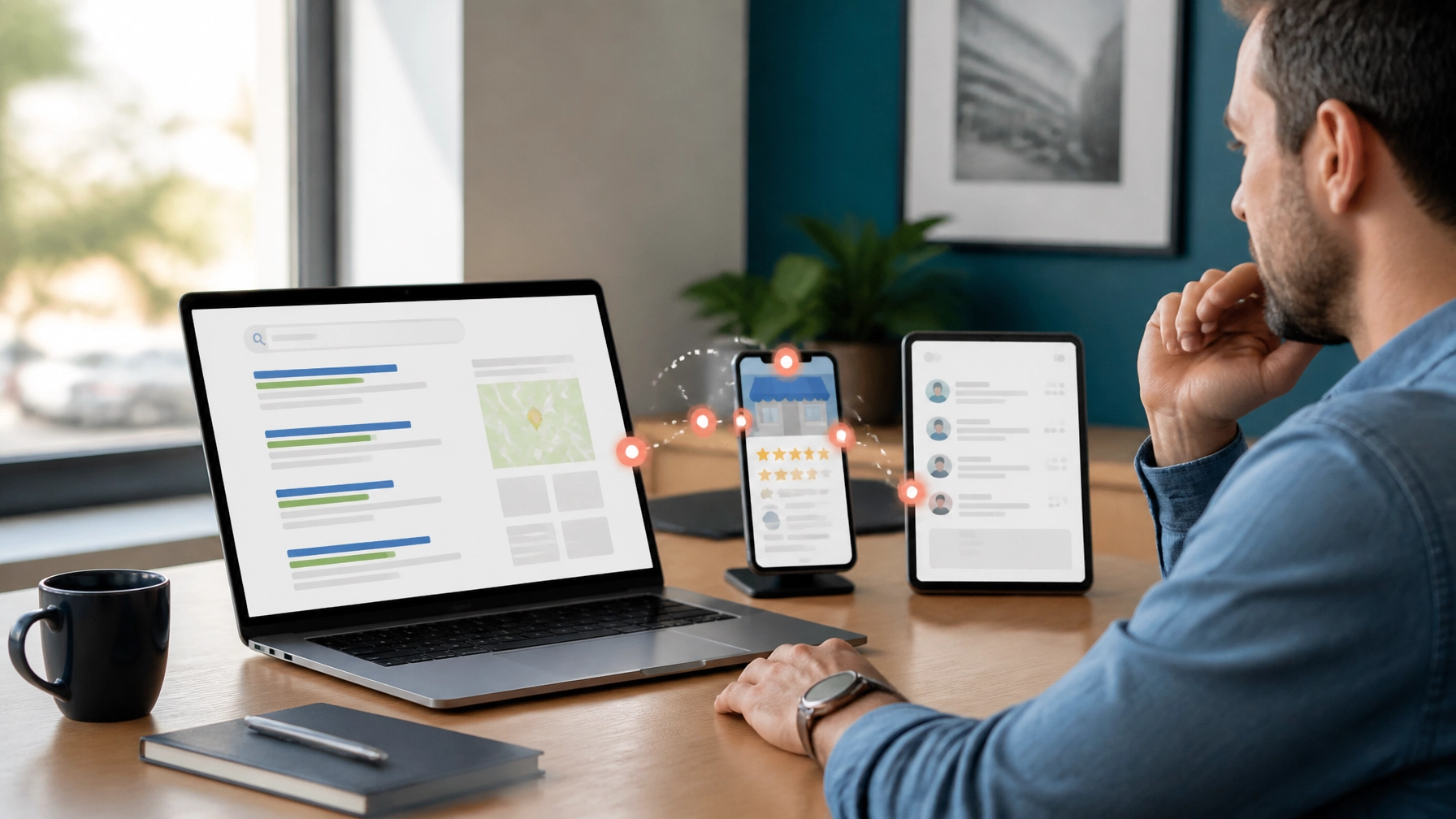
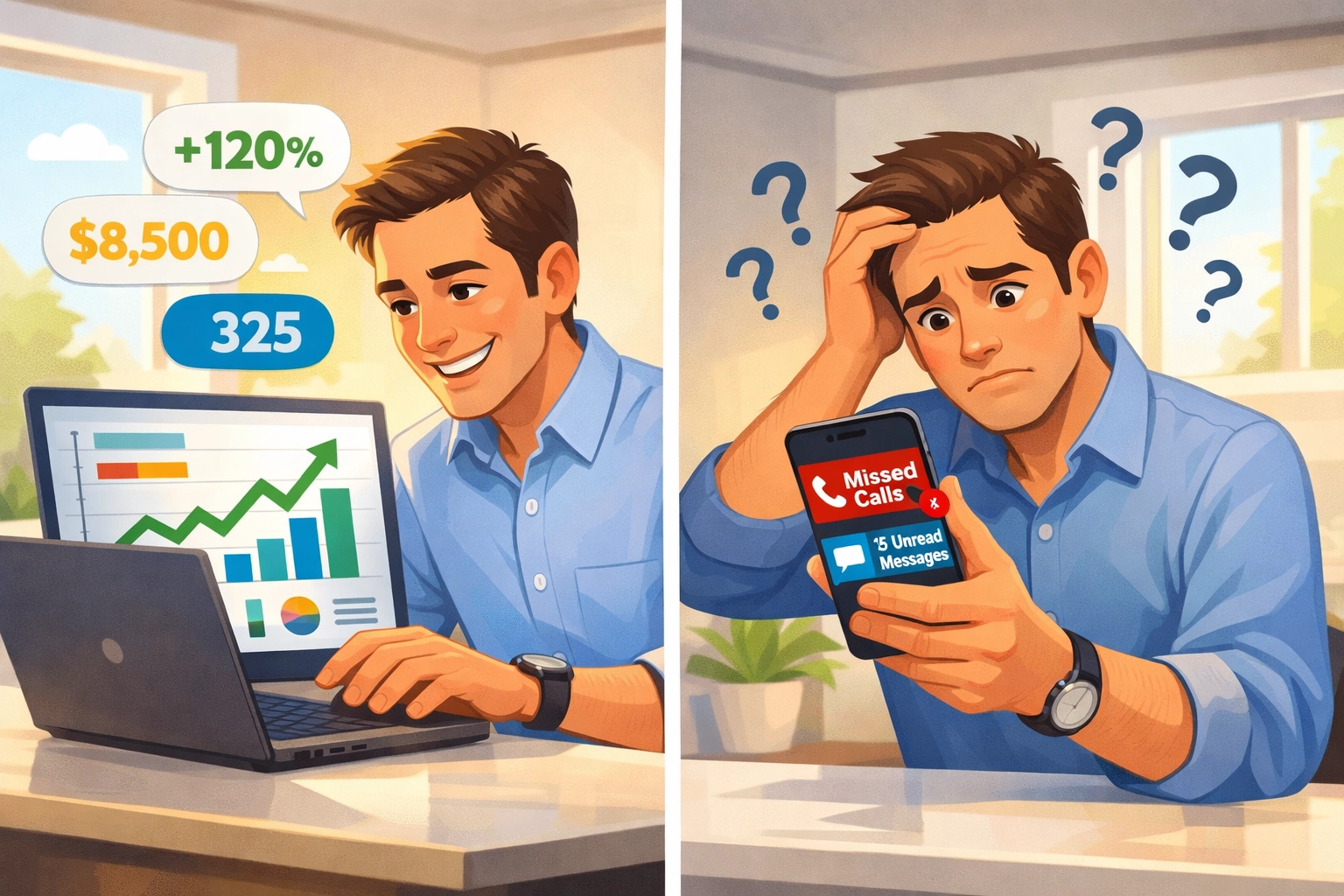
You’re tracking clicks, impressions, and conversion rates like a hawk. Your dashboards light up with green arrows. But your prospects still ghost you after the first call. Your close rates are stagnant. And you can’t figure out why leads who seem interested suddenly go silent or choose a competitor you know charges more.
Here’s what’s actually happening: your prospects don’t trust you yet. And in 2026, trust isn’t a soft metric anymore, it’s the hardest ROI driver you have.
“94% of B2B marketers now consider trust the most important driver of business success, surpassing traditional profit metrics in influence over purchasing decisions.” , LinkedIn/Ipsos Study, 2025
The shift isn’t subtle. Buyers are deciding earlier, researching deeper, and involving more stakeholders before they ever fill out your contact form. They’re not just evaluating your service, they’re evaluating whether you’re credible enough to bet their budget on.
Why Are Traditional Metrics Failing to Predict Revenue?
Your Google Analytics shows 500 website visits last month. Your CRM logged 47 form fills. But only 3 became paying clients. The math doesn’t add up because you’re measuring activity, not intent or confidence.
Traditional metrics tell you what people did. They don’t tell you whether people believed you while they were doing it. A visitor can spend six minutes on your service page, download your lead magnet, and still think you’re not the right fit, not because of price, but because something in your messaging, proof points, or presentation failed to establish credibility.
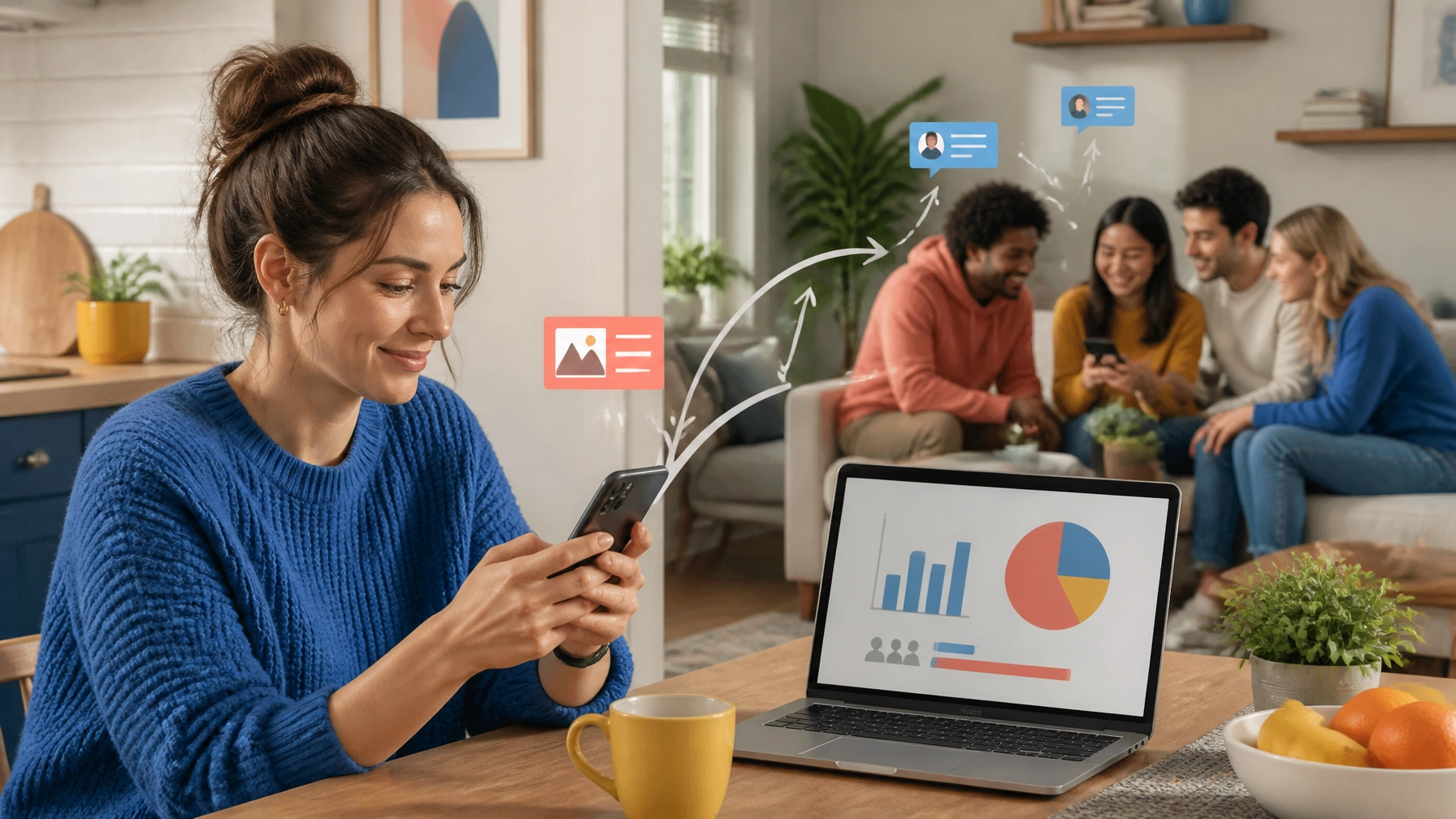
In 2026, buyers move through research phases you never see. They check your reviews on platforms you don’t monitor. They compare your team’s LinkedIn profiles to your competitors’. They screenshot your pricing page and share it in Slack channels with people you’ll never meet. By the time they contact you, they’ve already made a trust judgment.
That judgment determines whether they’re a serious buyer or just kicking tires. And if your metrics aren’t measuring trust signals, you’re flying blind.
What Does ‘Credibility’ Actually Mean as an ROI Metric?
Credibility in 2026 isn’t about how polished your website looks or how many years you’ve been in business. It’s about verifiable competence, dependability, and consistency, the three pillars that buyers use to decide if you’re worth the risk.
Here’s how that breaks down in practice:
| Credibility Pillar | What Buyers Verify | Where They Look |
|---|---|---|
| Verifiable Competence | Do you actually know what you’re talking about? Can you prove results? | Case studies, public reviews, content depth, certifications |
| Dependability | Will you deliver what you promise without drama? | Response times, communication clarity, transparency about process |
| Consistency | Do your words match your actions across every touchpoint? | Website vs. social media, sales promises vs. actual service, brand voice alignment |
“Only 45% of sellers claim they have fully mastered their client’s pain points, and buyers express deep skepticism about ROI projections and business case assumptions.” , B2B Trust Research, 2025
When these three pillars align, prospects move faster. When even one pillar wobbles, they slow down, or disappear entirely. That hesitation costs you revenue in ways your conversion rate optimization can’t fix.
How Do You Measure Trust Signals Instead of Just Traffic?
Start by redefining what counts as a “conversion” in your analytics. A form fill isn’t a conversion if the lead never responds to your follow-up. A phone call isn’t a win if they’re just price-shopping with no intent to buy.
Real trust signals show up in behaviors that indicate belief, not just curiosity. You need to track the actions that prove someone is leaning in, not just browsing.
Signals That Indicate Growing Trust
Direct Navigation and Return Visits: If someone types your URL directly into their browser or comes back three times in a week, they’re not casually shopping. They’re deciding. Set up Google Analytics segments to track direct traffic separately from paid or referral traffic. Higher direct traffic percentages usually correlate with stronger brand trust.
Time Spent on Credibility Pages: Track which pages visitors spend the most time on. If your “About” page, case studies, or team bios get more engagement than your service pages, that’s a trust-building session in progress. Use heatmaps to see where they’re reading deeply versus skimming.
Review Interaction Rates: How often do visitors click through to your Google Business Profile from your website? How many watch video testimonials if you embed them? These actions signal due diligence, they’re fact-checking you.
Email Engagement Beyond Open Rates: Opens mean nothing if no one clicks. But if someone clicks multiple links in your nurture sequence, downloads your resources, and replies to your emails, they’re engaging with your ideas, not just your subject lines. Track click-through rates and content downloads as trust indicators.

If you’re not currently tracking these signals, start with analytics and attribution strategies that tie digital behavior to offline conversions. The goal is to identify which prospects are warming up versus which are wasting time.
What Kills Credibility Faster Than Anything Else?
Inconsistency. The moment your messaging doesn’t match reality, trust collapses. And in 2026, buyers notice the gaps immediately.
Here’s where most businesses accidentally destroy their own credibility:
Overpromising in Ads, Underdelivering on Landing Pages: Your Google Ad says “24-hour response time.” Your website says “We’ll get back to you within 2 business days.” A prospect sees that contradiction and assumes you’re either careless or dishonest. Neither builds trust.
Generic Content That Proves Nothing: Publishing blog posts that could apply to any business in any market doesn’t establish competence. It signals you don’t actually know your client’s pain points. If a prospect can’t tell the difference between your content and a competitor’s, you haven’t earned credibility.
Slow or Vague Communication: If it takes you 48 hours to respond to an inquiry, and your response is “Let’s hop on a call to discuss your needs,” you’ve just told them you’re not dependable or prepared. Credible businesses respond fast and with substance.
Social Proof That Feels Fake: Stock photos on your team page. Reviews that all sound the same. Testimonials with no names or company details. Prospects can smell manufactured credibility from a mile away, and it makes them trust you less than having no social proof at all.
“Nearly half of U.S. consumers now actively reward brands reflecting their values and quickly abandon those they distrust, with entire product categories losing customers simply due to eroded confidence.” , Consumer Trust Survey, 2025
The fix isn’t perfection, it’s transparency. If you can’t deliver in 24 hours, don’t claim you can. If you’re a small team, show real photos and names. If your process takes time, explain why and set accurate expectations. Prospects respect honesty. They punish deception.
How Do You Build Measurable Credibility Across Your Digital Presence?
Building credibility isn’t a branding exercise. It’s a systematic approach to proving your competence, dependability, and consistency at every touchpoint. Here’s how to make it measurable.
Audit Your Consistency Gaps
Start with a simple exercise: compare your messaging across every channel you use. Google Ads, website homepage, service pages, social media bios, email signatures, and review responses. Write down the promises you make in each place.
Do your response time claims match? Do your service descriptions align? Does your brand voice sound like the same company wrote it, or like five different freelancers who never talked to each other? Inconsistencies here cost you deals before you even know a prospect existed.
Create Proof-Heavy Content
Generic advice doesn’t build credibility. Specific, data-backed insights do. If you’re a local service business, publish content that references real client challenges, measurable outcomes, and the exact process you used to get there.
For example, instead of “5 Tips to Improve Your Local SEO,” write “How a Garage Door Company in Austin Went from 3 Calls Per Month to 47 by Fixing These 5 Citation Errors.” The second version proves competence. The first one could have been written by anyone.
If you need help building content strategies that establish authority, explore SEO services that focus on trust-building rather than just rankings.
Make Your Review Strategy a Priority
You already know reviews matter. But most businesses treat them as a passive byproduct of good service. In 2026, your review strategy needs to be as intentional as your ad strategy.
Request reviews immediately after delivering value, not weeks later when the client has moved on. Use SMS or email automation to make the ask timely and easy. Respond to every review, good or bad, with specificity that shows you actually read it. Prospects notice when you engage thoughtfully versus copying and pasting generic thank-yous.
And if you have negative reviews, address them publicly with accountability and solutions. Prospects trust businesses that admit mistakes and fix them more than businesses with suspiciously perfect 5-star ratings.
Track Lead Quality, Not Just Lead Quantity
If your CRM treats every form fill the same, you’re measuring the wrong thing. Start categorizing leads by trust indicators: Did they mention a specific service? Did they reference your content? Did they ask informed questions or generic ones?
High-trust leads close faster, negotiate less on price, and refer more business. Low-trust leads waste time, ghost after the first call, and churn quickly even if they do convert. Your ROI comes from attracting and converting the first group, not just generating more of the second.
Set up lead scoring based on engagement signals: repeat website visits, email clicks, review interactions, and content downloads. Then track close rates by score tier. You’ll quickly see that credibility-driven leads convert at 2-3x the rate of cold traffic leads, even if the total volume is lower.
What’s the ROI of Prioritizing Credibility Over Clicks?
Let’s make this concrete. Imagine two businesses in the same market, both spending $5,000/month on Google Ads.
| Metric | Business A (Click-Focused) | Business B (Credibility-Focused) |
|---|---|---|
| Monthly Ad Clicks | 850 | 620 |
| Landing Page Conversion Rate | 4% (34 leads) | 6% (37 leads) |
| Lead-to-Customer Close Rate | 8% (2.7 customers) | 18% (6.7 customers) |
| Average Customer Value | $2,500 | $3,200 |
| Monthly Revenue from Ads | $6,750 | $21,440 |
| Cost Per Acquisition | $1,852 | $746 |
Business B gets fewer clicks because they’re not chasing vanity metrics. But their landing pages, follow-up process, and content strategy all reinforce credibility. Prospects arrive pre-sold on the competence and dependability of the business. So more of them convert, and they close at nearly double the rate.
The difference isn’t just a better ROI. It’s a fundamentally different business model, one where marketing builds trust that sales converts, instead of marketing generating noise that sales has to overcome.
This is why businesses focusing on data-driven attribution are outperforming competitors who still optimize for traffic volume. They’re measuring what actually predicts revenue: belief, not behavior.
How Do You Shift Your Team to a Credibility-First Mindset?
The biggest obstacle isn’t tactics, it’s organizational buy-in. Your sales team wants more leads. Your marketing team wants better click-through rates. Your leadership wants faster growth. No one naturally thinks “let’s slow down and focus on trust signals.”
Start by redefining success metrics in your reporting. Add a “credibility score” to your lead tracking: a simple 1-10 rating based on engagement depth, review interaction, repeat visits, and question quality during initial contact. Then track close rates by score tier for 90 days.
When your team sees that leads scoring 7+ close at 40% while leads scoring 3 or below close at 5%, the case for credibility makes itself. You’re not asking them to care about softer metrics, you’re showing them which behaviors predict revenue.
Next, tie credibility-building activities to compensation or recognition. If your content team publishes a case study that gets referenced in 10 sales calls, that’s a win worth celebrating. If your customer success team generates 15 video testimonials in a quarter, that’s a measurable contribution to pipeline.
Finally, involve your entire team in the consistency audit. When your sales reps see firsthand how mismatched messaging confuses prospects, they become advocates for tighter alignment. When your customer success team hears prospects mention blog posts during onboarding, they understand why content quality matters.
Credibility isn’t a marketing initiative. It’s a company-wide operating principle that either everyone reinforces or no one benefits from.

Does This Mean You Should Ignore Traditional Metrics Entirely?
No. It means you need to reframe what traditional metrics actually tell you, and what they don’t.
Clicks, impressions, and traffic volume still matter as top-of-funnel indicators. They show you’re getting attention. But they don’t show you’re earning belief. Conversion rates still matter, but only if you’re segmenting by trust signals so you know which conversions are worth optimizing for.
Think of traditional metrics as diagnostic tools. If your traffic is up but your close rate is down, that’s a credibility problem. If your email open rates are strong but click-through rates are weak, your subject lines are working but your content isn’t building trust. If your landing page conversion rate is high but your sales team says leads are low-quality, your messaging is attracting the wrong people or setting wrong expectations.
The goal isn’t to replace traditional metrics, it’s to add a credibility layer on top so you understand why the numbers move the way they do. Revenue doesn’t come from clicks. It comes from belief. And belief is built through consistent, verifiable proof that you’re competent, dependable, and worth the risk.
If you need help integrating credibility metrics into your existing analytics infrastructure, explore AI and automation solutions that can track engagement depth and sentiment signals alongside your standard KPIs.
What’s the difference between brand trust and credibility?
Brand trust is emotional, it’s how people feel about your company. Credibility is behavioral, it’s whether people believe your claims enough to act on them. You can have strong brand awareness but weak credibility if your messaging doesn’t match your delivery.
How long does it take to build measurable credibility?
For most local businesses, you’ll start seeing shifts in lead quality within 60-90 days of implementing consistent credibility-building tactics. Close rates typically improve within 120 days as your pipeline fills with higher-trust prospects.
Can you lose credibility faster than you build it?
Yes. A single major inconsistency: like a public review response that contradicts your website claims: can erase months of trust-building. Credibility compounds slowly but erodes quickly.
Do credibility metrics work for B2C businesses or just B2B?
They work for both, but the signals differ. B2C buyers look for review volume, social proof, and fast response times. B2B buyers look for case studies, thought leadership, and stakeholder alignment. The underlying principle: measuring belief instead of activity: applies to both.
What if your competitors have better reviews or more social proof?
Focus on the credibility pillars you can control: response times, content depth, and consistency. A business with 50 thoughtful, detailed reviews and fast follow-up often outperforms a business with 200 generic reviews and slow communication.
Should you still track traditional ROI if credibility is the primary metric?
Absolutely. Credibility predicts revenue, but revenue is still the outcome you’re optimizing for. Track both: traditional ROI shows you what happened, credibility metrics show you why it happened and how to replicate it.