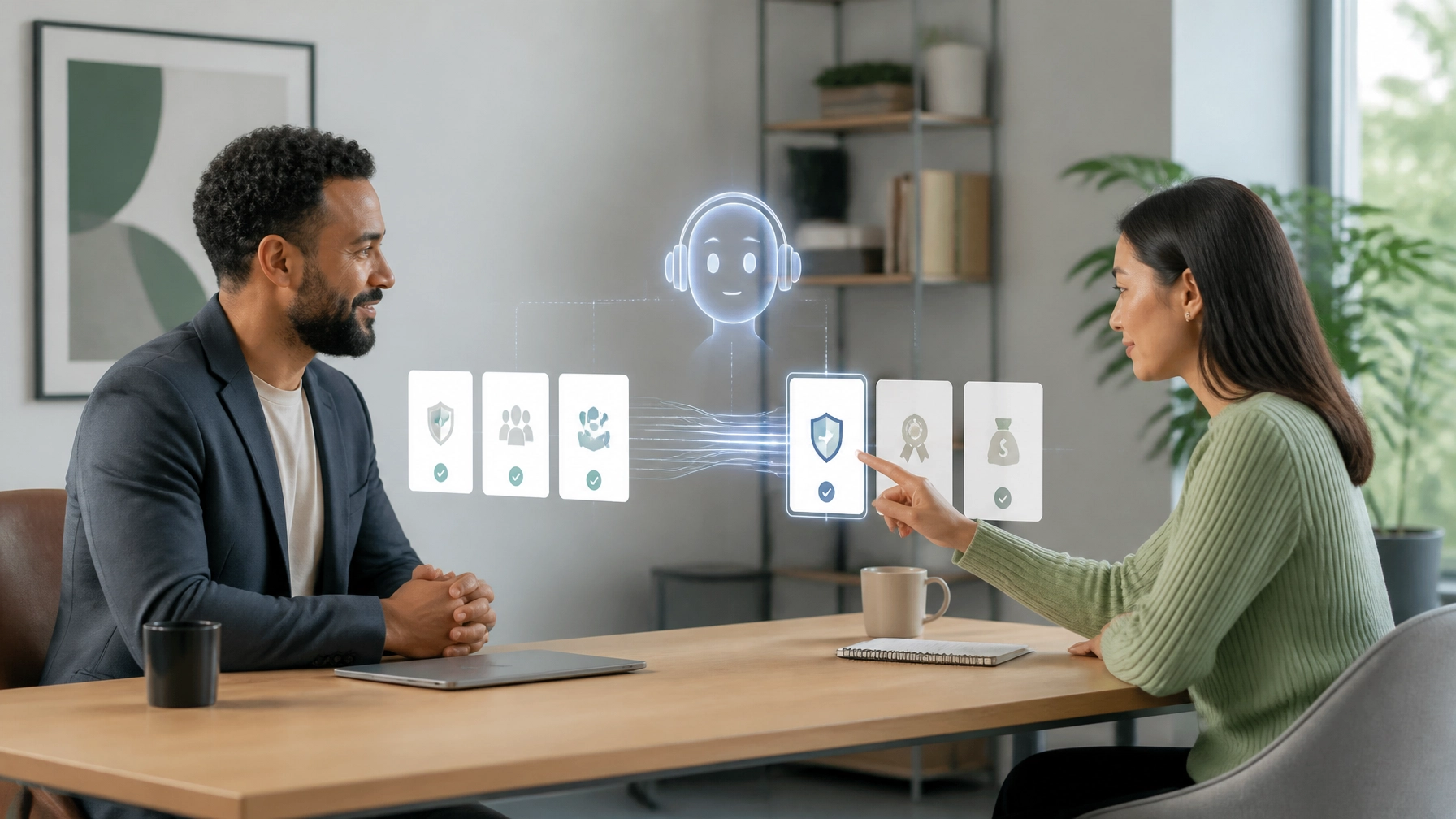
Efficiency is no longer a competitive advantage when everyone has access to the same AI.
For the past few years, the corporate playbook has revolved around a singular obsession: automate everything. Tools that draft emails, generate landing page copy, classify incoming tickets, and answer routine customer inquiries have become standard issue. On paper, the math is irresistible. Lower operational overhead, instantaneous response times, and infinite content scaling promise higher margins with zero friction.
That said, when every competitor in your market uses the exact same foundational models, prompts, and templates, something strange happens to your brand voice. It flattens. You enter what we call the synthetic middle: a vast desert of uniform competence where every business sounds equally polished, equally prompt, and entirely interchangeable.
When your customer receives three identical AI-crafted proposals from three different vendors, speed stops being a differentiator. Price becomes the only battleground left. To break out of this cycle, forward-thinking businesses are discovering a counterintuitive truth: the more automated your middle, the more valuable your human extremes must be.
What is the Synthetic Middle?
The synthetic middle represents the operational bloating of automated mediocrity. It is the zone where businesses deploy AI to handle every touchpoint between initial awareness and final transaction. Standardized chat bots, formulaic nurture sequences, automated blog posts, and templated follow-up emails create a frictionless highway that leads straight to indifference.
Customers have developed an acute radar for this middle layer. They recognize the cadence of generative copy, the bulleted lists that say nothing in four paragraphs, and the reflexive politeness of chatbots that cannot grasp context.
| Dimension | Automated Middle Strategy | Polarized Human-Edge Strategy |
|---|---|---|
| Routine Inquiries | Generic chatbot scripts and template auto-replies | Instant intelligent triage paired with human context |
| Content Production | High-volume, mass-prompted blog posts and emails | Laser-focused, experience-driven insights and original data |
| Customer Customization | Dynamic tag insertion in generic email sequences | Deeply contextualized guidance based on real operational hurdles |
| Problem Solving | Deflection through FAQ links and ticketing queues | Direct access to experienced specialists who own the outcome |
| Customer Perception | “Another efficient corporate machine” | “An expert partner who actually understands my specific reality” |
When you rely entirely on the synthetic middle, you remove the friction: and with it, every opportunity to demonstrate genuine care, authority, or insight.
The Automation Paradox: Efficiency vs. Connection
This shift reveals a fundamental paradox in modern digital growth. Technology is designed to eliminate friction, yet human relationships are built on shared understanding, which often requires navigating complexity together.
When businesses automate their customer communication indiscriminately, they achieve operational efficiency at the exact expense of emotional resonance. Customers do not leave reviews praising your average handling time; they advocate for your brand because someone listened when a nuance mattered.
“The true risk of enterprise automation is not that machines will replace human judgment, but that organizations will willingly surrender their distinct point of view in exchange for algorithmic convenience.”
As explored in our analysis of The Expectation Gap, technology’s real impact isn’t the tool itself: it is how customer expectations rise to demand deeper authenticity in response. If your digital touchpoints feel manufactured, your market position becomes vulnerable to any competitor willing to show up with real conviction.

Bypassing the Middle with Polarized Human Edges
Winning in a post-automation economy requires restructuring how your organization interacts with clients. Instead of spreading mediocre automation across the entire customer journey, high-performing businesses concentrate their human capital at the two critical extremes where trust is actually won or lost: Radical Empathy at the Entry Point and Absolute Authority at the Closing Point.
1. Radical Empathy at the Entry Point
The first contact a prospect has with your business sets the emotional baseline. If they encounter an impersonal gatekeeper, their guard goes up.
Consider how a regional home service contractor transformed their intake process. Instead of relying on instant automated text replies that asked for project details, they introduced a personalized, 30-second video introduction recorded by the actual field technician assigned to the territory. The technician addressed the client by name, acknowledged their specific neighborhood concern, and outlined what to expect.
While the administrative backend (scheduling, route optimization, inventory tracking) was fully automated by AI, the human entry point was radically personal. Close rates on inbound inquiries jumped 45% because prospects felt seen before a single contract was signed.
2. Absolute Authority at the Closing Point
At the other end of the journey: when decisions involve capital allocation, strategic risk, or complex implementation: templated reassurance fails. This is where absolute authority takes over.
In ecommerce and specialized B2B services, brands are leveraging AI to manage logistics, demand forecasting, and inventory tracking behind the scenes. However, when a customer encounters a friction point, they bypass Tier-1 support queues and connect directly with senior product specialists or curators who send handwritten notes or unboxing guides.
By letting AI absorb the operational noise, expert teams have the cognitive bandwidth to deliver definitive, strategic insight when it matters most. This balance protects retention and turns routine buyers into vocal advocates.

Where Modern Strategy is Heading
AI isn’t here to replace your relationship with customers. It is here to clear away the operational clutter so your human expertise can shine where it counts.
In The Verification Economy, we examine how the proliferation of synthetic media makes verified human experience the ultimate luxury good. Markets are rewarding brands that anchor their digital presence in verifiable reality: real case studies, unscripted expert viewpoints, and tangible operational accountability.
Here is how strategic leaders are redesigning their operations for the years ahead:
- Audit your touchpoints: Identify where automation feels helpful versus where it feels dismissive. Keep automation behind the scenes (data routing, analytics, inventory) and keep humans at the microphone for relationship-critical interactions.
- Elevate your content point of view: Stop publishing AI-synthesized summaries of what everyone else is saying. Invest in original data, proprietary frameworks, and direct observations from your day-to-day work.
- Empower frontline experts: Give your most knowledgeable team members the time to interact directly with high-value clients by offloading administrative burdens to intelligent systems.
Frequently Asked Questions
What does the term “synthetic middle” mean in modern marketing?
The synthetic middle refers to the uniform, automated zone of the customer journey where businesses use generic AI tools to generate content, handle routine chats, and send template emails. Because every competitor uses similar tools, customer interactions in this middle layer lack distinction and fail to build brand loyalty.
Does this mean businesses should stop using AI automation?
Not at all. AI is essential for handling back-end operations, data processing, inventory tracking, and initial task routing. The key is using automation to absorb operational friction while reserving human expertise for the critical entry and closing points of the customer relationship.
How can small businesses compete against larger enterprises using advanced AI?
Small businesses have an inherent advantage in agility and personal identity. By skipping the corporate bureaucracy and putting real people front and center during initial client interactions, smaller brands can establish immediate trust that massive, automated enterprises struggle to replicate.
What are the two human extremes that matter most in customer experience?
The two critical extremes are Radical Empathy at the entry point (understanding the customer’s true emotional and operational context right away) and Absolute Authority at the closing point (delivering expert, definitive guidance when high-stakes decisions are made).
How does automation affect customer retention in ecommerce?
When automation is overused in customer service and post-purchase communication, customers feel ignored during critical support moments. Brands that combine automated logistics with human-curated support notes and responsive problem-solving see significantly higher repeat purchase rates and long-term loyalty.
How does TrustMedia help businesses navigate this technological shift?
TrustMedia partners with local service businesses, professional practices, and growing brands to design data-driven digital strategies that balance intelligent automation with high-impact human branding, ensuring your company stands out where it matters most.