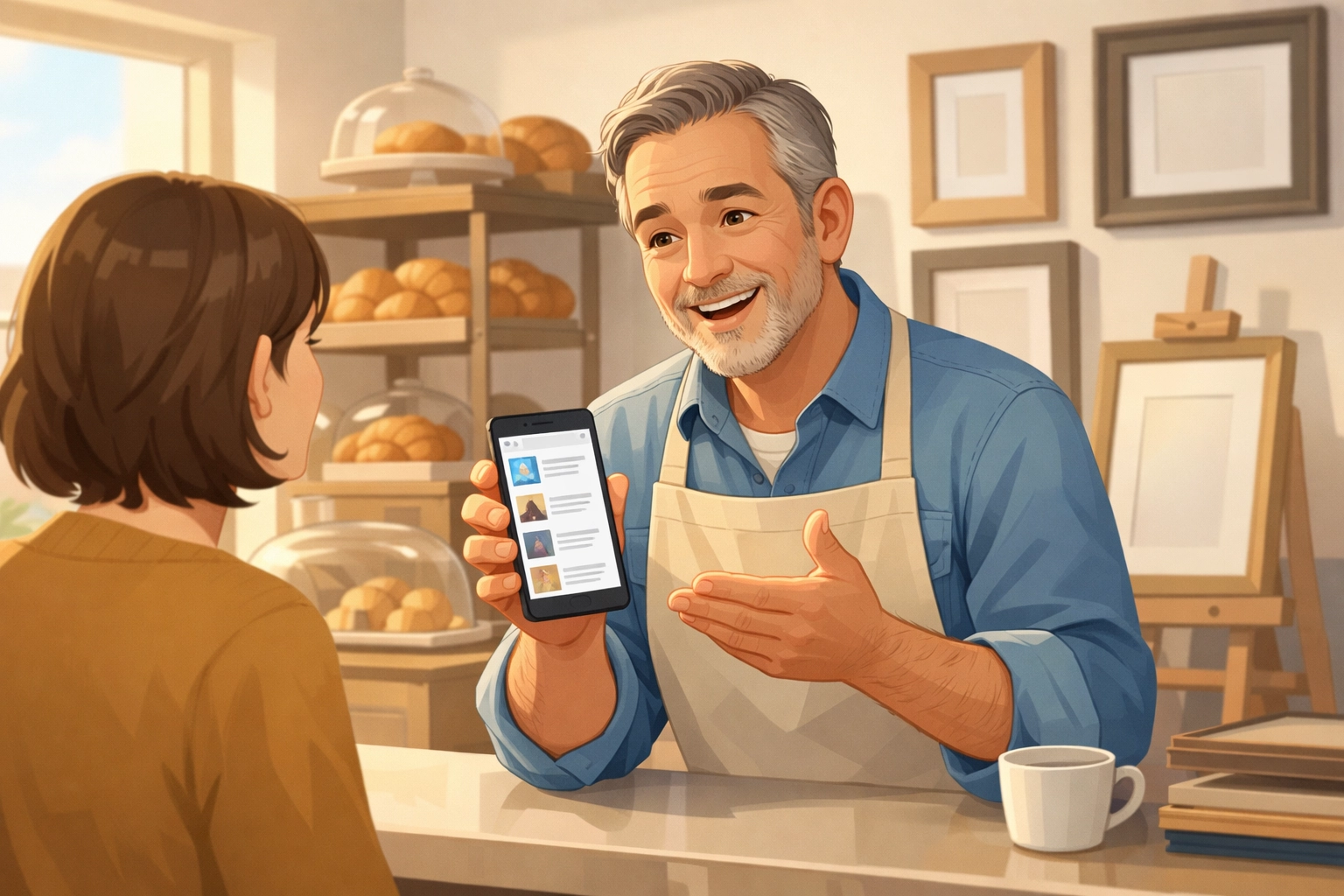
It’s Sunday morning, March 2026. Your potential customers aren’t just scrolling through a list of search results anymore. They are talking to AI agents that summarize the entire internet for them. In this world, “content” has become a commodity. If you run an organic bakery or a custom framing shop, you’ve likely noticed that the old way of “posting for the sake of posting” doesn’t work. The AI can write a better recipe blog or a more technically accurate guide to wood types than most humans can.
However, there is one thing the AI cannot replicate: your soul.
The “Storytelling Edge” isn’t about being the most polished brand on the block. In fact, in 2026, perfection is often a red flag for “AI-generated.” To stand out, you need to lean into the messy, vibrant, and deeply local reality of your business. This is how you move from being a “commodity provider” to a “community staple.”
The Shift from Content to Connection
By now, we’ve all seen the flood of perfectly manicured, AI-produced social posts. They look good, but they feel empty. For a local specialty business, this is actually your greatest opportunity. While the big box retailers use massive language models to churn out thousands of generic landing pages, you can focus on the one thing they can’t scale: genuine human connection.
“According to the Content Marketing Institute’s 2026 Content Benchmarks, 74% of consumers now prioritize ‘demonstrable human origin’ when choosing local service and retail providers over price-point leaders.”
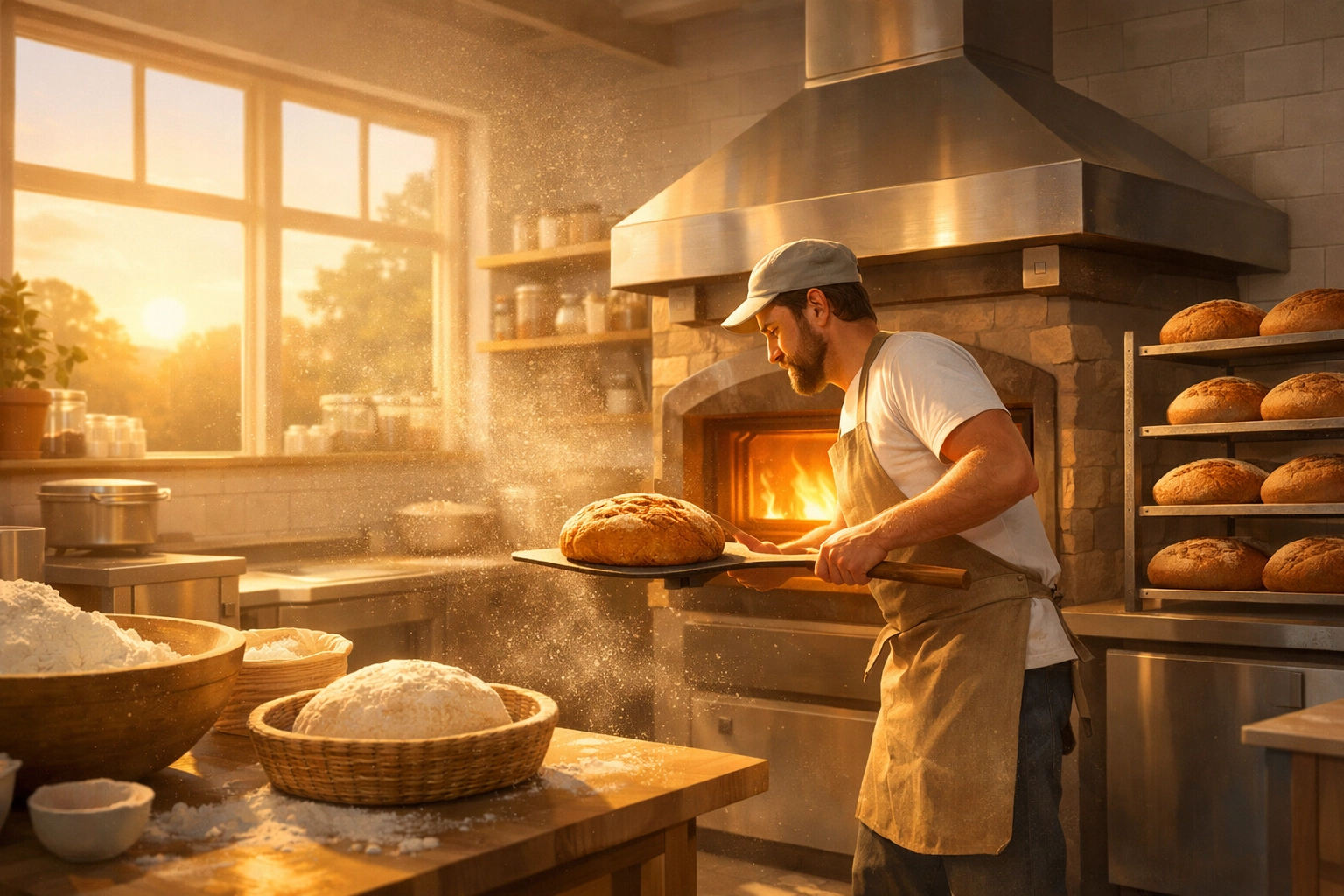
This data tells us that people are tired of the noise. They want to know who is baking the bread at 4:00 AM. They want to see the dust on the hands of the craftsman framing their wedding photos. This shift requires a move toward what we call “Connectioneering”, the intentional building of relationships through shared stories.
Defining Your Storytelling Pillars
You don’t need to be a novelist to tell a great story. You just need a framework. For a local retail business, your storytelling should be built on four specific pillars. These pillars ensure that your content marketing isn’t just noise, but a strategic asset that drives foot traffic and loyalty.
| Story Pillar | Focus Area | Why It Works in 2026 |
|---|---|---|
| The Origin Story | Your “Why” and early struggles. | Humanizes the brand and builds empathy. |
| The Belief Story | Your values (e.g., zero-waste, local sourcing). | Connects with the ethical consumer of 2026. |
| The Process Story | The “unpolished” behind-the-scenes work. | Proves human craftsmanship in an AI world. |
| The Transformation | How your product changed a customer’s day. | Provides social proof that feels lived-in. |
By rotating through these pillars, you ensure your feed remains varied and engaging. For instance, an organic bakery shouldn’t just post pictures of finished croissants. You should post a video of the failed batch from Tuesday and explain why the humidity in the shop made the dough act up. That vulnerability is something a machine can’t fake, and it’s exactly what makes a local customer feel like they know you.
Using AI Ethically (and Strategically)
We aren’t suggesting you ignore AI entirely. That would be a mistake. The key is to use AI as your “Editor-in-Chief” rather than your “Lead Creator.” You provide the soul, the facts, and the local context; the AI helps you format it for different platforms.
When you’re trying to search in the age of AI, your primary goal is to feed the algorithms high-quality, unique data that doesn’t exist elsewhere. AI overviews in search engines love “first-person” data. If you write about the specific type of reclaimed oak you use in your custom framing shop, and include photos of you actually working on it, search engines recognize that as “Experience” (the extra ‘E’ in E-E-A-T).
Here is a simple workflow for the busy local owner:
- Capture: Take a 30-second video of a customer picking up a finished frame or a baker pulling fresh sourdough out of the oven.
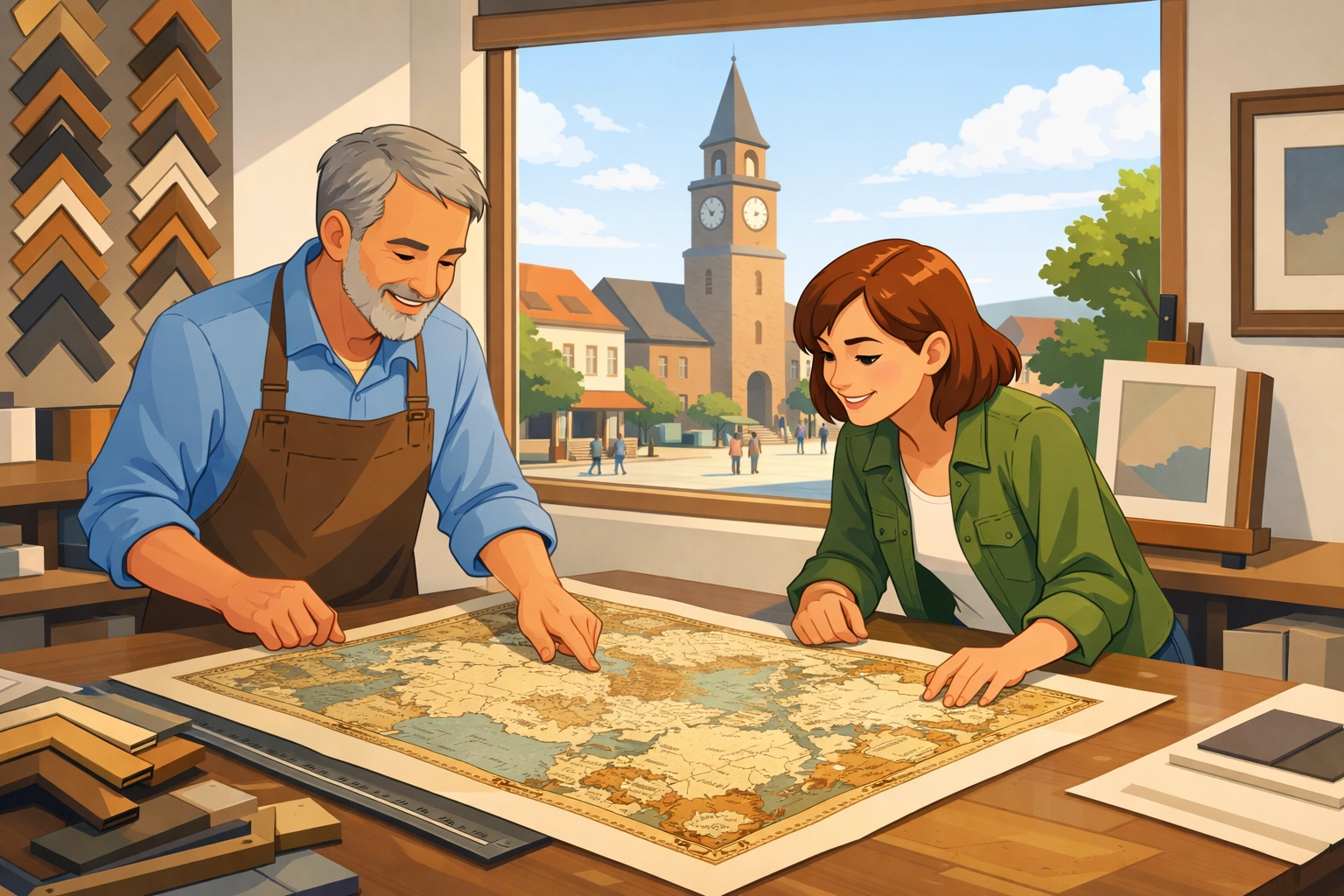
- Contextualize: Write two sentences about what makes this moment special (e.g., “This frame is for a 50-year-old map of our downtown area”).
- Scale: Use AI to turn that context into a caption for Instagram, a short update for your Google Business Profile, and a blurb for your email newsletter.
The Local Landmark Advantage
One of the best ways to prove you are a real local business is to anchor your stories in recognizable landmarks. If your custom framing shop is two blocks away from the historic town square, mention it. Show the square in the background of your outdoor photos.
In practice, this tethers your digital presence to a physical reality. When someone sees your shop mentioned alongside the local park or a popular nearby coffee shop, their brain maps you as a “neighbor,” not just a “website.” This geographic storytelling is a massive advantage over national competitors who can only speak in generalities.
Scenario: The Organic Bakery’s Sunday Strategy
Let’s look at how a specialty bakery might execute this. Instead of a generic “Happy Sunday, come buy bread” post, they could run a series called “The Sunday Loaf.”
- Storytelling Angle: A short interview with the farmer who provides the heirloom grains.
- The Hook: Why this specific grain only grows 30 miles away and why it tastes different every season.
- The Call to Action: “We only have 20 loaves of this specific batch. Come taste the neighborhood.”
This isn’t just selling bread; it’s selling an experience, a local partnership, and a limited-time event. It leverages scarcity and community pride, two things AI-generated content struggles to do authentically. To see how this impacts your bottom line, you might look at the new ROI which focuses on how these deep connections lead to higher customer lifetime value rather than just one-off clicks.
Avoiding the “Spam” Trap
As you become more active in your storytelling, you’ll likely want to share these stories via email. However, you must be careful. In 2026, inbox filters are more aggressive than ever. If your emails look like every other marketing blast, they will disappear.
The CTO’s no-bs guide to marketing emails emphasizes that personal storytelling is the best way to keep your deliverability high. When people actually open and read your emails, instead of deleting them immediately, it signals to providers like Gmail that you are a “wanted” sender. Use your storytelling to make your emails a “must-read” part of your customer’s week.
| Content Type | AI Approach (Avoid) | Storytelling Approach (Use) |
|---|---|---|
| New Product Launch | “Check out our new line of walnut frames. High quality and durable.” | “I found this specific walnut at a local sawmill that was clearing old growth. It has a grain I’ve never seen before.” |
| Store Hours | “We are open 9-5. Come visit us for your framing needs.” | “The light in the shop is best around 3 PM. That’s when we’re usually finishing the week’s biggest projects.” |
| Holiday Sale | “20% off all bread this Saturday only!” | “My grandmother always made this rye for the holidays. We’re honoring that tradition this Saturday with a special batch.” |
Micro-Stories: The Power of the Mundane
You don’t need a grand epic to move the needle. In 2026, “micro-stories” are the currency of social media. These are 15-second “day in the life” clips or a single photo with a 50-word caption.
For a custom framing shop, a micro-story could be as simple as showing how you join a corner of a frame. Explain why you choose a specific type of glue. This “nuanced trust-building” shows your expertise without you having to scream “I am an expert!” from the rooftops. It invites the customer into your workshop.

Ethical AI: Transparency as a Feature
If you do use AI to help generate an image for a blog post or to help brainstorm a headline, be honest about it if asked. Better yet, use AI to do the “boring” stuff so you have more time for the “human” stuff.
For example, use AI to analyze your sales data to see which stories resonated most last month. Did people react more to the sourdough process or the farmer interview? This data-driven approach to storytelling ensures you aren’t just shouting into the void.
“Authenticity in the age of automation is not about the absence of technology, but the presence of humanity. 82% of top-performing local businesses in 2026 report using AI for distribution while keeping the ‘creative spark’ 100% human-led.” , Local Marketing Trends Report 2026
Distribution: Where Your Stories Live
Your stories deserve to be seen. While Instagram and TikTok are the obvious choices, don’t overlook your Google Business Profile (GBP). In 2026, the GBP is often the first place a story is consumed. Instead of just posting “Business Updates,” post your “Process Stories” there.
When someone searches for “best bakery near me,” and they see a recent post of a baker laughing while covered in flour, they aren’t just seeing a business; they are seeing a destination. This emotional resonance is the tie-breaker that wins the “Local 3-Pack” battle.
Conclusion: Starting Your Narrative Journey
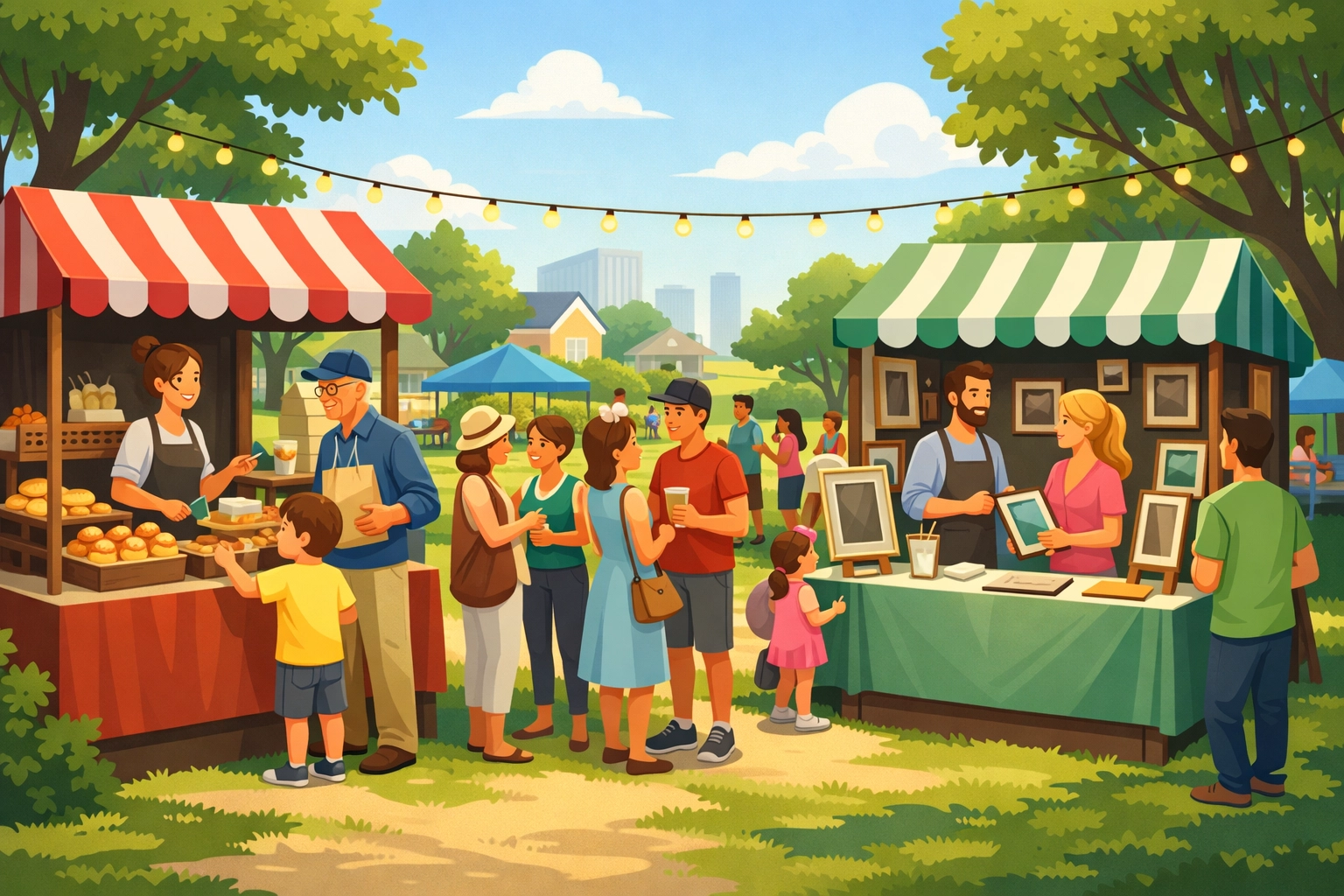
Cutting through the AI noise doesn’t require a Hollywood budget. It requires a shift in perspective. You are not just a retailer; you are a curator of local culture. Whether you are framing a child’s first drawing or baking the bread for a family’s Sunday dinner, you are part of their story.
Start small. Tomorrow, take one photo of something “imperfect” in your shop and tell the story of why it matters. That’s the storytelling edge. That’s how you win in 2026.
Is it okay to use AI to write my social media captions?
Yes, but you should use it as a starting point. AI is great at structuring a caption, but it often lacks the specific “local flavor” that makes a post stand out. Always go back in and add details that only a local would know: like mentioning the construction on Main Street or the way the shop smells after a rainstorm.
How often should I be posting these stories?
Consistency beats frequency. It’s better to post one high-quality “Process Story” per week than five generic AI-generated posts. Aim for 2–3 meaningful stories a week across your primary channels (Instagram, Google Business Profile, and Email).
I’m a craftsperson, not a writer. How do I find stories?
Look at your “Frequently Asked Questions” or the things customers comment on when they walk into your shop. If three people ask about the wood you use for a specific frame, that’s a story. If someone asks why your sourdough crust is so dark, that’s a story. Your daily work is the story.
Does storytelling actually help with SEO?
Absolutely. In 2026, search engines prioritize “Originality” and “Experience.” By writing unique stories that mention local landmarks and specific business processes, you are providing content that cannot be found anywhere else. This helps you rank for “long-tail” keywords and makes your Google Business Profile more engaging to the algorithm.
What if my stories aren’t “exciting” enough?
People aren’t looking for action movies from their local bakery. They are looking for “joy-driven impact” and “human moments.” A video of the morning light hitting your display case or the sound of a frame being clamped into place is relaxing and authentic. Those “boring” moments are actually what build trust.