

Think about the last time you received an email that actually helped you. It wasn’t a flashing “BUY NOW” banner or a countdown timer ticking toward a manufactured deadline. Instead, it was likely a subtle signal, a resource that arrived just as you were researching a solution, or a reminder about a service you genuinely needed but had forgotten to schedule.
In an era where the average inbox is a digital battlefield of noise, the most effective marketing doesn’t feel like marketing at all. It feels like a helpful nudge. For modern businesses, whether you are a high-growth eCommerce brand or a local service provider, success in the inbox is no longer about the volume of messages you send. It is about your ability to use email as a tool for decision architecture.
Strategic email marketing isn’t just about “converting” a lead; it is about guiding a customer through their own psychological journey, providing the right information at the exact moment they are ready to process it. By shifting your focus from promotion to partnership, you can transform your email list from a simple broadcast channel into a powerful engine for trust and retention.
The Architecture of Timing: When “When” Becomes “Why”
Most businesses approach email timing as a logistical question: “What day of the week gets the highest open rates?” While data is important, this question misses the deeper psychological reality of your customer. Timing isn’t just about catching someone at their desk; it is about aligning with their mental state.
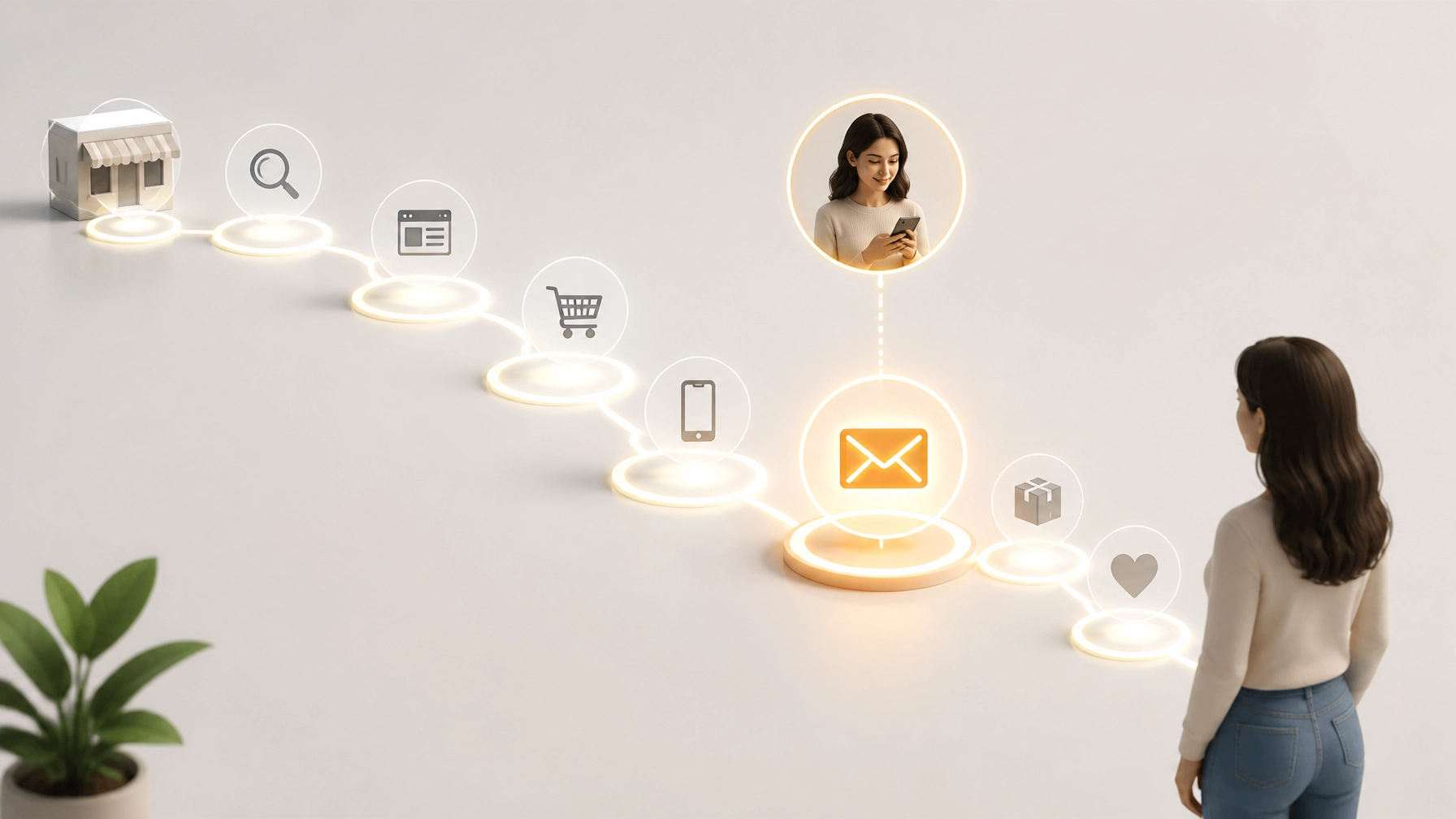
When you send an email, you are entering a subscriber’s personal space. If that email arrives when they are overwhelmed or disinterested, it becomes a micro-annoyance, a small piece of decision debt that accumulates over time until they hit the unsubscribe button. However, when an email arrives as a response to a specific behavior, it functions as a signal of relevance.
Consider a homeowner who recently visited your HVAC website to read an article about air quality. An automated email sent two hours later, offering a checklist for seasonal filter maintenance, isn’t a “sales pitch.” It is a timely resource that validates their current concern. This is why a timely resource beats a generic campaign every single time. You aren’t just sending a message; you are architecting a decision-making environment where the customer feels supported rather than pushed.
Segmentation as Psychological Empathy
For many marketers, segmentation is a mechanical process of dividing a list by demographics: age, gender, or location. But true strategic segmentation is rooted in psychology. It is about understanding intent.
A customer who has purchased from you three times in the last month has a completely different psychological relationship with your brand than someone who has been on your list for six months without ever clicking a link. Treating them the same isn’t just inefficient; it’s a violation of trust.
Strategic segmentation allows you to speak to the specific stage of the customer’s decision-making process:
- The Researcher: Needs educational content, social proof, and clarity on how your solution works.
- The Comparison Shopper: Needs specific data points, “vs.” comparisons, and reassurances about ROI or quality.
- The Loyal Advocate: Needs insider access, appreciation, and ways to deepen their relationship with the brand.
By tailoring your messaging to these psychological states, you reduce the “cognitive friction” of the inbox. You aren’t asking them to make a giant leap; you are giving them the next logical step.
Promotional vs. Decision-Support: A Strategic Shift
To build a high-conversion email strategy, you must distinguish between “push” tactics and “guide” tactics. The goal of a decision-support approach is to empower the customer so that when they finally do buy, they feel confident in their choice.
| Feature | Promotional Approach | Decision-Support Approach |
|---|---|---|
| Primary Goal | Short-term revenue spikes | Long-term trust and lifetime value |
| Messaging Focus | Product features and discounts | Solutions, benefits, and education |
| Trigger Logic | Calendar-based (Holidays, sales) | Behavior-based (Browsing, engagement) |
| Customer Feeling | Being “sold to” or pressured | Being “helped” or understood |
| Tone | Urgent and loud | Authoritative and calm |
| Long-term Impact | High unsubscribe rates | Sustainable retention engine |
Overcoming Decision Fatigue in the Inbox
Modern consumers are exhausted. Every day, they make thousands of micro-decisions, what to wear, what to eat, which notifications to clear. When your email adds to that fatigue by offering too many choices or vague calls to action, it becomes part of the problem.
“Email timing is decision architecture: respect your subscribers’ decision fatigue, and your emails become choices they make, rather than clutter they escape.”
By providing one clear, relevant path forward, you act as a filter for your customer. You help them narrow down their options. For an eCommerce brand, this might mean sending a “curated for you” selection based on past browsing rather than a link to your entire catalog. For a service business, it might mean a “Book Your Consultation” button that leads to a simple, three-step calendar rather than a complex intake form.
When you reduce the cognitive load required to engage with your brand, you aren’t just making it easier to buy, you are building a competitive advantage. In a noisy market, clarity is a form of kindness.

Email as a Retention Engine
Retention isn’t what happens after the sale; it is what happens during the entire relationship. Strategic email marketing supports retention by continually reinforcing the value of the decision the customer has already made.
Post-purchase emails are often the most underutilized real estate in digital marketing. Instead of just sending a receipt, use that moment to provide “how-to” guides, maintenance tips, or a personal note from the founder. These signals tell the customer: “We care about your success with our product even after we have your money.”
This builds a long tail of trust that makes the next purchase decision almost automatic. You have already proven that you understand their needs and respect their time. Why would they go anywhere else?
Implementing the Silent Signal Strategy
Ready to move beyond generic campaigns? Here is how to start implementing a decision-first email strategy:
- Audit Your Triggers: Look at your automated flows (Welcome, Abandoned Cart, Post-Purchase). Do they offer value, or just a discount code? Replace one purely promotional email with a “helpful guide” email.
- Map Behavior to Psychology: Identify three key actions on your website that signal intent (e.g., visiting a pricing page vs. reading a blog post). Create specific follow-up content for each.
- Simplify Your CTAs: Every email should have one primary goal. If you give the reader five things to do, they will likely do none of them.
- Listen to the Data: Use your analytics and insights to find where customers are dropping off. Are they opening but not clicking? They might be interested but confused.

At TrustMedia, we view email as the connective tissue of your marketing ecosystem. It is the bridge between a cold lead and a loyal advocate. By mastering the “silent signal”, the art of being helpful, timely, and relevant, you don’t just grow your revenue; you grow your authority.
How often should we be sending emails to avoid fatigue?
There is no universal “right” frequency. The key is to match your cadence to the customer’s needs. If you are a daily news site, daily is expected. If you are a local roofing contractor, once or twice a month with high-value seasonal tips is likely sufficient. Always prioritize relevance over frequency.
Is segmentation worth the extra work for a small list?
Yes. Even if you only have 500 subscribers, dividing them into “Leads” and “Customers” allows you to send significantly more effective messages. Personalization is about quality, not just quantity.
What is the most important metric to track in email marketing?
While open rates matter, “Click-to-Open Rate” (CTOR) is often more telling. It measures how many people who opened the email actually found the content valuable enough to take action. It is the ultimate measure of relevance.
How do we balance “being helpful” with “making sales”?
Think of it as the 80/20 rule. 80% of your content should be focused on providing value, education, and support. The remaining 20% can be a direct ask. Paradoxically, the more helpful you are in that 80%, the more effective your 20% will be.
Do we really need fancy designs for our emails?
Not necessarily. In fact, “plain text” or minimalist designs often feel more personal and less like a “marketing broadcast.” Focus on the clarity of your message and the strength of your call to action rather than complex graphics.


