You probably think the “Follow” button is the beginning of your relationship with a new customer. In reality, it is the conclusion.
Before that single tap occurs, a sophisticated, near-instantaneous psychological process has already taken place. We call it the Silent Audit. In a digital landscape where attention is the scarcest commodity, audiences have developed a reflexive defense mechanism. They don’t just consume your content; they investigate your credibility.
They scroll through your last 30 posts. They scan the tone of your replies to disgruntled customers. They look for the “tagged” photos to see what real people are saying when you aren’t the one holding the camera. This audit happens in seconds, often entirely in the background of the user’s conscious mind, and it determines whether you are worth their time or just more digital static.
The Psychology of Digital Skepticism
We are currently living through what many call The Attention Recession, a period where the volume of content has far outpaced our biological capacity to process it. Because of this, the modern consumer is no longer a passive recipient of marketing; they are a skeptical gatekeeper.
The silent audit is a survival strategy. When every brand has a high-production-value video and a polished aesthetic, “looking professional” is no longer a differentiator, it’s the baseline. To decide who to actually follow or engage with, users look for “leaked” signals of truth. They are looking for the gap between who you say you are and how you actually behave when you think no one is looking.
“Trust is not built in the highlights; it is verified in the archives. A brand’s social profile is less of a billboard and more of a public ledger of their consistency and character.” , Digital Behavior Report 2026
Most brands optimize for the individual post, the “hook,” the “viral sound,” the “trending transition.” But the audience audits the grid. They are looking for patterns, not peaks. If your last post was an inspiring quote but your comments section is a graveyard of unanswered customer complaints, the audit fails.

What Brands Optimize vs. What Audiences Audit
The disconnect between marketing teams and their audiences often stems from a fundamental misunderstanding of what constitutes a “trust signal.” While you might be focused on reach and frequency, your potential followers are focused on reliability and relevance.
| What Brands Usually Optimize For | What the Audience Actually Audits |
|---|---|
| High Production Value: Polished videos and professional photography. | Consistency of Character: Does the tone stay the same across posts and replies? |
| Viral Hooks: Getting that first 3 seconds of attention at any cost. | The “Tagged” Tab: What do real people say when they mention the brand? |
| Follower Count: Buying into the illusion of “social proof” via numbers. | Comment Depth: Are people actually having conversations, or is it just bot-spam? |
| Posting Frequency: Staying “top of mind” by posting three times a day. | Response Strategy: How does the brand handle a question or a criticism? |
| Aesthetic Grids: Making sure the colors match in a 3×3 pattern. | Historical Utility: Does the feed provide value if I scroll back six months? |
The Comments Section: Your Real Front Door
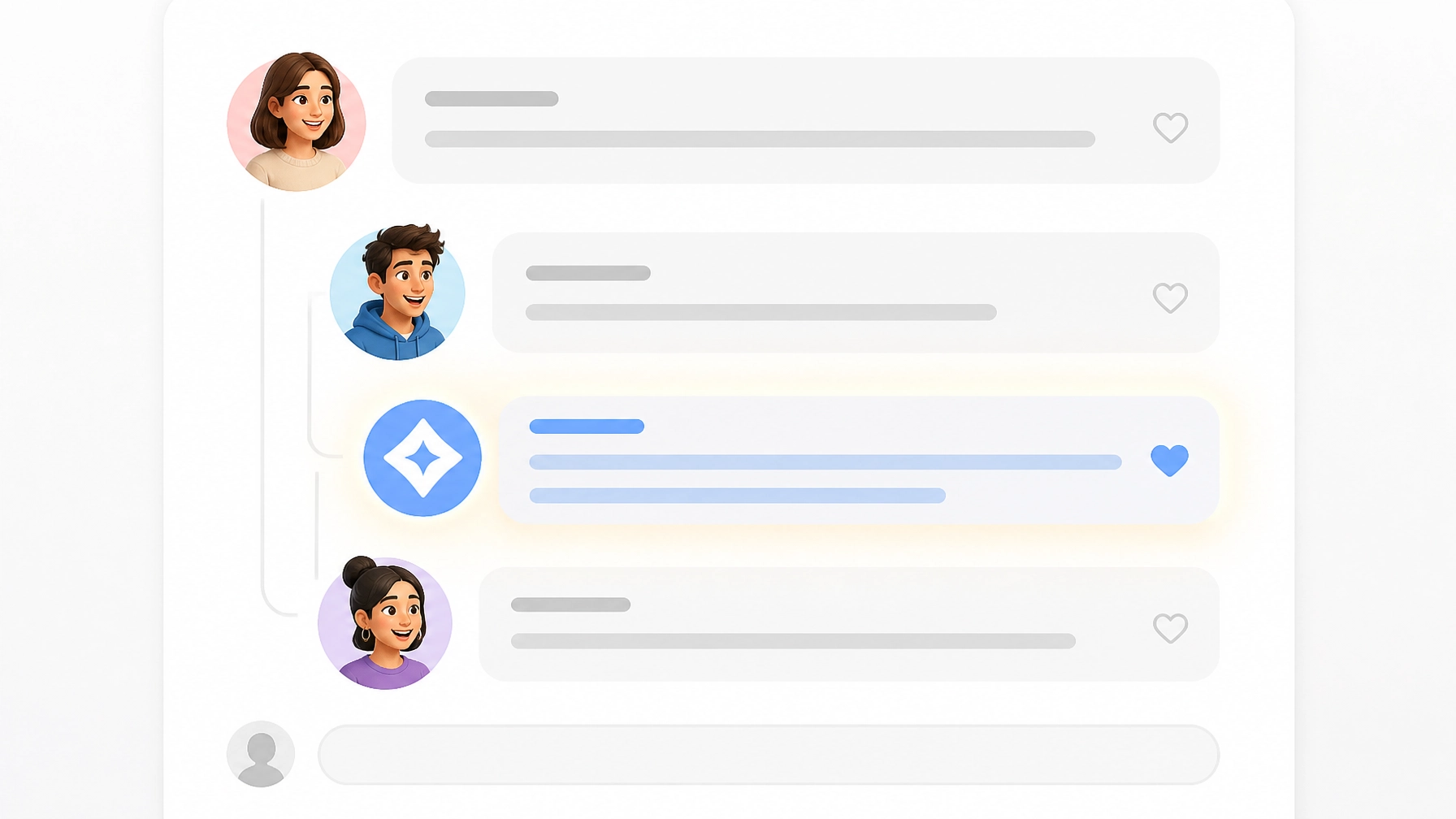
If your profile is the storefront, your comments section is the back alley where people go to see what’s really happening. This is one of the most critical stages of the silent audit.
In 2026, the savvy user knows that captions are scripted and images are edited. But the way a brand interacts with a random question from a stranger is seen as a “live” performance. This is where The Frictionless Connection is either forged or broken.
When you ignore a question, you aren’t just failing the person who asked it; you are failing the thousands of silent auditors who are reading that thread to see if you are a “real” company with real people behind it. Conversely, a thoughtful, human, and timely response acts as a powerful micro-conversion. It signals that you are attentive and that you value the community you are building.
The Pattern of Legitimacy
Consistency is often mistaken for “posting every day.” In the context of a silent audit, consistency refers to the integrity of the value proposition.
If you are a local HVAC company, the auditor is looking for proof of competence over time. They are looking for the video from three months ago where you showed how to clean a filter, and the post from six months ago where you introduced your lead technician. This creates a “content moat”, a layer of historical proof that makes it very difficult for a competitor to simply buy their way into the same level of trust.
This is the essence of finding The Signal in the Noise. In a sea of AI-generated filler and trend-chasing, the brand that maintains a steady, helpful, and human-centric perspective stands out. The auditor isn’t looking for you to be perfect; they are looking for you to be predictable. They want to know that if they follow you today, they won’t regret it tomorrow because you’ve suddenly pivoted to a completely different persona.
How to Prepare for the Audit
Preparing for the silent audit isn’t about “cleaning up” your profile, it’s about building a better infrastructure for your digital presence. Here is how you can ensure your brand passes the test:
- Audit Your Own Archives: Scroll back through your last 50 posts. If you were a total stranger, would you understand exactly what this brand does and why it matters within 10 seconds? If the answer is “maybe,” you need more clarity.
- The “Humanity Test”: Look at your last 10 replies to comments. If they all sound like “Thanks for reaching out!” or “Link in bio!”, you are failing the audit. Use a human voice. Be specific.
- Prioritize the Tagged Tab: This is the most underrated part of the audit. If you have “tagged” posts that are irrelevant or spammy, hide them. If you have great customer photos, engage with them so they stay at the top.
- Show the Work: Don’t just claim expertise; demonstrate it. Case studies, “behind-the-scenes” processes, and answering common industry myths are the “proof of work” that auditors crave.

The silent audit is a reality of modern digital life. People have been burned too many times by “get-rich-quick” creators and “dropshipping” brands that vanish after the first sale. By the time someone reaches out to you, they have likely already spent 15 minutes investigating your history.
Your goal isn’t to trick the auditor; it’s to make their job as easy as possible. When your public behavior aligns with your brand promise, the “Follow” button becomes the natural next step in a journey that began long before they ever said hello.
How far back do people usually scroll during a silent audit?
Most users will scroll through the first two or three “screens” on a mobile device, which typically covers about 12 to 24 posts. However, for higher-ticket services or professional practices, it’s common for users to scroll back several months to ensure the business is established and consistent.
Does a low follower count hurt my brand during an audit?
Not necessarily. While high numbers provide a certain type of social proof, modern audiences are increasingly aware of “vanity metrics.” They care more about the ratio of engagement and the quality of the interactions. 500 followers with genuine, helpful conversations in the comments is far more credible than 50,000 followers with zero engagement.
How should I handle old content that no longer fits my brand?
If the content is objectively low quality or significantly off-brand, it’s okay to archive it. However, don’t delete everything. Having a history shows longevity. Instead of deleting, focus on “pinning” three high-value posts that immediately establish your current authority and identity.
Is it better to turn off comments to avoid a “bad” audit?
Absolutely not. Turning off comments is a massive red flag in a silent audit. It suggests the brand is hiding something or cannot handle feedback. A well-managed comments section: even one with occasional criticism that is handled professionally: is a far stronger trust signal than a silent profile.