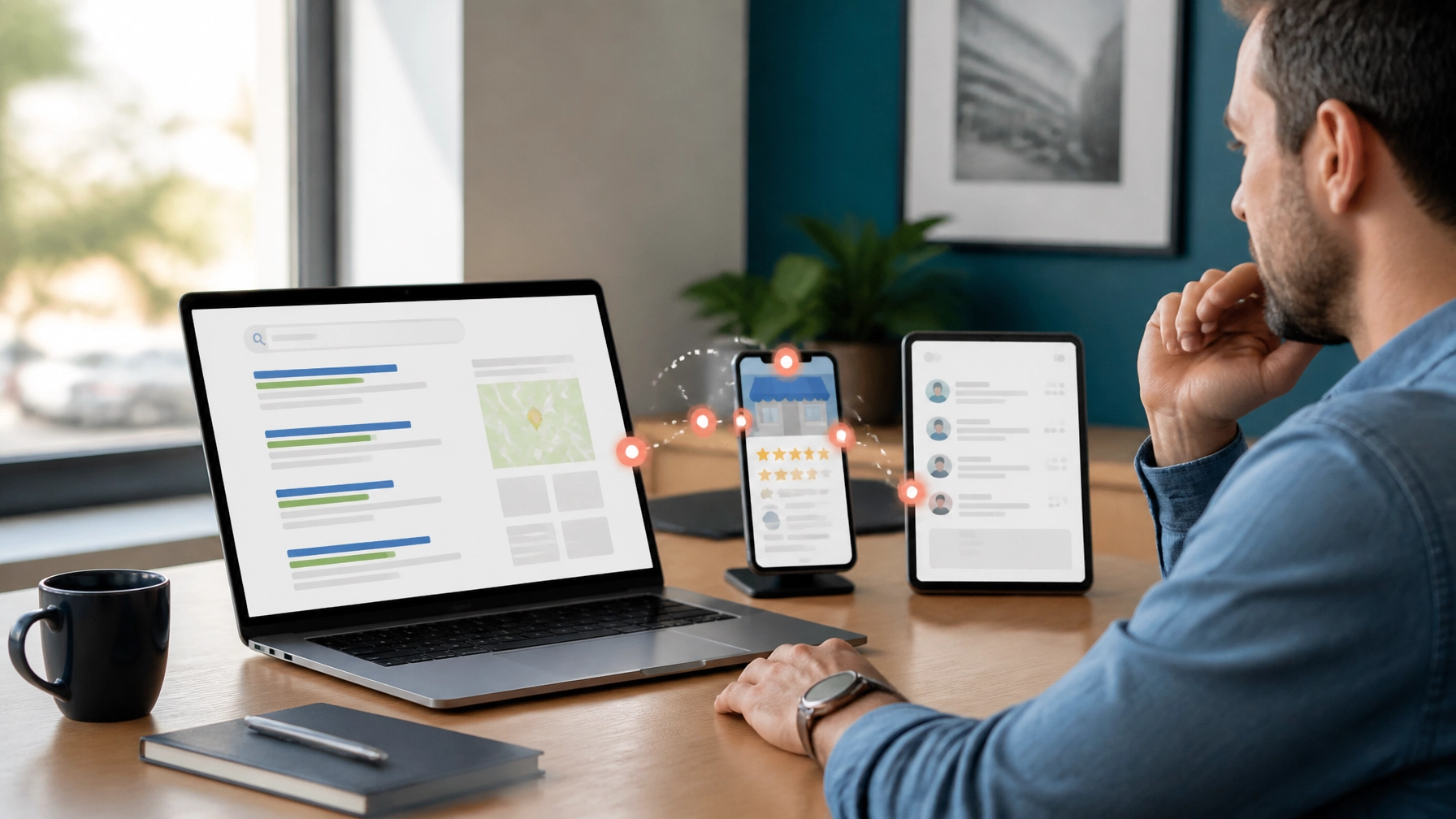
The infinite scroll is broken. You’ve felt it, and your customers certainly have, too. We’ve reached a point in digital history where “more content” is no longer the solution, it’s the problem. In 2026, the average person is bombarded with thousands of digital impressions every single day, leading to a phenomenon we call the Attention Recession.
For years, the marketing playbook was simple: post more, use more hashtags, and stay “top of mind” by sheer volume. But as platforms shift and audience psychology evolves, those tactics are backfiring. Today, high-frequency posting often leads to “brand fatigue,” where your audience doesn’t just ignore you, they actively mute you.
Survival in this landscape requires a fundamental shift in perspective. It’s no longer about how often you speak; it’s about the clarity and relevance of your “signal” in a world drowned in noise.
Understanding the Attention Recession
The Attention Recession isn’t just a catchy phrase; it’s a measurable decline in the amount of sustained focus users are willing to give to any single piece of content. Even though screen time remains high, our collective “engagement bandwidth” has shrunk. We are scrolling faster, skimming deeper, and ruthlessly filtering out anything that feels like a generic sales pitch.
This shift is driven by a combination of cognitive overload and a fundamental change in how social platforms operate. Most major networks have moved away from being “social media”, places where you connect with friends, to becoming “entertainment media”, places where you consume high-quality, algorithmic-driven video.
“As the cost of capturing attention continues to rise, brands must realize that attention is no longer a commodity to be bought, but a finite resource that must be earned through consistent utility and relevance.” , Industry Insight, Digital Marketing Trends 2025.
When you treat social media as a megaphone, you contribute to the noise. When you treat it as a service, you become the signal.

The Psychology of Fatigue: Why They’re Swiping Past You
To understand how to win, you have to understand why you’re losing. Audience psychology in 2026 is defined by Heuristic Filtering. Because we cannot possibly process everything in our feeds, our brains develop mental shortcuts to decide what to ignore.
If your content looks like an ad, feels like a generic template, or asks for something (like a click or a purchase) before giving anything back, it gets filtered out instantly. This is what we call The Attention Recession. People aren’t just tired of content; they’re tired of unhelpful content.
In practice, this means that every time you post something mediocre just to “stay consistent,” you are actually training your audience to ignore your future posts. You are building a reputation for being noise.
The Signal vs. The Noise: A Strategic Comparison
Winning in a crowded feed requires moving away from volume-led strategies and toward value-led strategies. Here is how the two approaches differ in the current digital landscape:
| Feature | Volume-Led Content (The Noise) | Value-Led Content (The Signal) |
|---|---|---|
| Primary Goal | Maximizing impressions and frequency. | Solving a specific problem or entertaining a niche. |
| Success Metric | Likes, reach, and “post count.” | Shares, saves, and direct inquiries. |
| Audience Reaction | Passive scrolling or “muting.” | Active engagement and brand recall. |
| Production Style | Template-driven, generic, and “fast.” | Researched, high-quality, and intentional. |
| Psychological Impact | Increases cognitive load and fatigue. | Provides clarity and builds authority. |
As you can see, the “Signal Strategy” is about doing more with less. It’s about ensuring that when you do show up in the feed, your audience stops because they’ve learned that your content is always worth their time. This is a core component of moving Beyond the Scroll.
Authenticity is the Only Algorithm-Proof Strategy
While the platforms change their algorithms every few months, human psychology remains remarkably consistent. We are hard-wired to pay attention to other humans, especially those who demonstrate expertise and empathy.
For local service businesses, from HVAC contractors to dental practices, this is a massive advantage. You don’t need a million-dollar production budget. You need to show the real work, the real people, and the real solutions you provide.

For example, a 30-second video of a contractor explaining why a specific type of insulation is failing in local homes is infinitely more valuable than five “Happy Monday” graphic templates. The first is a signal (helpful, local, expert); the second is noise (generic, filler).
Practical Steps to Build Your Signal
Ready to stop shouting into the void? Here’s how you can transition to a Signal Strategy:
- Audit Your “Post Debt”: Look at your last 20 posts. If you removed your logo, would anyone know it was yours? If the answer is no, you’re posting noise.
- Focus on “Share-Worthy” over “Like-Worthy”: Likes are easy; shares are hard. People share things that make them look smart, helpful, or funny. Aim for content that provides a “saveable” or “shareable” insight.
- Decrease Frequency, Increase Depth: Instead of posting every day, try posting twice a week but making those two posts twice as good. Give them more research, better visuals, and a clearer point of view.
- Speak to One Person, Not “The Audience”: Write your captions as if you are talking to your best customer. Use their language, address their specific fears, and answer their real questions.

Conclusion: The Long Game of Digital Trust
The brands that will thrive in 2026 and beyond are not the ones with the loudest voices, but the ones with the clearest signals. By respecting your audience’s time and attention, you build something far more valuable than a high follower count: Trust.
At TrustMedia, we help businesses cut through the noise by focusing on data-driven strategy and authentic execution. If you’re tired of the “content treadmill” and want a partner who understands the psychology of modern attention, let’s talk.
How do I know if I’m posting too much?
If your engagement rate (likes/comments divided by reach) is steadily declining while your posting frequency stays the same, you are likely over-posting. Your audience is signaling that they are experiencing fatigue. Try cutting your frequency in half for two weeks and focus on making each post higher quality; often, you’ll see engagement actually increase.
Should I stop using templates altogether?
Not necessarily. Templates are great for maintaining visual consistency. However, the content inside the template must be original and valuable. Avoid using stock photos or generic “motivational quotes” that don’t relate to your specific business or local community.
What is the best type of content for “the signal”?
Educational and “behind-the-scenes” content usually performs best. For local businesses, showing how you solve a common local problem (e.g., how to fix a specific plumbing issue common in older neighborhood homes) creates an immediate signal of expertise and relevance.
Does this mean I don’t need to care about the algorithm?
The algorithm’s job is to keep people on the platform. If you provide “The Signal”: content people actually want to watch and engage with: the algorithm will naturally favor you. Focus on the human behavior first, and the algorithm will follow.