The most important moment in e-commerce isn’t the checkout. It’s the unboxing.
You’ve spent thousands on top-of-funnel ads. You’ve obsessively A/B tested your product page, optimized your checkout flow for speed, and finally secured the conversion. But as the customer clicks “Place Order,” the relationship hasn’t been solidified, it’s just been put on credit. Everything you’ve done up to this point is a promise. Everything that happens after is the proof.
This is the Reality Gap. It is the psychological space between what the customer expected based on your high-res photos and persuasive copy, and what they actually experience when they hold the product in their hands. While most brands spend 90% of their energy on getting the sale, the brands that dominate their market spend that energy making the sale worth it.
Understanding the Post-Purchase Reality Gap
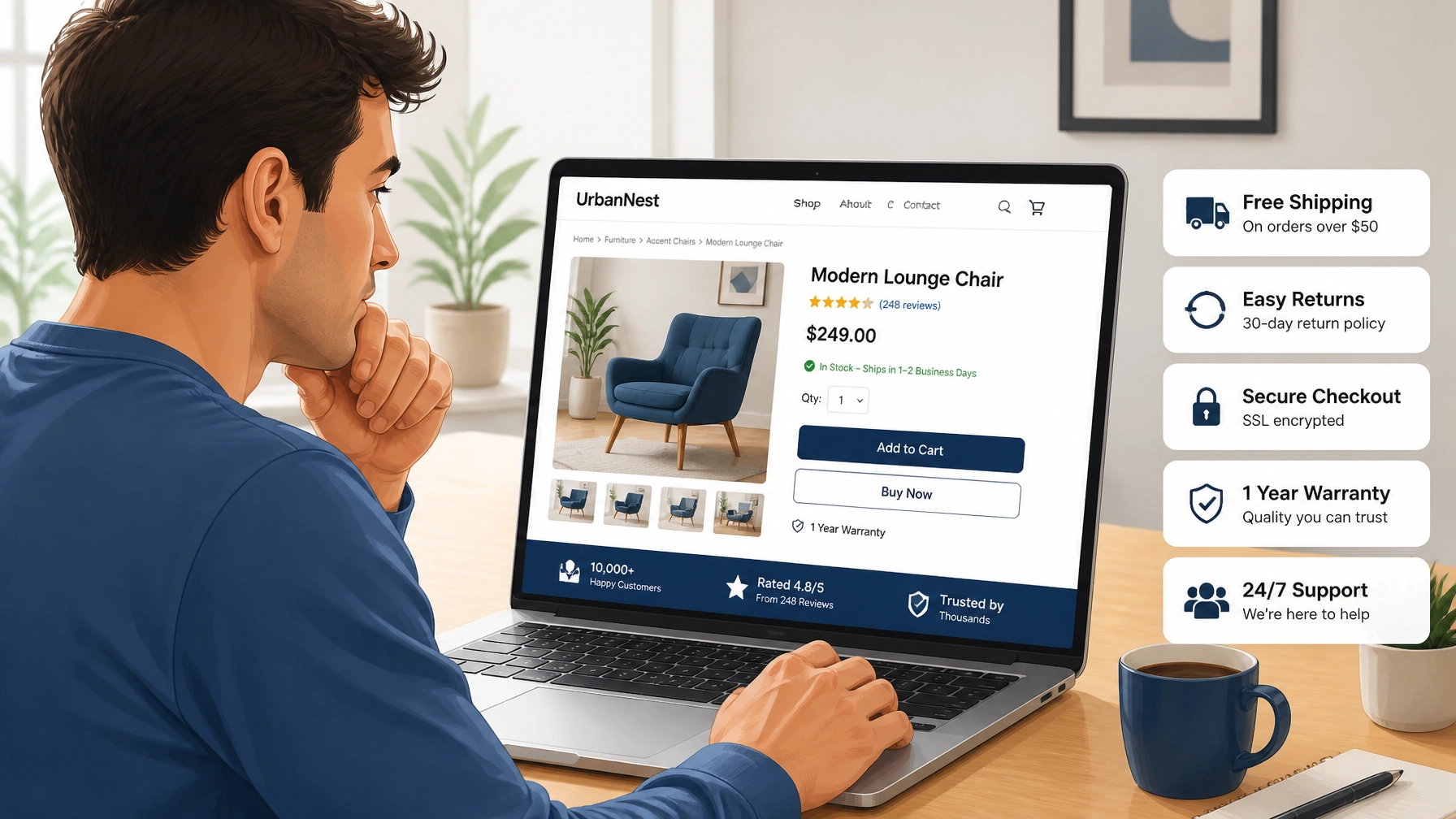
In a digital-first world, your product page is a curated hallucination. You show the product in the best possible light, often with professional studio equipment that masks the realities of daily use. When that product arrives, the customer immediately begins a process of “confirmation or disconfirmation.”
If the product matches the expectation, you’ve met the baseline. If it exceeds it, you’ve started to build loyalty. However, if the reality falls short, even by a small margin, you trigger a psychological phenomenon known as cognitive dissonance. This isn’t just a minor annoyance; it is the primary driver of the returns and negative reviews that plague growing e-commerce stores.
Research suggests that this gap is more than just a feeling; it is a measurable business risk.
Recent consumer behavior studies indicate that post-purchase dissonance explains nearly 79.5% of the variance in post-purchase behavior, including whether a customer returns an item, complains to support, or switches to a competitor for their next purchase. In online retail, where touch and feel are absent until delivery, return rates often hover around 25%, nearly triple that of traditional brick-and-mortar stores.
The Asymmetry of the Experience
The Reality Gap is governed by a brutal asymmetry. A positive post-purchase experience is often seen as “meeting the requirement.” The customer expected a good product, and they got one. It feels neutral. But a negative experience, a delayed shipment, confusing instructions, or a product that looks nothing like the photo, is highly memorable.
One bad unboxing can erase five good marketing touchpoints. You might have had the perfect email sequence and a flawless mobile site, but if the box arrives crushed and the product feels “cheap” compared to the price, that’s the only thing the customer will remember. This is why brands often see a high “one-and-done” rate despite having high initial conversion metrics. If you aren’t looking at the right data, you might be optimizing for a first-time sale that actually costs you money in the long run.
To understand how to bridge this gap, you must look at how the digital promise compares to the physical reality across your entire customer journey.
| Factor | Pre-Purchase Promise | Post-Purchase Reality |
|---|---|---|
| Product Imagery | Studio lighting, perfect angles, professional styling. | Real-world utility, natural lighting, daily wear and tear. |
| Description Accuracy | Feature-heavy, aspirational, and benefit-driven. | Practicality: “Does it actually solve the problem I had?” |
| Packaging | High-end digital renders or logo-centric mockups. | Protective quality, ease of opening, and waste management. |
| Instructions | Often generic or promised as “intuitive.” | Tangible, step-by-step clarity in the heat of assembly. |
| Return Process | A “Hassle-Free” icon in the footer. | The actual labor of printing a label and visiting the post office. |

Reducing Friction Through Product Clarity
The best way to bridge the Reality Gap is to stop over-promising and start “pre-aligning.” Modern customers are savvy; they know that studio photos are a best-case scenario. You can actually build more trust by showing the product in its “imperfect” state.
For example, a DTC furniture brand reduced their return rate by 30% by simply adding a short, unedited “real world” video to their product pages. This video showed a person of average height sitting on the sofa in a living room with standard lighting. It wasn’t as “beautiful” as the hero shot, but it closed the gap. Customers knew exactly what was arriving, and their expectations were grounded in reality rather than aspiration.
Similarly, a home goods brand transformed their unboxing into a social sharing moment by including a “Quick Start” card that addressed the most common point of confusion mentioned in their 3-star reviews. By proactively solving the “Reality Gap” before the customer even felt it, they turned potential frustration into a moment of brand advocacy.
The Strategic Value of the Delivery Experience
Your delivery partner is, for all intents and purposes, part of your marketing team. The moment the package hits the doorstep is a high-emotion event. If you treat shipping as a cost center to be minimized, you are likely creating friction that kills your Lifetime Value (LTV).

Strategic brands use this window to reinforce trust. This includes:
- Predictive communication: Telling the customer exactly when the package will arrive before they have to ask.
- Packaging that protects the promise: Ensuring the outer box reflects the quality of the inner product.
- The “Surprise and Delight” factor: Including a small, unexpected physical touchpoint that wasn’t mentioned on the product page.
These aren’t just “nice-to-haves.” They are structural components of a retention strategy. If you are struggling to understand which parts of your funnel are actually driving growth versus just creating noise, it may be time to re-evaluate how you interpret your analytics. Much like our analysis in The Wrong Metric Hypothesis, optimizing for the wrong signal (like raw conversion rate) can blind you to the reality of customer dissatisfaction happening just outside your dashboard’s view.
Why the Winners of 2026 Focus on Proof
The e-commerce landscape is shifting away from the “acquisition at all costs” model. As the cost of attention continues to rise, the brands that thrive are the ones that turn every customer into a repeat buyer. This requires a shift in mindset: you must stop viewing the customer as a “conversion” and start viewing the product delivery as the “moment of truth.”
By closing the Reality Gap, you reduce the psychological cost of the purchase. When a customer knows that what they see is exactly what they will get, the friction of the next purchase drops to near zero. Trust is the only currency that doesn’t depreciate in a crowded market.

To succeed, you must listen to what your customers are telling you through their post-purchase behavior. Are they returning specific items at a higher rate? Is there a common thread in their reviews? As we explored in The Listening Edge, the brands that win are those that can translate these signals into strategic pivots.
The Reality Gap is where your brand lives or dies. If you focus on making the proof as powerful as the promise, you won’t just make a sale, you’ll build a business.
What is the “Reality Gap” in e-commerce?
The Reality Gap refers to the difference between a customer’s expectations of a product (formed by marketing, photos, and descriptions) and the actual experience they have once the product is delivered. A large gap often leads to buyer’s remorse and high return rates.
How does post-purchase dissonance affect my brand?
Cognitive dissonance is the mental discomfort felt when expectations don’t match reality. In e-commerce, this leads to negative word-of-mouth, fewer repeat purchases, and increased customer service inquiries. It is a major driver of “one-and-done” customers.
Why is the unboxing experience so important?
Unboxing is the first physical interaction a customer has with your brand. It is the moment where your digital promise is confirmed or denied. A thoughtful, high-quality unboxing can reinforce trust and encourage customers to share their experience on social media.
How can I reduce my store’s return rate?
Reducing returns starts with better expectation management. Use “real-world” photography, include videos of the product in use, provide detailed and honest descriptions, and ensure your sizing or technical specifications are as accurate as possible.
Can packaging influence my customer lifetime value (LTV)?
Yes. Packaging that is secure, branded, and easy to open reduces post-purchase friction. When the delivery experience is smooth and the product arrives in perfect condition, customers are significantly more likely to trust the brand for future purchases.