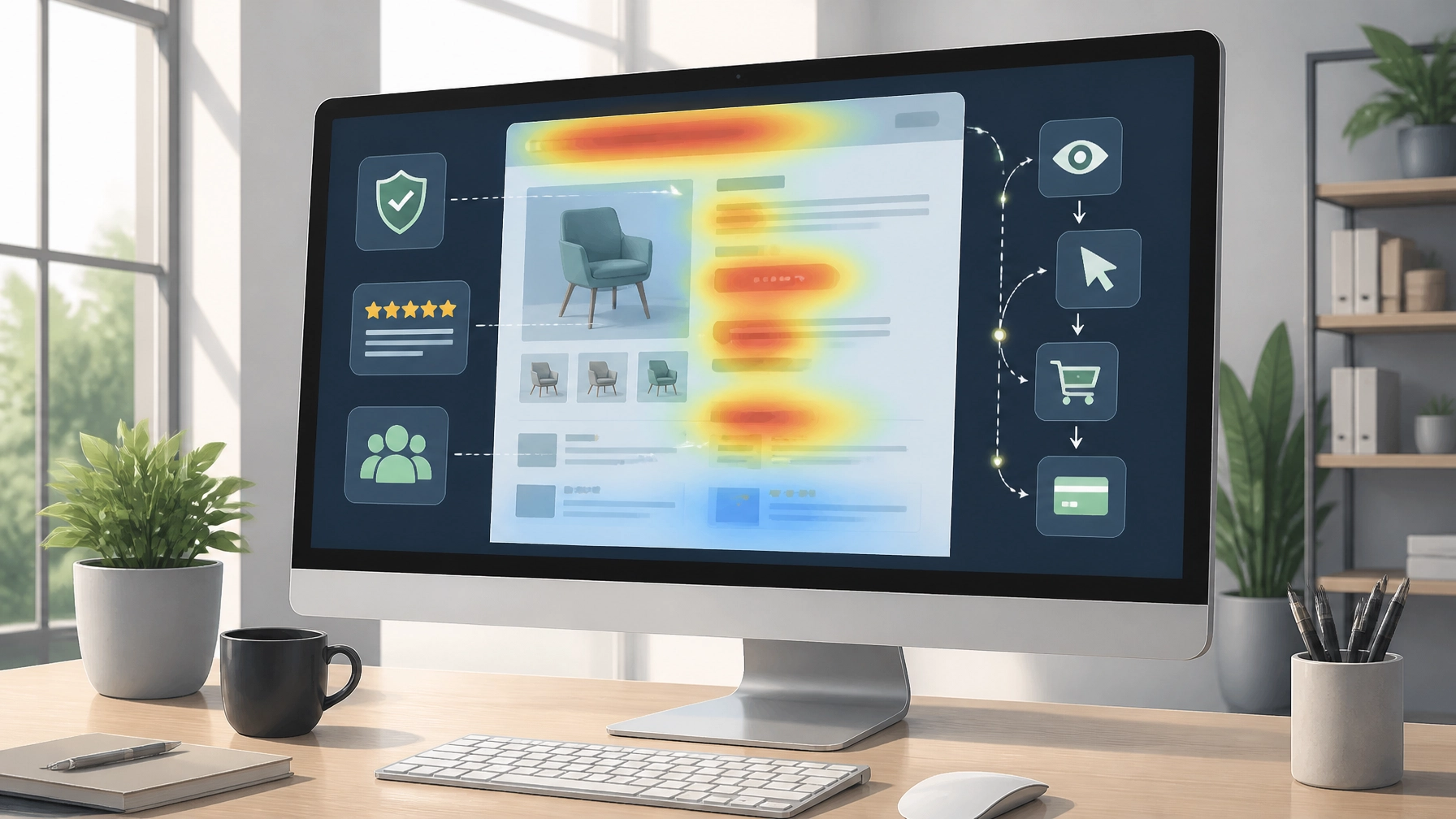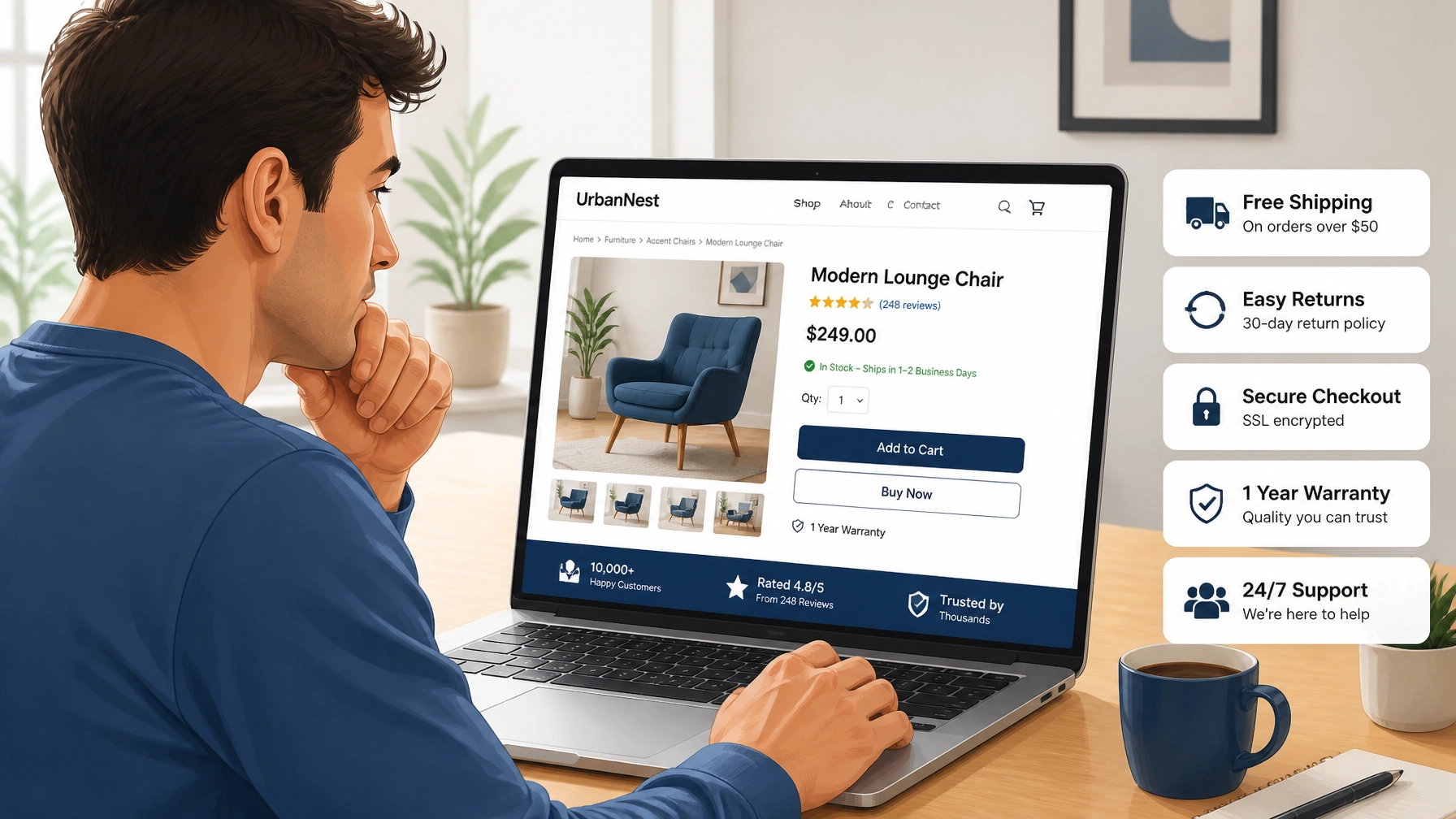
The price tag isn’t what’s stopping them. It’s the invisible cost of choosing wrong.
Every time a visitor lands on your e-commerce store, adds an item to their cart, and then silently closes the browser tab, you assume the price was too high. You check your analytics, look at your conversion rates, and immediately reach for the discount lever. You spin up a 15% off coupon, run a weekend flash sale, or slash your margins.
Sometimes it works. More often, it just trains your audience to wait for the next markdown while eating away at your bottom line.
In practice, the monetary price is only half of the transaction. Every online purchase carries a second, entirely invisible cost: the psychological price tag. This hidden currency is made of doubt, anxiety, and the exhausting mental labor of making a choice in a digital marketplace overflowing with alternatives.
When shoppers hesitate, they aren’t usually calculating whether your product is worth seventy-four dollars instead of sixty-nine dollars. They are calculating the emotional risk of making a mistake. Understanding this distinction is the single most powerful shift you can make in your e-commerce marketing strategy.
What Is the Psychological Price Tag?
When you buy online, you aren’t just exchanging currency for an object. You are entering into an emotional contract. You are betting your hard-earned money that the item arriving in a cardboard box will match the flattering studio photography on your screen, solve your specific problem, and leave you feeling smart rather than foolish.
That mental calculation happens in milliseconds, but it weighs heavily on conversion rates. If the psychological risk outweighs the perceived reward, no discount code in the world will save the sale.
“Price is read as value versus pain, not just a number; it instantly cues a smart buy or an expensive risk. When purchase anxiety rises, the brain activates defensive pain centers that override rational calculations of monetary savings.”
To fix cart abandonment and low conversion rates, you have to break down what actually makes up that psychological price tag.
The Six Components of Purchase Hesitation
When customers freeze at checkout, they are reacting to one or more of six hidden psychological costs. If your store fails to address these friction points, your visitors will default to the safest possible choice: doing nothing.

Here is what your shoppers are actually wrestling with behind the screen:
- Regret Risk: “Will I still want this tomorrow, or will it sit unused in my closet?” This is the fear of future buyers remorse, amplified by the permanence of online orders.
- Quality Doubt: “Is this brand actually legitimate, or is this targeted ad hiding cheap materials?” Without physical touch, skepticism is the default human setting.
- Return Anxiety: “If this doesn’t fit or work, am I going to be trapped in a nightmare customer service loop to get my money back?” Complex return policies act as a silent repellent.
- Social Judgment: “Will my partner, peers, or colleagues think I wasted money on this?” Perception matters, especially for high-ticket or lifestyle purchases.
- Decision Fatigue: “Between ten different colors, four bundles, and two shipping speeds, I have no idea which one is right.” As explored in our breakdown of the cognitive load trap, overwhelming choices lead directly to paralyzed shoppers.
- Opportunity Cost: “If I spend my budget here, will I regret not having those dollars for something better next week?”
When these anxieties stack up, the psychological price becomes too high to pay.
Why Discounting Is the Wrong Cure for Psychological Pain
Most online stores treat every conversion problem as a pricing problem. If sales dip, they drop margins.
This approach is fundamentally flawed because discounts only address the monetary price. If a customer is terrified that a skincare serum will break them out or that a piece of furniture won’t fit their living room layout, cutting the price by twenty percent doesn’t remove that fear. In fact, deep discounting can paradoxically increase anxiety by signaling desperation or inferior quality.
Here is how a superficial discount strategy compares to a psychological price reduction approach:
| Dimension | Monetary-First Strategy | Psychological Price Reduction Strategy |
|---|---|---|
| Primary Lever | Coupon codes, flash sales, margin cuts | Trust signals, risk reversal, clarity |
| Customer Perception | “Is this lower quality now?” | “This brand stands behind their product.” |
| Return Policy | Short windows, restrictive restock fees | Generous, frictionless, transparent |
| Product Presentation | Static studio photos, dense specs | Contextual proof, user validation, AR tools |
| Long-Term Impact | Trains buyers to wait for sales, erodes brand equity | Builds long-term loyalty and pricing power |
When you stop fighting over pennies and start engineering psychological safety, everything changes.
Two Ways Brands Lower the Psychological Price
Reducing the invisible cost of choosing doesn’t require reinventing your product catalog. It requires changing how you present certainty to your buyer.
1. Removing Spatial and Financial Risk in Furniture
Consider a mid-market e-commerce brand selling modern home furnishings. Their conversion rate was stuck at 1.4%, and despite running aggressive seasonal promotions, cart abandonment remained stubbornly high. Shoppers loved the aesthetic in ads, but stalled out at checkout because buying a $1,200 sofa online feels like a gamble.
Instead of cutting prices, the brand restructured their entire pre-purchase experience. They introduced an augmented reality “See It in Your Room” mobile tool and backed it with a 365-day home trial with free, no-questions-asked return pickup. They didn’t lower the monetary price by a single dollar. Yet, conversions jumped by 35% within sixty days because the psychological price, the fear of making an expensive decorating mistake, was effectively erased.
2. Eliminating Choice Overload in Apparel
An online apparel brand was struggling with high traffic but mediocre average order values (AOV). Their catalog featured hundreds of variations across categories, turning every product page into a maze of dropdown menus and color swatches.
Recognizing that decision fatigue was killing their momentum, they introduced a curated “3-Piece Edit” collection alongside their main catalog. Instead of browsing fifty sweaters, shoppers were guided through a simple three-step visual bundle designed to work together seamlessly. AOV increased by 28% simply because customers felt confident and secure in their selection. This same principle of alignment connects deeply with what we observe in the certainty cascade.
How to Audit Your Store’s Psychological Friction
If you want to increase conversions without sacrificing your margins, start by auditing your customer journey for hidden anxiety.
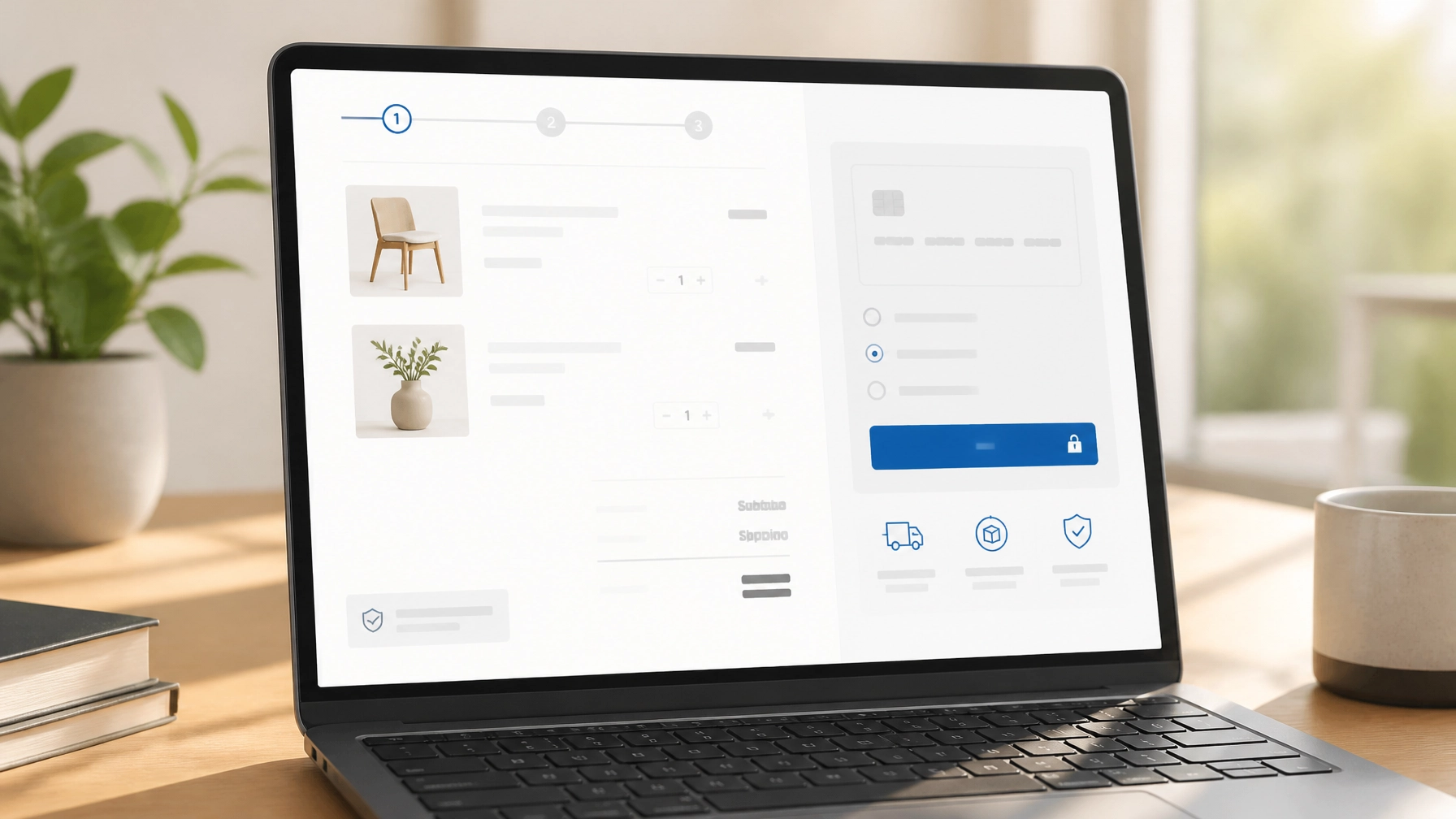
Ask yourself these three strategic questions:
- Where is the ambiguity? Look at your product pages. If a customer has to scroll through twenty paragraphs of specifications to answer a basic question about fit, durability, or compatibility, you are forcing them to do heavy mental work. Simplify your storytelling so the value is instantly grasped.
- Is your return policy a shield or a weapon? If your return policy is buried in legal jargon with restrictive timelines and restocking fees, you are broadcasting distrust. Make your guarantee your loudest marketing asset. As highlighted in our insights on the reality gap, the post-click and post-purchase experience dictates whether a first-time buyer ever returns.
- Are you offering choices or chores? Audit your product tiers and variant selections. If configuring a product feels like an algebra test, streamline your bundles so the right choice is obvious and effortless.
Pricing Power Belongs to the Brands That Make Choosing Safe
The brands that dominate their respective niches aren’t necessarily the cheapest. In fact, many command premium price points while enjoying industry-leading conversion rates.
They achieve this because they understand a fundamental truth of modern commerce: psychological safety is a premium you can charge for. When you remove the fear of regret, eliminate decision fatigue, and stand fearlessly behind your product quality, you stop competing in a race to the bottom.
You build an e-commerce engine where customers don’t just buy your products, they feel genuinely smart for having chosen you.

Frequently Asked Questions
What is the difference between monetary price and psychological price in e-commerce?
The monetary price is the literal dollar amount displayed on your product page. The psychological price is the invisible emotional cost the shopper pays, including the fear of making a bad purchase, decision fatigue, and the anxiety of dealing with poor customer service or returns.
Why do discounts sometimes fail to increase conversions?
Discounts only address the monetary price. If a shopper hesitates because they don’t trust your product quality or fear they won’t be able to return it easily, cutting the price doesn’t remove those underlying emotional barriers.
How does decision fatigue hurt e-commerce sales?
When shoppers are presented with too many options, variations, or complex pricing tiers, their cognitive load spikes. Instead of working through the choices, exhausted shoppers typically abandon their carts or leave the site entirely.
How can online stores reduce return anxiety without losing money?
You can reduce return anxiety by making your return policy exceptionally clear, visible, and straightforward right on the product page. Paradoxically, brands with generous and transparent return policies often experience lower return rates because customers feel far more confident at the moment of purchase.
Does focusing on psychological safety allow brands to raise prices?
Yes. When you successfully remove purchase friction, establish strong trust signals, and make buying feel safe and effortless, price becomes a secondary concern. Customers are consistently willing to pay a premium to buy from brands they completely trust.
What is the first step an ecommerce brand should take to reduce psychological friction?
Start by reviewing your highest-abandoned checkout steps and product pages through the eyes of a first-time visitor. Identify where questions arise about sizing, quality, or guarantees, and place clear, reassuring answers directly at the point of decision.