Table of Contents
- Why Google Maps Matters for Plumbers
- Optimize Your Google Business Profile from the Ground Up
- Service Area Business vs. Brick-and-Mortar: What’s the Difference?
- Build Trust Through Strategic Review Acquisition
- Why Local Citations Still Matter in 2026
- Upload Photos That Actually Convert
- Keep Your Profile Active with Google Posts
- Q&A
You’re a plumber. You fix pipes, clear drains, and save homeowners from midnight water disasters. What you probably don’t want to do is spend thousands on Google Ads just to get your phone to ring.
Here’s the good news: you don’t have to. The Google Map Pack, that prime real estate showing three local businesses at the top of search results, captures over 44% of clicks for local searches. And ranking there doesn’t require a single dollar in ad spend.
This guide breaks down exactly how to dominate Google Maps organically, so you can generate qualified leads without touching Google LSA or PPC.
Why Google Maps Matters for Plumbers
When a homeowner’s toilet overflows at 7 AM, they’re not browsing through pages of search results. They’re looking at the Map Pack, the three businesses Google surfaces immediately based on proximity, relevance, and prominence.
For plumbers, this visibility is everything. Unlike restaurants or retail stores where customers might plan ahead, plumbing searches are often urgent. The business that shows up first gets the call.
| Google Maps Ranking Factor | What It Means for Plumbers |
|---|---|
| Relevance | How well your profile matches search intent |
| Distance | Proximity to the searcher’s location |
| Prominence | Reviews, citations, and overall online presence |
The goal is to optimize for all three factors simultaneously. That starts with your Google Business Profile.
Optimize Your Google Business Profile from the Ground Up
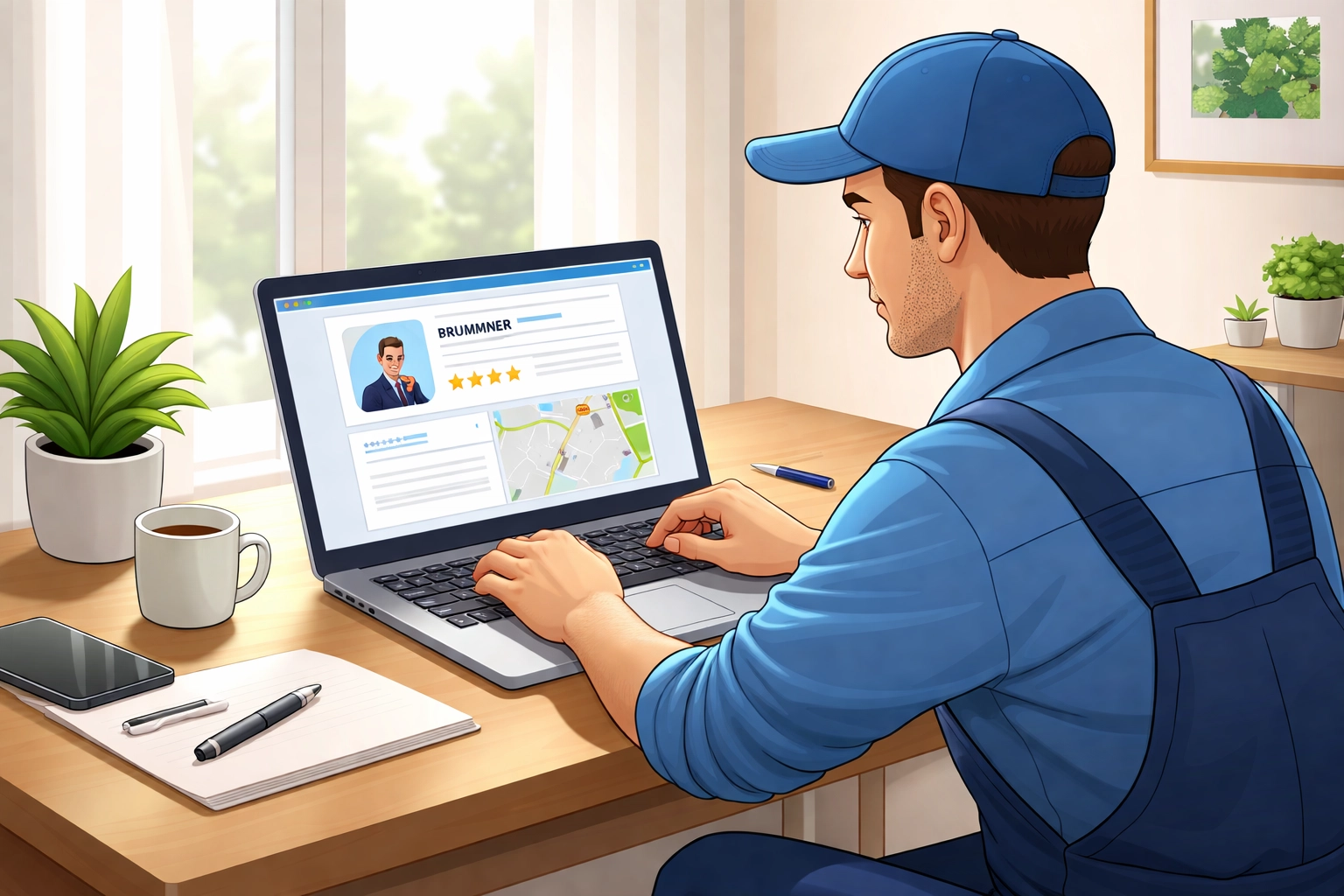
Your Google Business Profile (GBP) is the foundation of your Maps visibility. A half-completed profile signals to Google, and potential customers, that you’re not serious about your business.
Choose the Right Categories
Your primary category should be “Plumber.” But don’t stop there. Google allows you to add secondary categories that expand your visibility for related searches:
- Plumbing Drain Service
- Water Heater Installation Service
- Gas Installation Service
- Septic System Service
- Emergency Plumber
Each category you add gives Google more context about what you offer. Be specific and accurate, adding irrelevant categories can hurt your rankings.
Write a Keyword-Rich Business Description
Your business description is prime real estate for local keywords. Instead of generic copy like “We’re a family-owned plumbing company,” get specific:
“Serving the greater Austin area for over 15 years, we specialize in emergency leak detection, tankless water heater installation, and residential drain cleaning. Available 24/7 for Austin homeowners who need fast, reliable plumbing repairs.”
Notice how location and services are woven naturally into the description. This helps Google understand exactly who you serve and what you offer.
Add Every Service You Offer
The Services section of your GBP lets you list specific offerings with descriptions. Don’t just add “Leak Repair”, expand it:
- Emergency Water Leak Detection and Repair: Fast response for burst pipes, hidden leaks, and water damage prevention
- Tankless Water Heater Installation: Energy-efficient upgrades for homes switching from traditional tanks
- Drain Cleaning and Hydro Jetting: Professional clearing for stubborn clogs and buildup
Detailed service listings give Google’s algorithm clarity on what you offer, improving your chances of appearing for specific searches like “tankless water heater installation near me.”
For a deeper dive into profile setup, check out our Google Business Profile Optimization 101 guide.
Service Area Business vs. Brick-and-Mortar: What’s the Difference?
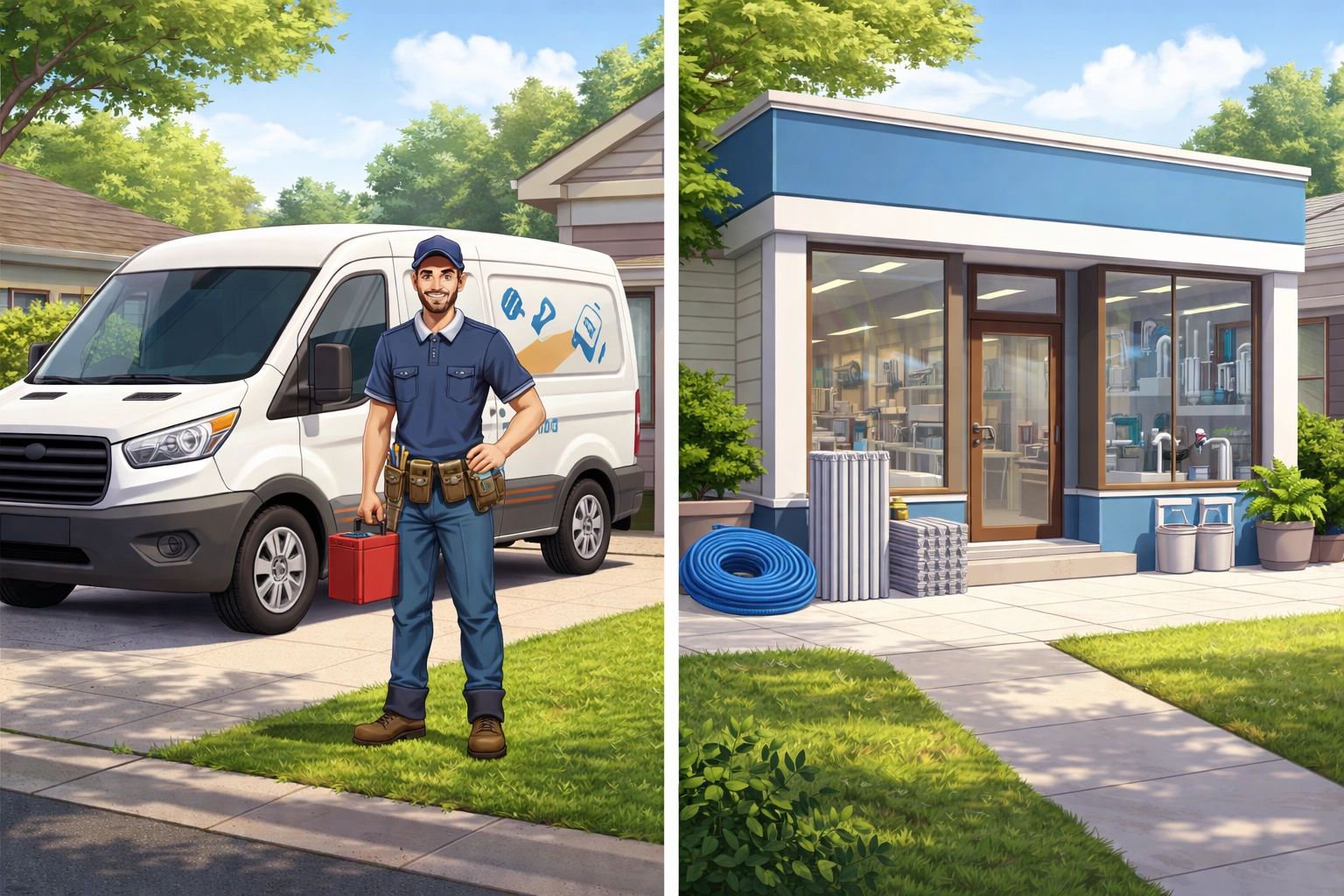
Most plumbers operate as Service Area Businesses (SABs), you go to your customers rather than them coming to you. This distinction matters for how you set up your GBP.
Setting Up as a Service Area Business
If you don’t have a storefront where customers visit, you should:
- Hide your address in GBP settings while still listing your service areas
- Define your service area by cities, zip codes, or a radius around your base location
- Avoid using a P.O. Box or virtual office address, Google will likely suspend profiles using these
Google allows you to list up to 20 service areas. Be strategic: only include areas you can realistically serve with competitive response times.
The Hybrid Approach
Some plumbing companies operate both ways, they have a physical location customers can visit for supplies or consultations, but also travel for service calls. In this case:
- Keep your address visible
- Still define your service areas
- Make sure your hours reflect when customers can actually visit
The key is accuracy. Misrepresenting your business type can lead to suspension, and recovering from that is a headache you don’t need.
Build Trust Through Strategic Review Acquisition
Reviews are the social proof that turns a Maps listing into a phone call. They also directly influence your ranking in the Local Pack.
Why Reviews Matter More Than You Think
Google’s algorithm weighs reviews heavily when determining prominence. A plumber with 200 reviews averaging 4.8 stars will almost always outrank a competitor with 15 reviews at 5 stars.
But volume isn’t everything. Google also considers:
- Recency: Fresh reviews signal an active, thriving business
- Keywords in reviews: When customers mention specific services (“fixed my water heater fast”), it reinforces your relevance
- Response rate: Businesses that respond to reviews demonstrate engagement
How to Get More Reviews Without Being Pushy
The best time to ask for a review is immediately after a successful job. Your customer is relieved, grateful, and still thinking about you. Here’s a simple approach:
- Send a follow-up text or email within 24 hours thanking them for their business
- Include a direct link to your Google review page (you can create this in your GBP dashboard)
- Keep the ask simple: “If you have 30 seconds, a quick Google review helps other homeowners find us”
Avoid offering incentives for reviews, Google prohibits this, and it can backfire.
Responding to Reviews (Yes, Even the Bad Ones)
Every review deserves a response. For positive reviews, a brief thank-you reinforces the relationship. For negative reviews, your response is really for future customers reading it.
Stay professional, acknowledge the concern, and offer to resolve the issue offline. A thoughtful response to a one-star review can actually build trust, it shows you take customer satisfaction seriously.
For advanced strategies, see our guide on Review Management 2.0.
Why Local Citations Still Matter in 2026
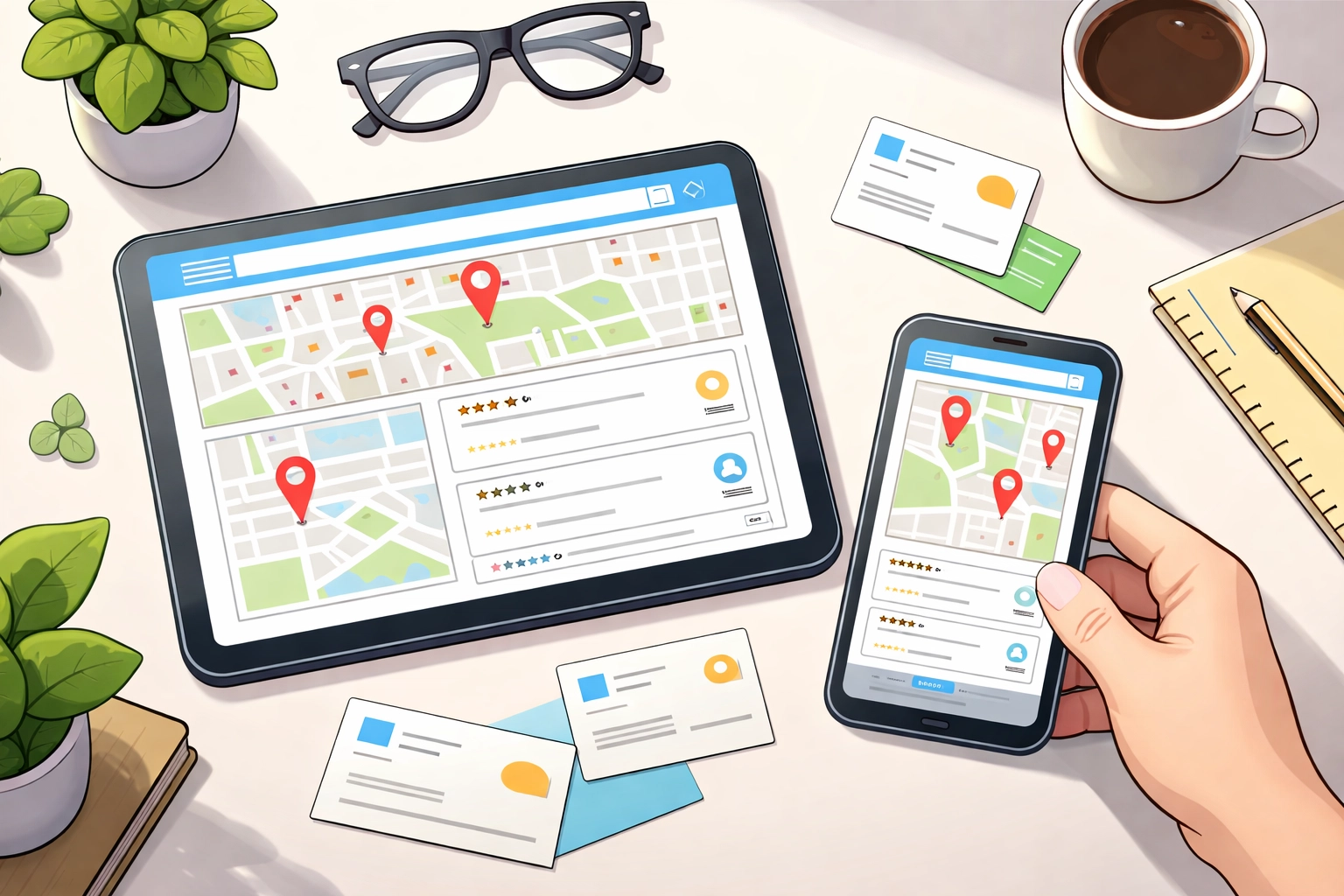
A citation is any online mention of your business name, address, and phone number (NAP). These appear on directories like Yelp, Angi, HomeAdvisor, the Better Business Bureau, and industry-specific platforms.
The NAP Consistency Rule
Your NAP information must be identical everywhere it appears. That means:
- Same business name (don’t use “Joe’s Plumbing” on Google and “Joe’s Plumbing LLC” on Yelp)
- Same address format (consistent use of “Street” vs. “St.”)
- Same phone number across all platforms
Inconsistent citations confuse Google and erode your local search authority. Audit your listings quarterly to catch discrepancies.
Where to Build Citations
Focus on quality over quantity. Start with these high-authority platforms:
- Google Business Profile
- Yelp
- Angi (formerly Angie’s List)
- HomeAdvisor
- Better Business Bureau
- Local Chamber of Commerce
- Industry associations (state plumbing boards, trade organizations)
Each accurate citation reinforces your legitimacy and strengthens your Maps presence.
Upload Photos That Actually Convert
Plumbing businesses with photos receive 42% more requests for directions and 35% more website clicks. Yet most plumbers treat their GBP gallery as an afterthought.
What to Upload
Aim for at least 25 photos that showcase:
- Your team in uniform: Puts a face to the business and builds trust
- Branded vehicles: Shows professionalism and coverage area
- Before-and-after project shots: Demonstrates capability
- Equipment and tools: Signals expertise
- Your office or shop (if applicable): Adds legitimacy
Photo Optimization Tips
Before uploading, optimize each image:
- Compress file sizes using tools like TinyPNG for faster loading
- Use descriptive filenames with keywords (e.g., “austin-water-heater-installation.jpg”)
- Geo-tag photos when possible to reinforce location relevance
Fresh photos also signal activity. Upload new images monthly to keep your profile dynamic.
Keep Your Profile Active with Google Posts
Google Posts let you share updates, offers, and announcements directly on your GBP. They appear in your Maps listing and signal to Google that your business is active.
Effective posts for plumbers include:
- Seasonal reminders: “Winter’s coming, schedule your pipe insulation inspection”
- Service highlights: “Now offering trenchless sewer repair with minimal yard disruption”
- Community involvement: “Proud sponsor of the Austin Youth Soccer League”
Post weekly if possible. Each post stays visible for seven days, so consistency matters.
Dominating Google Maps without paid ads isn’t about gaming the system, it’s about building a legitimate, well-optimized local presence. Complete your profile thoroughly. Earn reviews consistently. Maintain citation accuracy across the web.
These fundamentals compound over time. A plumber who commits to this strategy for six months will see meaningful ranking improvements, and a steadier flow of organic leads.
If you’re struggling with visibility or unsure where to start, our team at Trust Media specializes in helping contractors build sustainable local search strategies.
What is the Google Map Pack, and why is it important for plumbers?
The Google Map Pack (or Local 3-Pack) displays three local businesses at the top of search results for location-based queries. For plumbers, appearing here is critical because most customers searching for plumbing services need help urgently and will call one of the top-listed businesses. The Map Pack captures over 44% of clicks for local searches.
How long does it take to rank in the Google Map Pack without ads?
Results vary based on competition in your area, but most plumbing businesses see measurable improvements within 3-6 months of consistent optimization. Factors like review velocity, citation building, and profile completeness all influence how quickly you climb the rankings.
Should I hide my address if I’m a service area plumber?
Yes. If customers don’t visit your physical location, Google recommends hiding your address and defining service areas instead. This prevents confusion and aligns with Google’s guidelines for Service Area Businesses.
How many reviews do I need to rank well on Google Maps?
There’s no magic number, but volume combined with quality matters. A business with 100+ reviews averaging 4.5 stars or higher typically outperforms competitors with fewer reviews. Focus on consistent acquisition: aim for 5-10 new reviews per month.
Can I rank in multiple cities on Google Maps?
You can define multiple service areas, but Google primarily ranks you based on proximity to the searcher. To improve visibility in specific cities, consider creating location-specific pages on your website and building local citations that reference those areas.