
For years, the digital marketing world was obsessed with one thing: the click. If someone clicked your ad, you won. If they didn’t, you lost. But as we move through 2026, we’ve realized that a click is often the most deceptive metric in your dashboard. It tells you that someone arrived, but it says absolutely nothing about why they stayed, or why they left five seconds later.
If you are still managing your marketing budget based on Click-Through Rates (CTR) alone, you are essentially flying a plane looking only at the fuel gauge while ignoring the horizon. You might have gas, but you have no idea if you’re about to hit a mountain. At Trust Media, we’ve shifted our focus toward behavioral insights because that’s where the real money is made.
Behavioral insights move past the “what” and dive deep into the “how” and “why.” How is a user moving through your site? Why did they stop scrolling right before your “Book Now” button? By answering these questions, you unlock a level of ROI that simple tracking can’t touch.
The Click is a Handshake; Behavior is the Conversation
Think of a click as a handshake at a networking event. It’s a start, but a handshake doesn’t close a deal. You need to know if that person is actually interested in what you’re saying or if they’re just looking for the nearest exit.
In the current landscape, “accidental clicks” and bot traffic still plague standard metrics. Behavioral analytics filters through that noise. Instead of just seeing 1,000 visitors, you see 200 visitors who spent three minutes reading your service page, scrolled 80% of the way down, and hovered over your contact form. That’s data you can actually use to grow a professional practice or a contracting business.
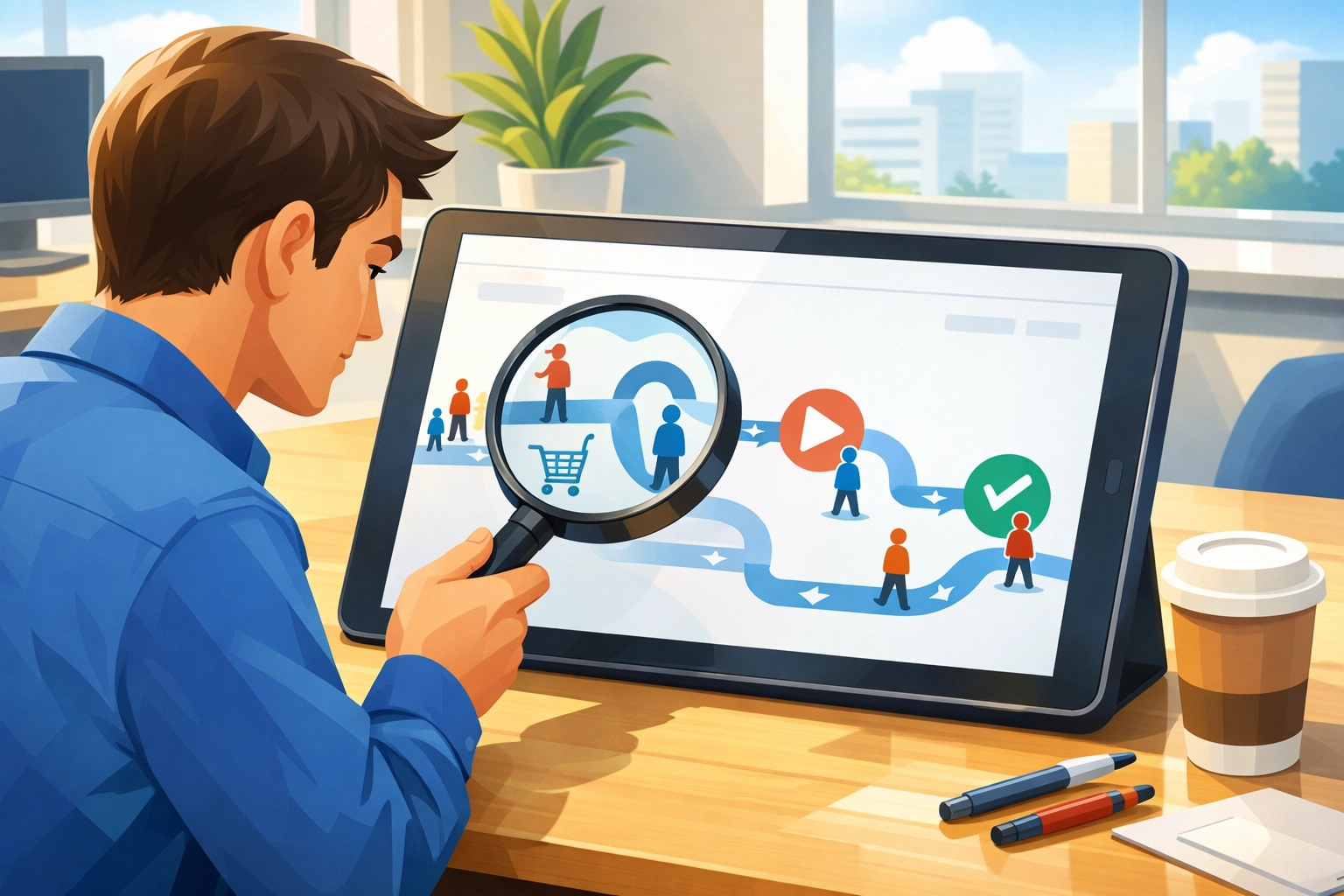
When you understand the intent behind the action, you can stop wasting money on “curiosity seekers” and double down on “high-intent buyers.” This is the core of what we call Lead Intelligence. It’s about using data-driven heatmaps and session recordings to see exactly where your leads are coming from and why they choose you.
Why Vanity Metrics are Costing You Money
Most business owners get a monthly report filled with “Green Up” arrows. More impressions! More clicks! More likes! But if those arrows don’t translate to more revenue, they are just vanity metrics.
The danger of vanity metrics is that they hide inefficiency. You might be getting clicks at $2.00 each, which looks great on paper. However, if those clicks have a 95% bounce rate because they are landing on a page that doesn’t answer their specific question, your actual cost per lead is astronomical.
“Behavioral targeting can increase click-through rates by 30-50% and lead to a 20% increase in ROI for digital advertising campaigns by reducing ad wastage by up to 35%.” , Digital Marketing Institute Behavioral Report 2025
By shifting your focus to engagement depth, you can identify these leaks in your funnel. For example, if you see that users are clicking your ad but leaving the site immediately, you don’t have a “traffic” problem, you have a “landing page” problem.
| Metric Type | Vanity Metric (The “What”) | Behavioral Insight (The “Why”) |
|---|---|---|
| Traffic | Total Hits / Clicks | Scroll Depth & Time-on-Page |
| Engagement | Social Likes / Shares | Heatmap “Hot Zones” & Hover Patterns |
| Conversion | Raw Form Submissions | Path to Conversion (Which pages they visited first) |
| Retention | Total Followers | Return Visitor Frequency & Feature Usage |
Heatmaps: Reading the Mind of Your Customer
One of the most powerful tools in our arsenal in 2026 is the heatmap. It’s a visual representation of where people are looking and clicking on your website. If you’re running a dental clinic or a law firm, your “Contact Us” button needs to be in the natural path of the user’s eye.
If your heatmap shows that everyone is clicking on an unclickable image of your team instead of the “Schedule Appointment” button, you have a massive opportunity to fix a bottleneck. That said, heatmaps aren’t just about clicks; they are about frustration. “Rage clicking”, when a user clicks something repeatedly because it isn’t working, is a massive red flag that behavioral insights catch instantly.

In practice, this allows us to optimize your site for what users actually do, rather than what we think they should do. This is especially critical when combined with a solid Local SEO strategy, as you want to ensure that once a local lead finds you, their journey to booking is frictionless.
The ROI of “Engagement Depth”
In 2026, the new standard for ROI is engagement depth. This measures how deeply a user interacts with your brand before they ever reach out. Are they watching your videos? Are they reading your blog posts about technical specifics?
Research shows that users spend an average of 2 minutes longer on personalized, behaviorally-targeted content than on standard static pages. This extra time isn’t just a stat; it’s the building of trust. For high-ticket services like home remodeling or specialized medical procedures, that trust is the difference between a lead and a customer.
By tracking these behaviors, you can build “intent scores” for your visitors. A visitor who has visited your pricing page three times and watched a case study video is 10x more valuable than a first-time visitor. You should be spending more of your ad budget retargeting that specific person.
Using Insights to Inform Your Digital Ads
Analytics shouldn’t just sit in a dashboard; they should dictate your next move. When we see specific behavioral patterns, we adjust the digital advertising strategy in real-time.
For instance, if behavioral data shows that visitors from Google Search behave differently than those from Facebook, perhaps the search visitors read more technical content while the social visitors watch more videos, we can tailor the landing pages for each source. This level of granularity is why behavioral insights consistently beat simple click tracking. It ensures your message matches the user’s mindset.

As a result, your cost per acquisition drops because you aren’t treating every click like a generic number. You are treating every click like a unique human being with specific needs.
Why This Matters for Local Businesses
If you’re a local business owner, you might think this level of analytics is only for big tech companies. That is a mistake. In fact, local businesses have the most to gain. Every dollar in a local marketing budget needs to work harder.
When you combine behavioral insights with a No-Fluff Guide to Local SEO, you create a dominant presence. You aren’t just appearing at the top of Google; you are providing an online experience that converts local searchers into loyal clients. You can see which neighborhood-specific pages are performing best and adjust your physical service areas accordingly.
In other words, behavioral insights take the guesswork out of growth. You stop wondering why your phone isn’t ringing and start seeing the exact point where people are getting stuck.
Common Questions About Behavioral Analytics
What is the difference between Google Analytics 4 and behavioral tracking tools?
Google Analytics 4 (GA4) provides the foundation of “what” happened (sessions, page views, events). Behavioral tracking tools like Hotjar or Microsoft Clarity provide the “how” through heatmaps and session recordings. Using them together gives you the full picture of user intent.
Does behavioral tracking slow down my website?
While adding any script to your site has a small impact, modern behavioral tools are designed to be “asynchronous.” This means they load in the background and don’t interfere with the user’s ability to see and use your site. The ROI gained from the insights far outweighs the negligible change in load speed.
Is behavioral tracking privacy-compliant in 2026?
Yes, as long as it is implemented correctly. Most reputable tools automatically mask sensitive information (like credit card numbers or passwords) in session recordings. You must ensure your privacy policy is updated to inform users that you use these tools to improve their experience.
How much data do I need before I can make decisions?
You don’t need millions of visitors. For most local businesses, even 100-200 recorded sessions on a specific landing page can reveal significant patterns, such as a broken link or a confusing headline that is causing people to leave.
Can behavioral insights help with my ad spend?
Absolutely. By identifying which traffic sources produce the highest “engagement depth,” you can reallocate your budget away from platforms that provide “cheap but hollow” clicks and toward the channels that actually drive intent and sales.