
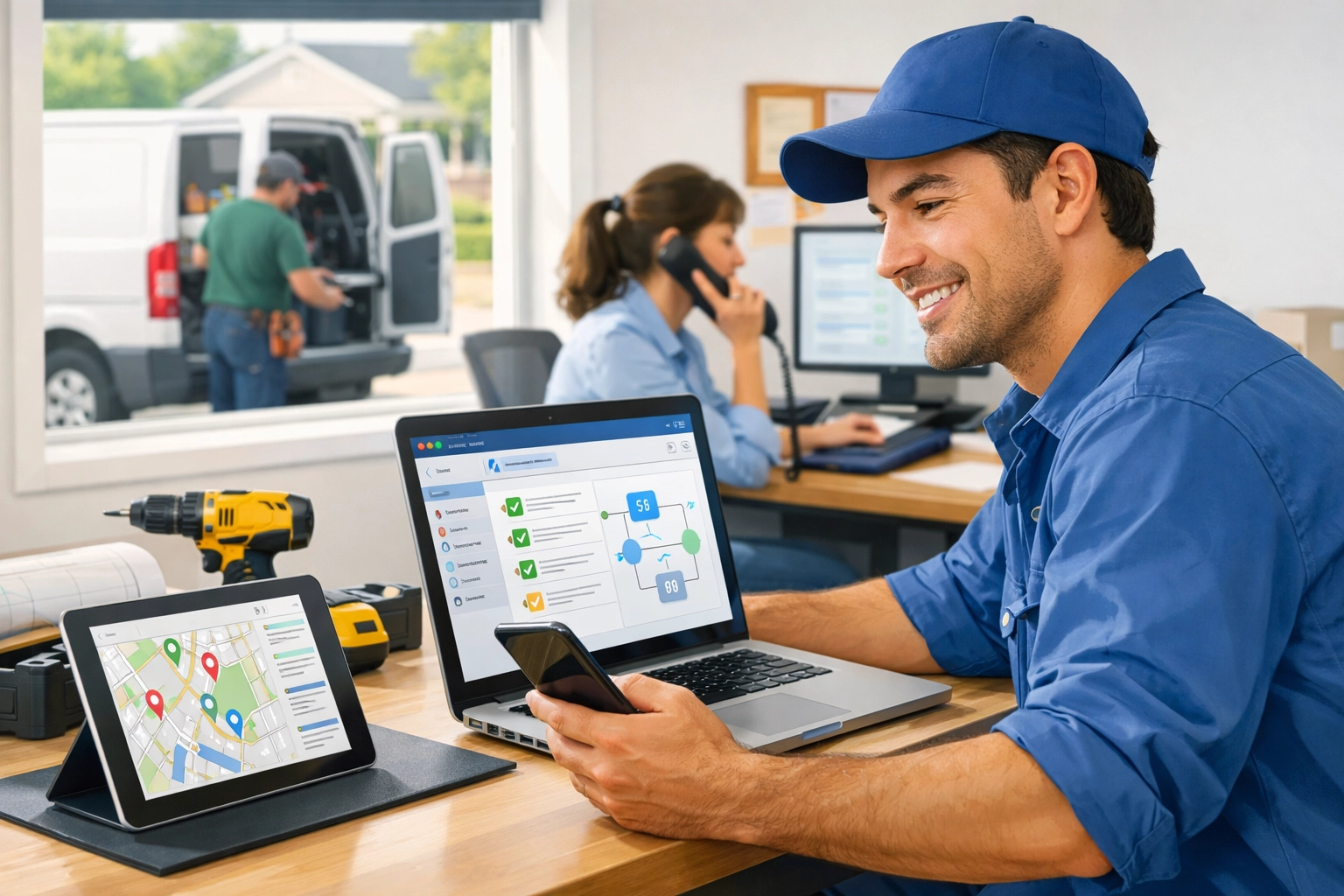
You are likely familiar with the “speed-to-lead” race. Whether you are running a plumbing business or managing an HVAC crew, the moment a homeowner realizes their basement is flooding or their AC is dead, the clock starts ticking. If you don’t respond within minutes, they move to the next name on the Google search results.
Managing these leads manually while you are on a job site is nearly impossible. This is where email automation transforms from a “nice-to-have” tool into a vital component of your growth strategy. By implementing automated workflows, you ensure that every inquiry is acknowledged and every past customer is nurtured, all without you having to lift a finger during a service call.
The Speed-to-Lead Gap in Local Services
The primary challenge for home service providers isn’t just getting the lead; it’s keeping the lead. When a potential customer fills out a form on your site, they expect an immediate response. Delaying that response by even thirty minutes can result in a 391% decrease in lead conversion rates.
Automation bridges this gap. A well-configured system triggers an instant “Welcome” or “Estimate Request Received” email. This simple step stops the customer from clicking back to Google to find another contractor. It establishes professional authority from the first second.
“A study by the Harvard Business Review found that companies that reached out to potential leads within an hour were seven times more likely to have a meaningful conversation with a key decision-maker compared to those that waited even sixty minutes.” , Harvard Business Review
By automating this initial touchpoint, you are effectively using a digital marketing agency for small business strategy on a DIY budget. You provide the high-touch experience of a large corporation while maintaining the personal feel of a local professional.
Boosting Google Maps SEO Through Post-Service Automation
Many contractors view email marketing as separate from their search engine rankings. In reality, they are deeply connected. One of the most powerful uses of email automation for plumbers and HVAC technicians is the “Review Request” sequence.
Google’s local algorithm heavily weighs the frequency, quantity, and recency of reviews. If you finish a job and forget to ask for a review, you’ve lost a valuable opportunity to boost your google maps seo. An automated email sent four hours after a job is marked “complete” in your CRM can include a direct link to your Google Business Profile.
| Benefit | Manual Outreach | Automated Systems |
|---|---|---|
| Response Time | 2-4 Hours (Average) | Instant (< 1 Minute) |
| Follow-up Consistency | Often Forgotten | 100% Execution Rate |
| Review Generation | Low / Inconsistent | High / Systematic |
| Customer Retention | Reactive | Proactive |
This systematic approach to gathering feedback is a cornerstone of google business profile optimization. When you consistently generate new reviews through email automation, Google sees your business as active and trustworthy, which naturally pushes you higher in the local 3-pack.
Seasonal Campaigns: Staying Top-of-Mind
For industries like HVAC or roofing, demand is often cyclical. You don’t want to wait for the first heatwave of the year to start thinking about your schedule. Local seo for hvac is highly competitive during peak seasons, making it more expensive to acquire new customers through ads.
Automation allows you to run “Pre-Season Tune-Up” campaigns. By segmenting your list based on past service dates, you can send automated reminders to customers who haven’t seen you in six months. This fills your calendar during the shoulder seasons and prevents the “feast or famine” cycle that plagues many small businesses.
This proactive approach is similar to how high-growth clinics use emerging tech to scale local leads. By using data to predict when a customer will need your services next, you remove the friction of them having to search for a “plumber near me” again. They already have your email in their inbox with a “Book Now” button.
Turning Leads into Sales with Nurture Sequences
Not every lead is ready to book an expensive installation immediately. Someone searching for “tankless water heater benefits” is in the research phase. If you simply give them a quote and walk away, you’ve wasted the lead.
A nurture sequence provides value over time. For example, you can create a 4-part email series that explains:
- The cost savings of energy-efficient units.
- What to expect during the installation process.
- How to maintain the new system.
- A limited-time discount for booking within 30 days.
This educational approach builds trust. By the time the homeowner is ready to pull the trigger, you are the clear expert in their eyes. This level of conversion-first strategy ensures that your website traffic isn’t just “window shopping” but actually contributing to your bottom line.
Technical Integration: The Local SEO Audit Connection
Before launching an aggressive email strategy, you need to ensure your digital foundation is solid. This is why a local seo audit is essential. If your website isn’t capturing emails effectively through “Lead Magnets” or contact forms, your automation software will have no data to work with.
When you audit your site, look for these key integration points:
- Pop-up offers: “Get $25 off your first service” in exchange for an email.
- Footer sign-ups: For seasonal maintenance tips.
- Checkbook integration: Linking your accounting software (like Quickbooks or Jobber) to your email platform (like Mailchimp or ActiveCampaign).
Integrating your service data with your marketing tools allows you to use predictive analytics to understand which customers are most likely to churn and which are ready for an upsell.
The Role of Personalization and Data
In 2026, generic “Dear Customer” emails don’t work. Automation tools now allow for deep personalization. You can include the customer’s address, the name of the technician who visited their home, and the specific brand of equipment they have installed.
Using this level of detail makes the email feel like a personal note rather than a marketing blast. For local seo for contractors, this personalization leads to higher engagement rates. Higher engagement rates often correlate with higher brand search volume, another signal to Google that your business is a local authority.
Whether you are focusing on seo for dentists or seo for chiropractors, the principle remains the same: the more you can automate the mundane tasks of communication, the more time you have to provide the actual service that wins you the 5-star review.
How long does it take to set up email automation for a small business?
Basic automation, such as a welcome email and a review request sequence, can usually be set up within a single afternoon. More complex nurture sequences or seasonal triggers may take a few days to draft and test, but once they are live, they require very little maintenance.
Does email marketing help with my Google Maps ranking?
Indirectly, yes. Email automation is one of the most effective ways to drive customers to leave reviews on your Google Business Profile. Since review frequency and sentiment are major ranking factors for the “Local 3-Pack,” a steady stream of reviews from email follow-ups will improve your visibility.
What is the best platform for contractor email automation?
For most local contractors, tools like Jobber or Housecall Pro offer built-in automation features. If you need more advanced marketing capabilities, Mailchimp, ActiveCampaign, or Constant Contact are excellent choices that integrate well with most website platforms.
Is email automation expensive?
Many platforms offer free tiers for the first 500 to 1,000 contacts. Even paid versions are generally affordable, often starting around $15–$50 per month. Considering the ROI of a single reclaimed lead or an upsold maintenance contract, the system usually pays for itself within the first month.
How often should I email my customers?
For home services, less is often more. Aside from transactional emails (receipts and reminders), a monthly newsletter or a seasonal promotion every three months is usually sufficient to stay top-of-mind without becoming a nuisance in their inbox.


