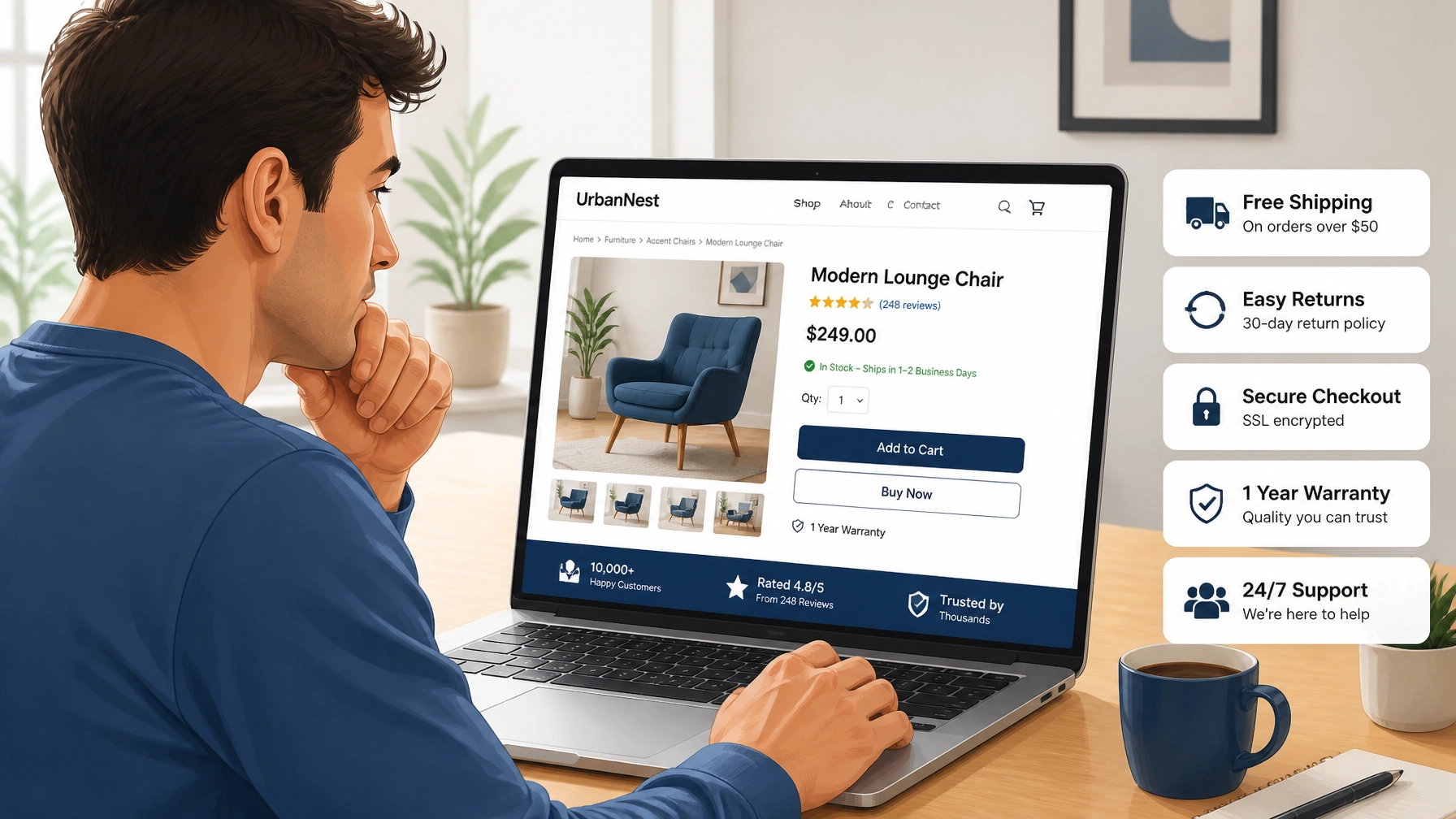
You’ve seen it in your analytics: the “hovering mouse.” A visitor arrives, navigates through your categories, finds a product they love, and adds it to their cart. Then, at the final threshold: the moment of transaction: they disappear.
Most e-commerce owners look at a 70% cart abandonment rate and assume it’s a pricing issue. They think, “If I just offer a 10% discount, they’ll come back.” But in 2026, the “Hesitation Gap” is rarely about the price tag. It’s about psychological friction.
Your customers aren’t ghosting you because they found a cheaper option. They are ghosting you because you failed to bridge the gap between intent and certainty. Every millisecond of hesitation is an opportunity for a customer to remember they have a mortgage to pay or that they might not actually need another pair of sneakers.
To win in modern e-commerce marketing, you must stop selling products and start selling confidence.
The Psychology of the “Almost” Purchase
Shopping is an emotional experience, but checking out is a logical one. When a customer moves from the product page to the checkout, their brain shifts from the “desire” phase (dopamine-driven) to the “risk assessment” phase (cortisol-driven).
This is where the Hesitation Gap opens. If your site doesn’t proactively answer the unasked questions in their head, the risk will always outweigh the reward. These questions usually fall into three buckets:
- Identity Risk: “Is this brand real? Will I get what I see?”
- Effort Risk: “How much work is this going to take? Do I have to create an account?”
- Future Risk: “What if it doesn’t fit? How hard is it to send back?”
According to data from the Baymard Institute, the average documented online shopping cart abandonment rate is 70.22%. While many shoppers are “just browsing,” a significant portion leave due to avoidable friction like forced account creation and complex checkout flows.
Bridging the Gap with Product Clarity
Confidence begins long before the checkout button. If your product detail page (PDP) is thin on details, the customer’s imagination fills in the gaps: usually with negative assumptions.

Clarity is the ultimate friction reducer. If a customer has to wonder about the dimensions, the material, or the shipping timeline, they are already one step closer to closing the tab. We often see brands focus too much on “lifestyle” photography and not enough on “utilitarian” photography. Your customers need to see the scale, the texture, and the fine details.
| Friction Point | The Hesitation Trigger | The Clarity Solution |
|---|---|---|
| Vague Specs | “Will this actually fit on my shelf?” | Use comparison objects or detailed measurement guides. |
| Hidden Costs | “Why is there a $15 shipping fee at the end?” | Show shipping estimates on the product page. |
| Thin Social Proof | “Does anyone actually like this?” | Prioritize photo reviews and “verified buyer” tags. |
| Stock Uncertainty | “Will this arrive in time for the weekend?” | Real-time inventory and “Arrives by” dates. |
By sharpening your SEO strategies to include detailed product schema, you don’t just help search engines; you provide the immediate data points customers use to validate their choice before they even click through to your site.
Eliminating the “Work” in Shopping
Every field in your checkout form is a hurdle. If you require a customer to create an account before they can give you money, you are essentially asking them to commit to a relationship before the first date.
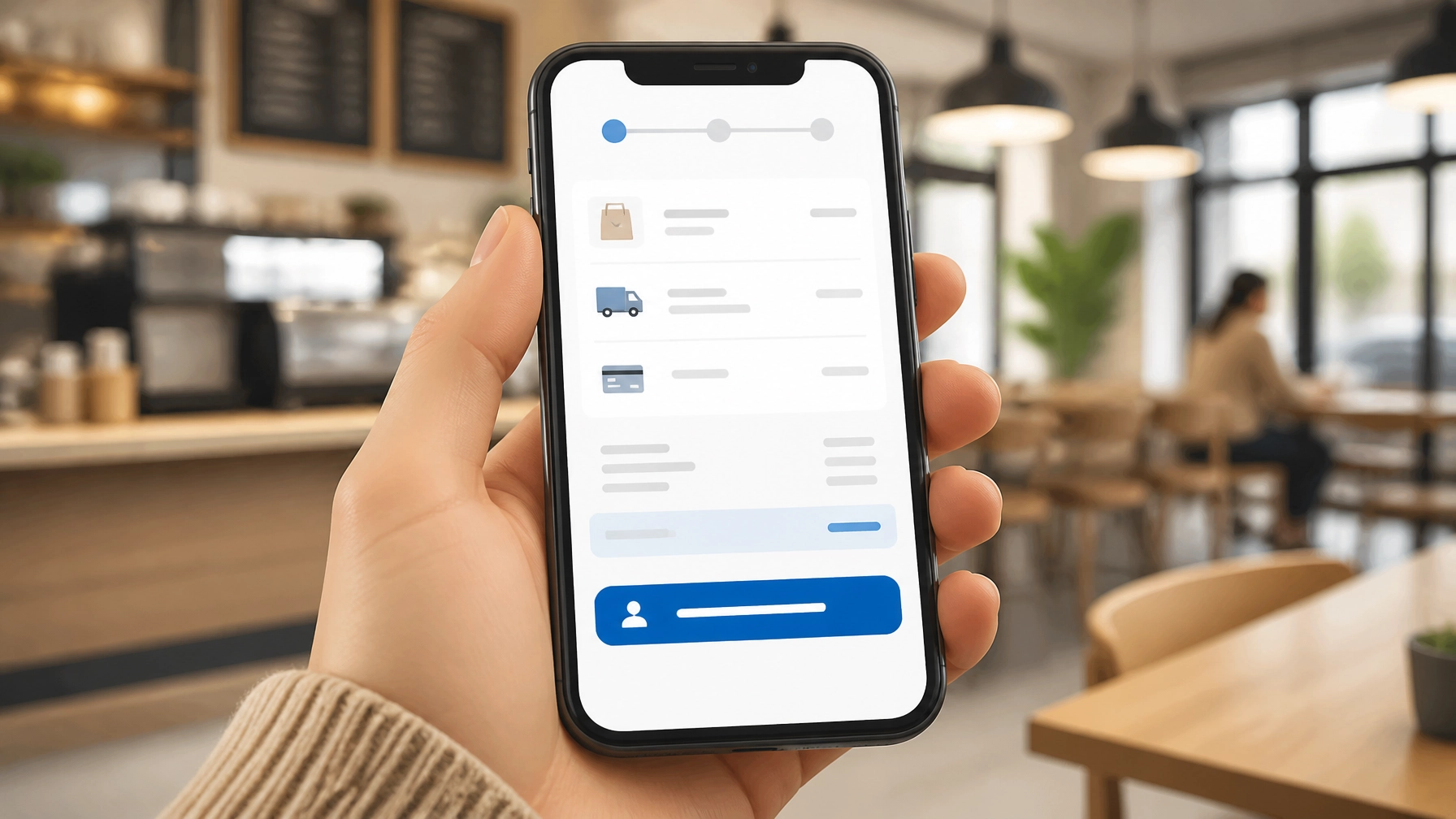
Modern customers suffer from “Account Fatigue.” They don’t want another password to remember. This is where website strategy becomes your most powerful conversion tool. Implementing guest checkout and one-click payment options like Apple Pay or Shop Pay doesn’t just make things faster; it removes the “Effort Risk” entirely.
When the transaction feels like a reflex rather than a task, the Hesitation Gap vanishes. This is particularly true for mobile shoppers, where every additional tap increases the likelihood of a distraction: a text message, a low battery warning: ending the session.
Post-Click Anxiety: The Silent Conversion Killer
The gap doesn’t always close when the payment is processed. Many shoppers hesitate because they are worried about what happens after they click buy. This is “Post-Click Anxiety.”
Will the tracking link work? Is the return policy a nightmare? If your site doesn’t clearly communicate these answers, the shopper will stay in a state of perpetual “maybe.”
Strategic e-commerce brands use their email marketing and site copy to build a safety net. This includes:
- A “No-Hassle” Return Policy: Don’t hide it in the footer. Put it near the Buy button.
- Live Chat Support: Real-time answers to small doubts can prevent large-scale abandonment.
- Transparent Timelines: “Ships in 24 hours” is more powerful than “Fast Shipping.”
By addressing these concerns upfront, you aren’t just selling a product; you are selling a frictionless experience. This level of transparency is what separates growing brands from those struggling with stagnant paid advertising returns.
Turning Data into Decision-Making
To bridge the Hesitation Gap, you must understand exactly where your specific customers are falling through. This requires a deep dive into your analytics and reporting.

Are people dropping off after seeing the shipping costs? That’s a transparency issue. Are they dropping off at the payment method screen? That’s a trust or options issue. Data tells you where the friction is; psychology tells you how to fix it.
At TrustMedia, we don’t just look at the “what”: we obsess over the “why.” By analyzing user behavior at a granular level, we help brands identify the subtle psychological triggers that are costing them revenue. Whether it’s a confusing navigation menu or a lack of trust signals at critical moments, these small gaps add up to significant losses over time.
Bridging the Hesitation Gap isn’t about one big change. It’s about a hundred small corrections that collectively tell the customer: “You are safe here. This is easy. You’ve made the right choice.”
How can I identify where shoppers are hesitating on my site?
The best way is to use heatmaps and session recordings. Look for “rage clicks” or “looping behavior” where users move back and forth between the cart and the product page. This usually indicates they are looking for a piece of information they can’t find.
Is free shipping the only way to reduce cart abandonment?
No. While free shipping is a massive motivator, transparency is more important. Most customers will accept a shipping fee if they know about it from the beginning. The “hidden” cost at the end of the checkout is what causes the most abandonment.
Why is guest checkout so important for e-commerce?
Forcing account creation adds significant cognitive load and effort. It forces a user to stop their “buying flow” to create a password and verify an email. Guest checkout allows them to complete the transaction while they are still in the “desire” phase of the purchase.
How do product reviews affect the Hesitation Gap?
Reviews act as “Identity Risk” insurance. Shoppers trust other customers more than the brand itself. Seeing that someone else received the product and was happy with it provides the social proof needed to overcome the fear of a bad purchase.
Does site speed impact customer hesitation?
Absolutely. A slow-loading checkout page creates a sense of technical instability. If the site feels “broken” or slow, the customer begins to worry that their payment information might not be secure or that their order won’t be processed correctly.