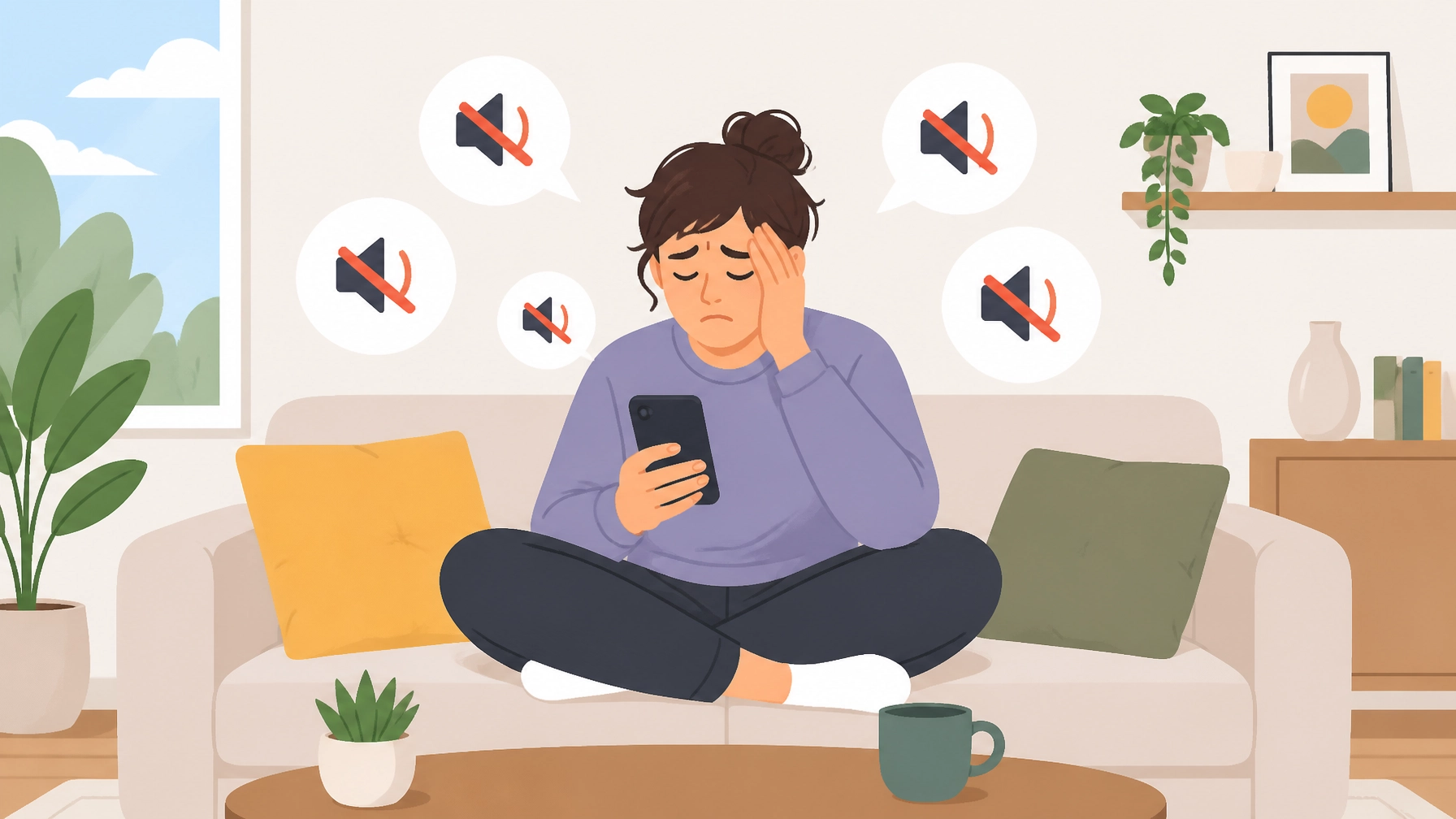
You’ve seen the metrics. Your reach is plateauing, your engagement rate is dipping, and despite your team’s best efforts to “stay consistent,” the silence from your audience is deafening. In 2026, the digital landscape has shifted from an attention economy to an attention defense economy.
Your customers aren’t just busy; they are exhausted. They are actively shielding themselves from the relentless noise of brand content that feels like a chore to consume. If your content is getting muted, it’s rarely because of the algorithm: it’s because you’ve failed to account for the psychology of the modern scroller. To win in this environment, you have to stop acting like a broadcaster and start acting like a partner.
The Reality of Content Fatigue in 2026
We have reached a tipping point. Recent data suggests that 32% of social media users now explicitly report experiencing social media fatigue, leading to burnout and stress. For the 18–34 demographic, that number jumps to a staggering 61%. People are spending over two hours a day on social platforms, but they are doing so with a finger hovering over the “Not Interested” button.
The average digital attention span has contracted to roughly 8.25 seconds. For Gen Z, you have about 6.5 seconds to prove that your post is worth the cognitive energy required to process it. When every brand is following the same “post 5 times a week” playbook, the result is a sea of sameness that the human brain is now evolutionarily wired to ignore.
“Audiences in 2026 have become ruthless gatekeepers of their own limited attention. They have migrated toward platforms and formats that feel real, immediate, and human, and away from curated corporate content.” : Industry Attention Report, 2026
This shift is what we call The Permission Paradox. You need attention to build trust, but you can only get attention once you’ve already proven you are trustworthy and relevant.
Why “More” is No Longer the Answer
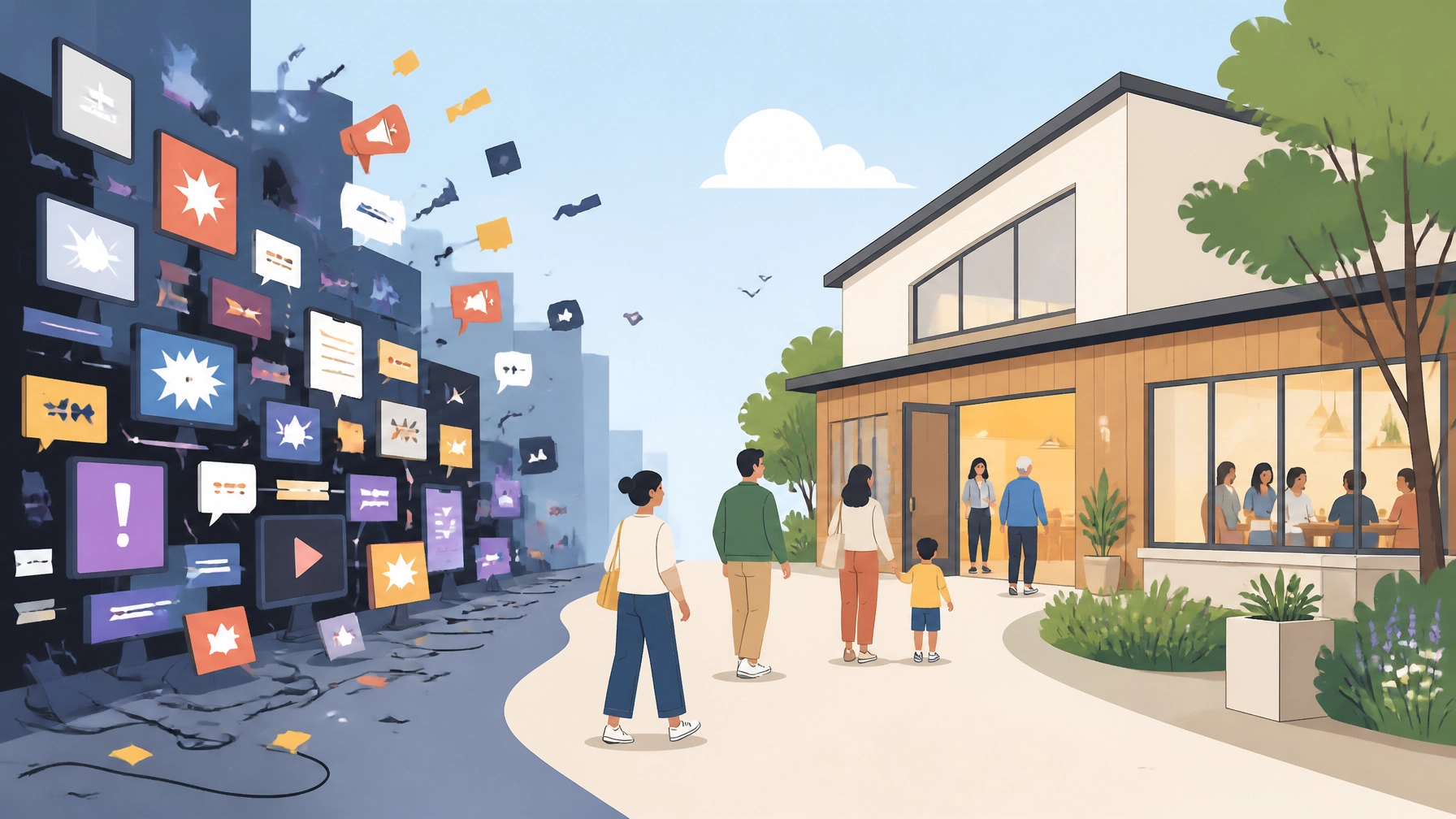
For years, the advice from every content marketing agency was simple: increase your frequency. But in a world where AI can generate infinite amounts of “good enough” content, volume is no longer a competitive advantage: it’s an irritant.
When you prioritize quantity over connection, you contribute to the noise. Modern audiences are looking for three specific things to break through their fatigue:
- Utility: Does this solve a problem I have right now?
- Authenticity: Does this sound like a human, or a committee-approved script?
- Calm: Does this content add to my stress, or provide a moment of clarity?
The rise of the “cozy” and “slow living” aesthetics on social media isn’t just a trend; it’s a psychological counter-response to overstimulation. Brands that can provide a sense of The Intelligence Layer: providing specific, high-value insights without the hype: are the ones earning the right to stay in the feed.
The Strategic Shift: From Public Theater to Dark Social
One of the most significant changes in audience behavior is the move toward “Dark Social.” While public engagement (likes and comments) is useful for reach, the real brand-building is happening in DMs, private Discord servers, and closed communities.
Users are retreating to these spaces because they feel safer and more controlled. For a digital marketing agency, this means your social strategy can no longer stop at the “Publish” button. You need to design content that invites a conversation, not just a click.
| Engagement Type | Public Feed (Discovery) | Dark Social (Conversion) |
|---|---|---|
| Primary Goal | Awareness & Entertainment | Trust & Decision Making |
| Content Style | Short-form video, Hooks, Visuals | In-depth answers, DMs, Resources |
| Success Metric | Shares, Saves, Views | Replies, Referrals, Intent signals |
| User Mindset | Passive, Scanning | Active, Intentional |
By balancing your presence across these two layers, you move from being a “distraction” in the feed to being a “resource” in the community. This requires sophisticated analytics and conversion tracking to understand how a user who saw a Reel on Monday became a customer after a DM conversation on Friday.

Practical Ways to Earn Attention Back
If you want to stop the “muting” and start the “engaging,” your strategy needs to evolve. Here is how we help our partners at TrustMedia navigate this transition:
1. Humanize the “Why,” Not Just the “What”
Stop posting product features. Start posting the philosophy behind the product. People don’t connect with a logo; they connect with the people who built it. Use faces, use real voices, and don’t be afraid of the occasional unpolished moment. In an AI-saturated world, the “flaws” are what prove you are real.
2. Implement Marketing Automation for Connection, Not Spam
Use marketing automation services to handle the repetitive tasks: like answering basic FAQs or segmenting your audience: so your human team can focus on real interactions. Automation should buy you time to be more human, not replace the human element entirely.
3. Focus on “High-Intent” Long-Form
While short-form video dominates time-on-platform, long-form content is where deep trust is built. We are seeing a “long-form reset” where fatigued users are rewarding intentional, educational content with much higher conversion rates. If someone spends 10 minutes watching your video or reading your guide, they aren’t just “aware” of you: they are considering you.
4. Create an Omnichannel Feedback Loop
As an omnichannel marketing agency, we know that social doesn’t exist in a vacuum. Your social content should inform your email strategy, and your customer service inquiries should inform your social content. This creates a seamless experience where the customer feels understood at every touchpoint.
Moving Toward a Frictionless Connection
The brands that will survive the next wave of social media fatigue are those that respect the user’s time. Every post should be a deposit into the “Trust Bank,” not a withdrawal from the “Attention Bank.”
When you focus on audience behavior rather than platform algorithms, you stop fighting the system and start building a community. It’s a shift from “How can we get them to look at us?” to “How can we be the most useful thing they see today?”
Ready to stop the mute and start the conversation? At TrustMedia, we specialize in building social strategies that respect the psychology of the modern consumer. Whether you need a full-scale content marketing agency or advanced analytics and conversion tracking to find the signal in the noise, we are here to help you earn the attention you deserve.
Why are my followers not seeing my posts anymore?
Social platforms in 2026 use interest-based algorithms rather than chronological follower feeds. If your followers haven’t interacted with your recent content, the algorithm assumes they are no longer interested and stops showing it to them. To fix this, you need to create “high-signal” content: posts that get users to save, share, or reply.
Should I stop posting short-form video if people are fatigued?
No. Short-form video (Reels, TikTok, Shorts) is still the primary way new audiences discover your brand. However, you should change what you post. Move away from high-energy “hacks” and toward “calm utility” or authentic storytelling. Use short-form for discovery and long-form or DMs for building trust.
How do I measure the success of “Dark Social”?
Since you can’t always track a DM or a private share directly in standard analytics, you look for “proxy metrics.” These include spikes in direct traffic, an increase in brand-name searches, and “how did you hear about us?” fields on your lead forms. Qualitative data: like the depth of a conversation in your comments: is often more valuable than raw reach.
Is AI making social media fatigue worse?
Yes. AI has made it easy to flood the internet with “average” content, which increases the overall noise. However, this creates a massive opportunity for brands that produce high-quality, human-led content. Distinctiveness is the only antidote to AI-generated sameness.
How often should a brand post in 2026?
There is no “magic number,” but the trend is moving toward “fewer, better.” Instead of posting 7 mediocre pieces a week, try posting 3 high-value pieces that are designed to spark a conversation or solve a specific problem. Quality and relevance always beat raw frequency in a fatigued market.