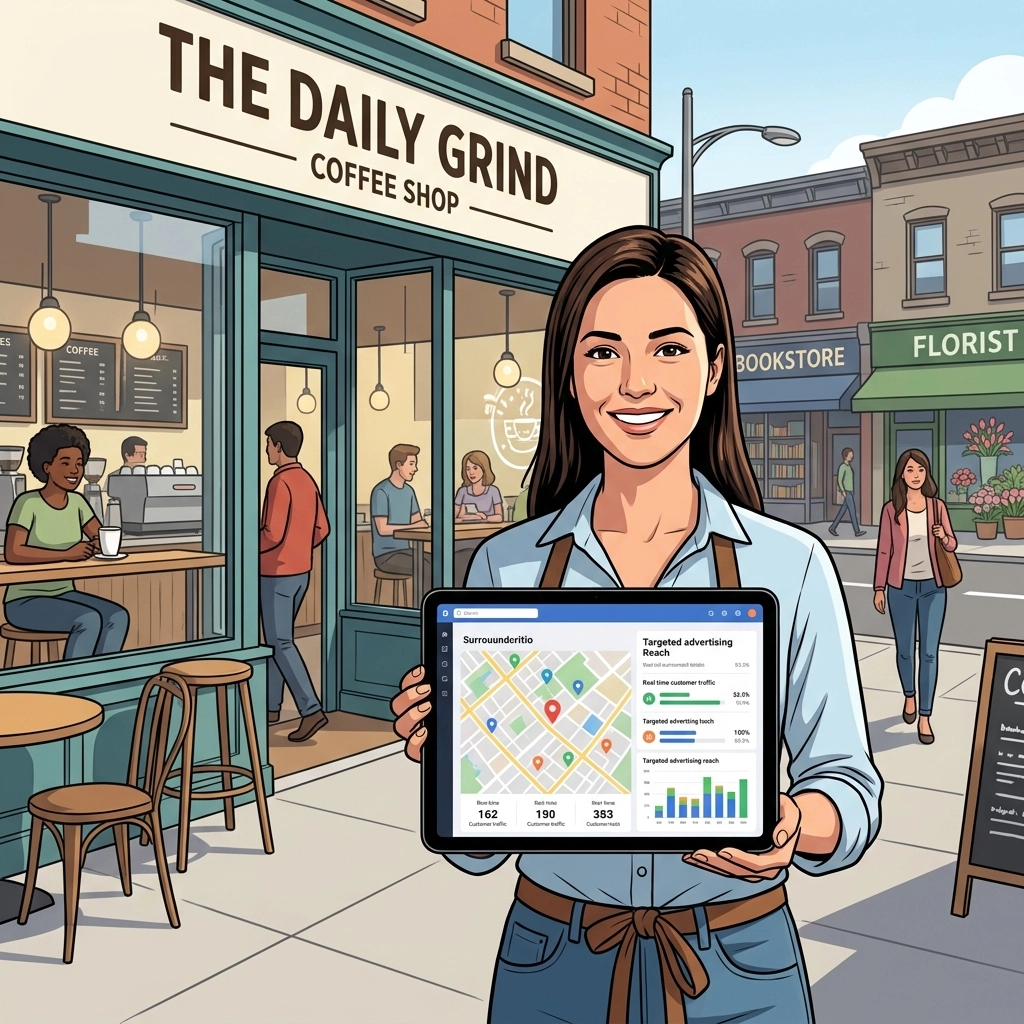
For years, local business owners have treated digital advertising like a high-stakes poker game. You put your money on the table, hope the “algorithm” plays fair, and wait to see if the phone actually rings. Whether you are running a dental practice in a crowded suburb or managing a construction firm looking for high-ticket renovations, the fear is always the same: how much of my budget is being flushed down the drain on clicks that never convert?
In 2026, that era of “praying for ROI” is officially over. We’ve moved past simple automation and entered the age of Agentic AI. This isn’t just about software that follows a few rules; it’s about autonomous agents that think, troubleshoot, and optimize your spend every second of the day. If you’re still managing your ads the “old way,” you aren’t just behind, you’re likely overpaying for every single lead.
What Exactly is Ad Waste in 2026?
In the past, ad waste was easy to spot but hard to stop. It was the “near me” search that triggered your ad for a user 50 miles away. It was the expensive click from a bot or a competitor. Today, waste is more subtle. It happens when your ads stay live on a platform where your audience isn’t active at 2:00 PM, or when your creative messaging doesn’t align with the specific intent of a local searcher.
As we discussed in our recent deep dive into The Rise of Agentic AI, these new systems don’t wait for a human to notice a dip in performance. They see the dip, identify the cause, and shift the budget to a winning campaign before you’ve even finished your morning coffee.

A landscape cartoon-style illustration of a friendly AI robot wearing a gardener’s hat, carefully weeding out “bad clicks” and “wasted dollars” from a vibrant digital garden representing a local business’s ad budget.
The Shift from Manual to Autonomous
Traditional ad management required a “set it and forget it” approach followed by a weekly or monthly check-in. Even the best digital marketing agency for small business used to spend hours manually adjusting bids or swapping out images. In 2026, that lag time is the primary source of waste.
Agentic AI operates on a “goal-based” framework. Instead of telling the system to “bid $5 on this keyword,” you tell the agent, “I need 20 qualified dental implant leads this month for under $100 per lead.” The agent then coordinates across Google, Meta, and local platforms to make it happen.
Comparing the Old Way vs. The Agentic Way
To understand why this is a game-changer for your bottom line, look at how the workflow has transformed:
| Feature | Traditional Ad Management | Agentic AI Management (2026) |
|---|---|---|
| Optimization Frequency | Daily or Weekly | Real-time (Millisecond adjustments) |
| Troubleshooting | Human identifies errors after spend is lost | Self-healing; detects and fixes issues instantly |
| Creative Strategy | Static A/B testing (takes weeks) | Generative iteration based on user behavior |
| Budget Management | Fixed daily caps per platform | Fluid allocation across the “Entity” ecosystem |
| Reporting | Looking backward at what happened | Predictive insights on what will happen next |
Why “The Entity Era” Changes Everything
You might be wondering how these agents know who to target so accurately. It comes down to how AI now perceives your business. We are no longer just bidding on keywords; we are building authority within a specific niche and location. This is what we refer to as The Entity Era.
When your ads are integrated with your local seo services, the AI understands the “entity” of your business, your services, your reputation, and your physical service area. If an agent sees that your organic ranking is already dominating for “emergency plumber,” it might automatically shift your ad spend to a more competitive term like “water heater installation” to maximize your total market share.
“Industry reports indicate that without autonomous intervention, nearly 30% of small business marketing budgets are historically lost to inefficient targeting, bot traffic, and non-converting placements.” , Marketing Tech Research 2025
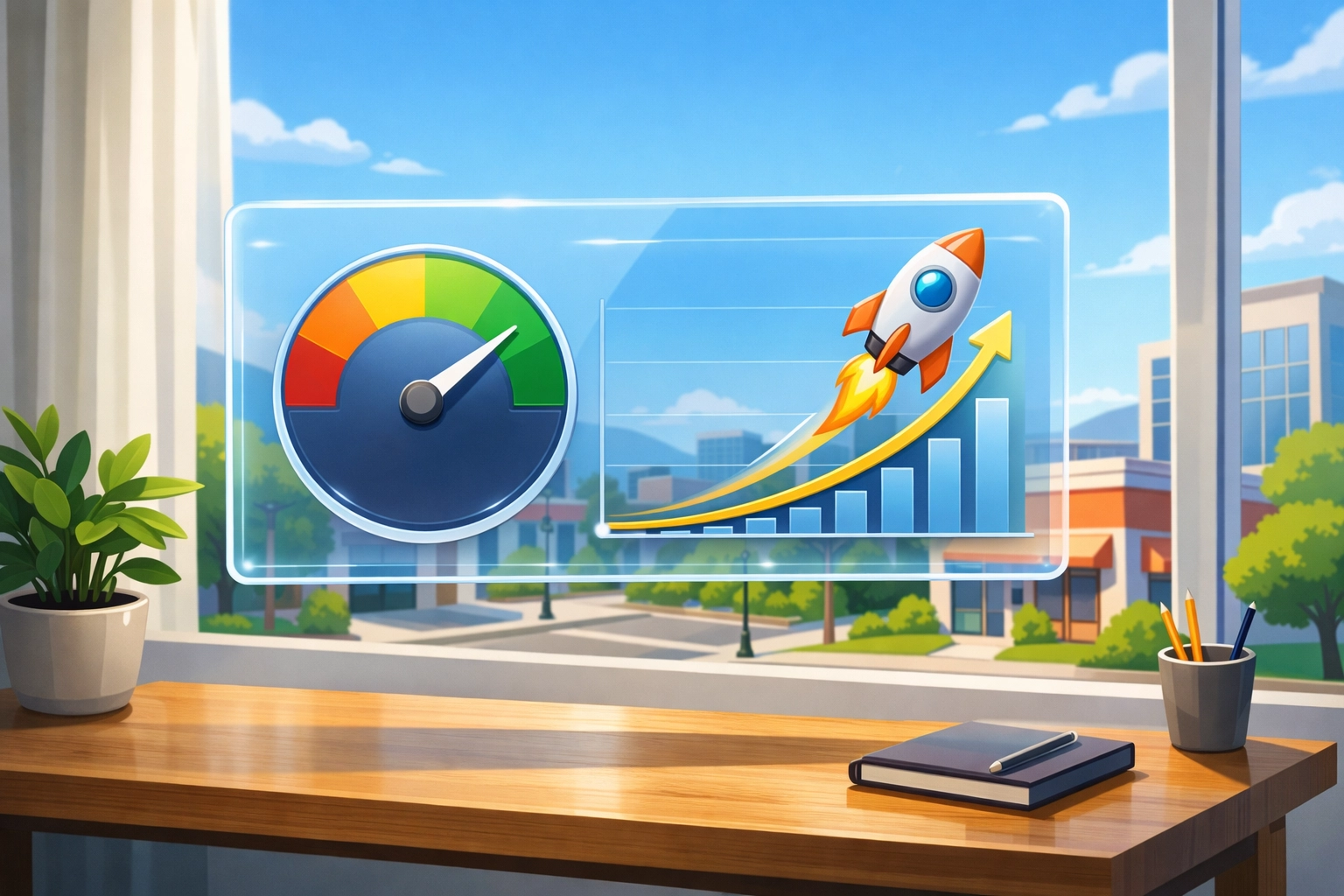
A landscape cartoon-style digital dashboard showing a “Waste Meter” dropping to zero while a “Conversion Rocket” takes off, set against a backdrop of a clean, modern office.
Real-World Impact Across Industries
How does this look for your specific business? Let’s break it down by the sectors we see the most growth in:
1. Professional Services (Lawyers, Accountants)
For professional services, the “intent” of the search is everything. An agentic system can distinguish between someone looking for “free legal advice” (waste) and someone searching for “hiring a divorce attorney near me” (high value). By analyzing behavioral patterns in real-time, the agent can block the “researcher” and double the bid for the “buyer.”
2. Construction & Contracting
Contractors often struggle with seasonality and lead quality. Agentic AI can sync with your CRM. If your schedule for roof repairs is full for the next three weeks, the agent can autonomously pause those ads and shift the budget to “gutter cleaning” or “siding,” ensuring your crew stays busy without creating a backlog of unhappy, unserved leads.
3. Dental & Medical Practices
Patient acquisition is expensive. Ad waste often comes from showing ads to people outside of a reasonable driving distance. Agentic AI uses hyper-local geofencing data to ensure your ads only appear to people who are statistically likely to make the trip to your office, integrating directly with your Google Business Profile analytics to track foot traffic results.
Performance Max and the Move to “Black Box” Advertising
Google’s Performance Max was the precursor to this, but it often felt like a “black box” where you put money in and hoped for the best. In 2026, agentic systems provide the transparency that was missing. They don’t just spend the money; they explain why they chose specific placements.
This level of insight is why AI-driven Google Ads have replaced static funnels. We no longer force users through a rigid path. Instead, the agent meets the user wherever they are in their journey, whether that’s watching a YouTube video about home renovation or searching for a local pro on a map.

A landscape cartoon illustration of a local business owner shaking hands with a friendly, glowing AI assistant, with a background of a bustling storefront and a phone ringing with new leads.
The Human Element: Strategy Over Button-Pushing
You might be thinking, “If the AI does everything, why do I need a CTO or a marketing team?” Here’s the reality: the AI is the engine, but you are still the driver.
At Trust Media, our role has shifted from manual bid adjustments to high-level orchestration. We set the “guardrails”, the brand tone, the target ROI, and the long-term business goals. The AI handles the tactical execution, but human expertise ensures that the strategy aligns with your actual business capacity. For example, if you’re looking to scale your brand, we use predictive AI to forecast which markets are ripe for expansion before we ever spend a dollar.
Final Thoughts: Stop Overpaying for Clicks
The goal of digital advertising in 2026 isn’t to get the most clicks; it’s to get the right calls and bookings. By embracing agentic systems, you move from a defensive posture, trying to catch mistakes, to an offensive one, where every dollar is deployed with surgical precision.
If you aren’t sure if your current setup is leaking money, it might be time for a local SEO audit and an ad account refresh. The technology exists to eliminate waste; you just have to be willing to let the agents take the wheel.
Does Agentic AI mean I don’t have to monitor my ads anymore?
While you don’t need to check them hourly for errors, you should still review high-level performance metrics. The AI handles the “how,” but you still control the “what” and “why” of your business goals.
Is this technology too expensive for a small local business?
Actually, it’s the opposite. Agentic AI is designed to save money by reducing waste. Because these systems are more efficient, they allow small businesses to compete with larger corporations by spending their smaller budgets more effectively.
How does this affect my Google Reviews and organic ranking?
Everything is connected. Agentic AI often uses signals from your Google Reviews to determine which ads to show. If you have a high rating for a specific service, the agent will prioritize ads for that service because they are more likely to convert.
Will I lose control of my brand’s voice?
No. You set the creative parameters and brand guidelines. The AI iterates within those boundaries. It tests different versions of your message, but it only uses the “ingredients” you provide.
How quickly can I see results from switching to an AI-driven ad system?
Because the AI can process data much faster than a human, you often see optimization trends within the first 72 hours. However, the most significant “waste reduction” usually happens after the first 14 days of the agent learning your specific market.