
The most powerful influencer right now may be the one telling people not to buy.
That sounds like a contradiction, especially after years of creator campaigns built around enthusiasm, product hauls, discount codes, and polished testimonials. Yet audiences have become much better at recognizing when a recommendation is genuinely considered and when it is simply a paid obligation.
This shift has created what we can call the deinfluencing effect: the creator who limits endorsements, admits product flaws, and explains who should not buy becomes more persuasive when they finally recommend something.
For brands, this is not an invitation to manufacture negativity. It is a signal that influence now depends less on constant promotion and more on credible judgment.
Why are audiences becoming harder to persuade?
Audiences have not stopped buying. They have become more selective about whom they believe.
After years of sponsored posts, affiliate links, gifted products, and identical talking points, consumers now recognize the structure of a creator advertisement almost instantly. A sudden burst of enthusiasm, a vague claim that a product is “a game changer,” and a discount code in the caption can trigger skepticism before the audience has even considered the product.
The problem is not sponsorship itself. The problem is the loss of independent judgment.
A creator who appears to recommend everything communicates that every recommendation may be commercially motivated. By contrast, a creator who regularly says, “This is expensive,” “This is not for beginners,” or “You probably do not need this” demonstrates a willingness to protect the audience from a poor decision.
That distinction matters because buyers increasingly use creators as filters. They are not only asking, “What should I buy?” They are asking:
- Is this product worth the money?
- Who is this actually designed for?
- What problem does it fail to solve?
- Is there a less expensive alternative?
- Does this creator understand my situation?
The strongest creator communication answers those questions before making a sales pitch.
Nearly 90% of consumers report distrust in influencers, according to the American Marketing Association’s 2026 summary of influencer-authenticity research. Separately, SponsorCX data reported by ContentGrip found that 74% of respondents feel there is too much sponsored content on digital platforms.
Together, those figures describe the current environment clearly: audiences are not merely distracted. They are actively evaluating the motives behind the content they see.
What does “deinfluencing” actually signal?
Deinfluencing is commonly associated with creators discouraging purchases, challenging overhyped products, or encouraging followers to consume less. But strategically, its significance goes beyond the format.
Deinfluencing signals selectivity.
When a creator occasionally rejects a popular product, the audience receives evidence that the creator has standards beyond earning a commission. That evidence can strengthen the credibility of later recommendations, particularly when the creator explains the reasoning behind both the “no” and the “yes.”
Research published in the Journal of the Academy of Marketing Science supports this pattern. In “Let Me Deinfluence You! The Impacts of Deinfluencing Content”, researchers examined deinfluencing across a pilot study and four preregistered experiments involving approximately 1,456 participants.
The findings suggest that deinfluencing content can increase perceived influencer trustworthiness by reducing suspicion that the creator is motivated only by money. That increased trust can improve responses to later positive recommendations, especially when those recommendations are organic and aligned with the creator’s established point of view.
There is an important limit: if a creator later promotes a product from a brand they previously criticized, the credibility benefit can quickly reverse. Audiences notice contradictions.
How has traditional endorsement logic changed?
The old model treated the creator as a media placement. The brand supplied the product, the talking points, and often the desired emotional reaction. The creator supplied access to an audience.
The deinfluencing-era model treats the creator as a trusted evaluator. Their value comes from judgment, not just distribution.
| Dimension | Traditional Endorsement Logic | Deinfluencing-Era Trust Logic |
|---|---|---|
| Creator approach | Recommend frequently | Recommend selectively |
| Audience perception | “This is probably paid promotion” | “This person has considered the trade-offs” |
| Brand fit | Broad demographic similarity | Shared standards, use cases, and values |
| Content style | Polished praise and product benefits | Specific context, limitations, and comparisons |
| Commercial result | Short-term reach and clicks | More qualified consideration and stronger trust |
| Primary risk | Sponsorship saturation | Misalignment between creator history and brand promise |
This is why The Endorsement Mirage matters to modern campaign planning. Reach can place a product in front of people, but cultural and behavioral fit determines whether the recommendation feels believable.
Why does restraint make a recommendation stronger?
Restraint creates contrast.
If every product is excellent, none of the products are meaningfully excellent. If every partnership is presented as a perfect match, audiences lose the ability to distinguish genuine conviction from campaign language.
A creator who says no creates a visible standard. That standard gives positive recommendations more weight because the audience knows approval is not automatic.
The psychology is straightforward:
- The creator acknowledges commercial incentives. This reduces the need for the audience to defend itself against hidden persuasion.
- The creator demonstrates independent judgment. The audience sees evidence that the creator can disagree with popular opinion or brand expectations.
- The recommendation becomes more selective. A positive opinion feels earned rather than routine.
- The buyer receives decision clarity. Knowing who should not buy can be as useful as knowing who should.
That final point is particularly valuable for ecommerce brands. Better qualification can improve conversion quality, reduce returns, and create more satisfied customers: even when the total number of clicks is lower.

How can brands work with creators without manufacturing authenticity?
Start by giving the creator enough room to make a real evaluation.
That does not mean abandoning brand safety or allowing inaccurate claims. It means replacing rigid scripts with clear strategic guardrails. Define what the product does, what it does not do, who it serves, and which claims require support. Then let the creator interpret that information through their own experience.
Use this process:
- Review the creator’s history of recommendations. Look for evidence of selectivity, comparisons, criticisms, and follow-up reviews.
- Study how the creator explains limitations. A thoughtful “not for everyone” is more valuable than constant enthusiasm.
- Check for commercial consistency. Avoid partnerships that contradict the creator’s established standards or previous product opinions.
- Invite an honest use case. Ask the creator to explain where the product fits, rather than asking them to present it as universally necessary.
- Measure qualified behavior. Track product-page depth, conversion quality, return rates, branded search lift, and customer feedback: not only views and likes.
- Protect disclosure clarity. Transparent sponsorship labeling is essential. Trust cannot be built through ambiguity.
This approach also connects with The Parasocial Fallacy. A creator’s audience relationship may feel personal, but brands should not treat that relationship as property they can rent. The partnership works when the creator retains a credible identity and the brand earns a legitimate place within it.
What does smarter influencer selection look like in practice?
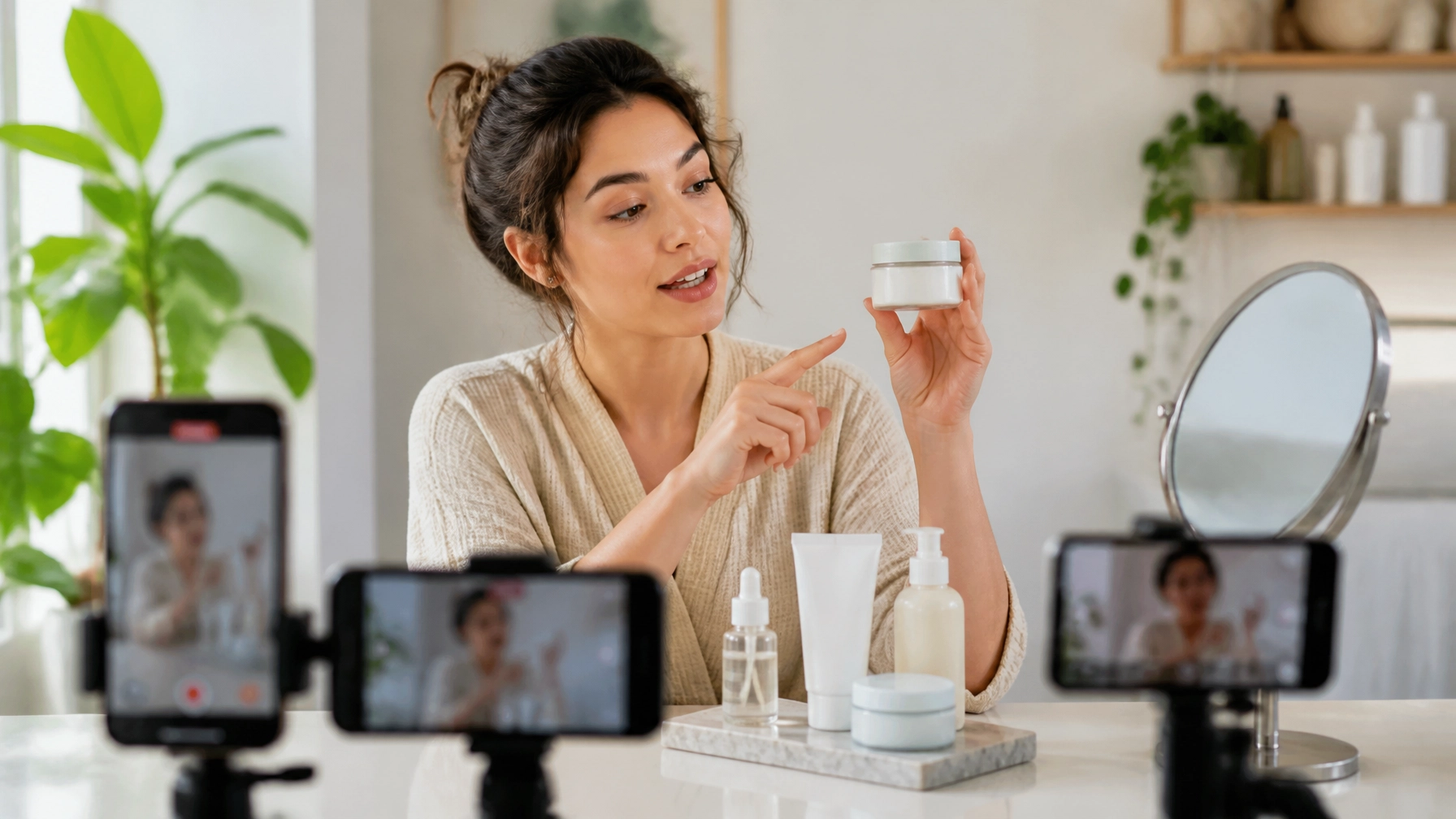
Consider a skincare brand preparing to launch a moisturizer.
The traditional approach might send the product to dozens of beauty creators and request positive launch content within the same week. The result could be broad visibility, but also a feed full of similar claims that make the campaign easy to dismiss.
A smarter approach would identify one reviewer known for candid product testing. The creator might explain that the moisturizer works well for people with dry skin in cold climates but will not replace a treatment for persistent irritation, solve every acne concern, or justify its price for someone seeking a basic daily lotion.
That content may produce fewer immediate impressions. However, the endorsement arrives with built-in context. The audience understands what the product can and cannot do, which can increase trust and improve the quality of resulting purchases.
The same principle applies outside ecommerce.
Imagine a home services company partnering with a local creator known for warning neighbors about unreliable contractors. That creator does not need to claim the company is perfect. They can explain what questions homeowners should ask, which estimates deserve scrutiny, and why this particular company’s process feels more accountable.
The recommendation is powerful because it enters an existing trust relationship. The creator has already established that they will criticize poor service. Their endorsement therefore carries more weight than a generic celebrity-style promotion, even if the audience is much smaller.
The right question is not, “How many people can this creator reach?”
It is, “Whose decision-making has this creator earned the right to influence?”
How should you measure the deinfluencing effect?
Deinfluencing may not produce the largest visible engagement spike. Its value often appears later and across multiple touchpoints.
Track indicators that reveal consideration and trust:
- Qualified conversions rather than total clicks
- Product returns and refund reasons
- Branded search volume after creator content
- Direct traffic to product or service pages
- Comment quality and recurring buyer questions
- Saves, shares, and private recommendations
- Assisted conversions across longer customer journeys
- Sentiment changes before and after the partnership
You should also evaluate whether the creator’s audience repeats the creator’s reasoning. When followers use the same language to describe why a product fits: or does not fit: the creator is helping them make a decision, not merely generating attention.
In a saturated market, the creator who says, “You probably do not need this,” may be worth more than the creator who says, “You need everything.”
The future of influencer marketing will not belong to the loudest recommendation. It will belong to the most credible filter.
Q&A
What is the deinfluencing effect?
The deinfluencing effect describes how creators can build trust by discouraging unnecessary purchases, explaining product limitations, and recommending selectively. That restraint can make later recommendations more persuasive because audiences see evidence of independent judgment.
Does deinfluencing mean creators should criticize every brand?
No. Constant negativity can become another performance. Effective deinfluencing is specific, fair, and useful. The creator should explain who a product is not for, what trade-offs exist, and what alternatives may make more sense.
Can a brand benefit from a creator saying its product is not for everyone?
Yes. Clear qualification can attract better-fit customers, reduce mismatched purchases, and strengthen credibility. The key is that the limitation must be honest and consistent with the product’s actual positioning.
Why is follower count less important in this model?
Follower count measures potential distribution, not trust or decision-making influence. A smaller creator with a history of careful reviews may generate more qualified outcomes than a larger creator whose audience expects constant promotions.
Should brands give creators complete creative control?
Brands should provide strategic guardrails, legal requirements, product facts, and approved claims. Within those boundaries, creators should have meaningful control over the story, tone, and evaluation. Over-scripted content often exposes the commercial arrangement and weakens credibility.
How can brands tell whether a creator is genuinely selective?
Review several months of content. Look for balanced product evaluations, clear explanations, follow-up testing, transparent sponsorships, and recommendations that are not all tied to affiliate links. Selectivity should appear as a pattern, not a campaign tactic.
What is the biggest risk of using deinfluencing in influencer marketing?
The greatest risk is inconsistency. If a creator criticizes a product category and later promotes a similar product without explaining the difference, audiences may view the partnership as opportunistic. Trust grows through coherent behavior over time.