Look, as a CTO, I usually care more about server uptime, lead attribution models, and clean code than who is posting what on Instagram. But here is the reality: influencer marketing has become a massive line item for many of our clients.
I’ve seen the back-end data of hundreds of campaigns. I’ve seen contractors spend thousands on a “local celebrity” only to get zero phone calls. I’ve also seen a plumber partner with a local “mommy blogger” and get so many leads they had to turn off their ads for a month.
The difference isn’t luck. It is data, geography, and a brutal rejection of vanity metrics. Most local businesses are doing this entirely wrong because they are following a “lifestyle brand” playbook that doesn’t apply to a business that fixes leaky pipes or installs roofing. If you want to stop lighting money on fire, you need to understand why the 99% fail and how the 1% actually drive revenue.
The Vanity Metric Death Spiral
Most people choose an influencer based on one thing: the follower count. In the tech world, we call this a “vanity metric.” It looks good on a report, but it has zero correlation with your bank account balance.
If you are a roofing contractor in Chicago, and you hire an influencer with 100,000 followers, you might feel like a big deal. But if 98% of those followers live in California, London, or are literally just bots in a server farm, you just paid to advertise to people who will never buy from you. This is why why your small business doesn’t need a tiktok viral hit and should focus on local relevance instead.
According to industry research, roughly 73% of influencer campaigns fail to deliver a measurable ROI, often because businesses prioritize reach over audience alignment and geographical proximity. (Source: Influencer Marketing Hub, 2024 Strategy Report)
When we look at the data at Trust Media, we see that high follower counts often mask a critical lack of local density. A local service business needs “hyper-locality.” You don’t need the world; you need the three zip codes where your trucks are already driving.

A cartoon-style landscape showing a local contractor looking confused at a massive digital billboard in the desert while his actual customers are in a small town nearby.
The Math of Local Influence
Let’s break down the numbers. If you hire a “Macro-Influencer” versus a “Micro-Influencer,” the results for a local service business are almost always inverted compared to what you’d expect.
| Metric | The “Big” Influencer | The “Neighborhood Hero” |
|---|---|---|
| Follower Count | 150,000+ | 2,500 – 7,000 |
| Local Audience % | 2% – 5% | 60% – 80% |
| Engagement Rate | ~1.2% | ~8% – 12% |
| Cost per Post | $2,000+ | $150 – $300 |
| Actual Local Reach | 3,000 – 7,500 people | 1,500 – 5,600 people |
| Trust Factor | Low (Paid Spokesperson) | High (Trusted Neighbor) |
As you can see, the “Big” influencer might reach more people total, but the cost to reach a local person is astronomically higher. This is where a digital marketing agency for small business adds value: by auditing these audiences before you spend a dime.
Why “Unsexy” Businesses Win with Micro-Influencers
If you’re a dentist, a plumber, or an HVAC specialist, you probably think influencer marketing isn’t for you. You aren’t selling skinny tea or trendy sneakers. But that is exactly why you have an advantage.
When a local influencer: someone who is known for reviewing local coffee shops or sharing school board updates: talks about how their AC broke and “Joe’s Cooling” saved the day, that carries more weight than any Google Ad ever could. It is a digital version of the “over the fence” neighborhood recommendation.
We call this the power of proximity. These micro-influencers drive high-intent leads because their audience actually trusts their local recommendations. They aren’t trying to be famous; they are trying to be helpful within their community.
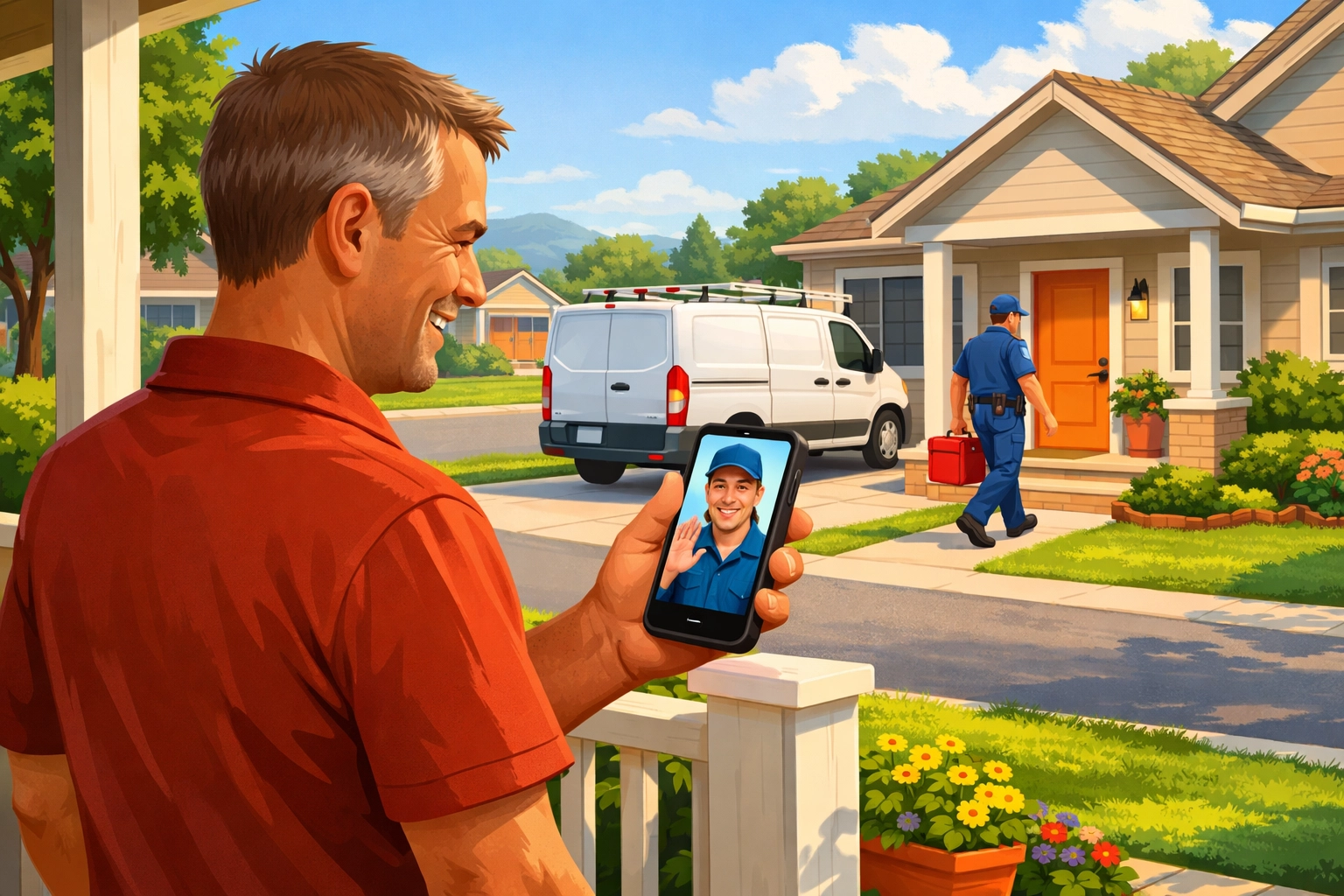
A cartoon-style landscape of a cozy neighborhood where residents are looking at their phones and seeing a friendly neighbor recommending a local HVAC technician standing by a truck.
The Technical Audit: How I Spot the Fakes
As a CTO, I look at the “signal-to-noise” ratio. Before we let a client sign a contract with an influencer, we run a technical audit. If you’re doing this yourself, here is what you need to look for:
- Geography Check: Ask for a screenshot of their “Audience Insights.” If they won’t show you the top cities and countries their followers live in, walk away. If you’re in Austin and their top city is New York, they are useless to you.
- Comment Quality: Look at the comments. Are they generic emojis or “Great post!”? Those are bots. You want to see actual conversations about the local area.
- The “Ad” Ratio: If every single post is a sponsored ad for a different product, their audience has likely tuned them out. Trust is a finite resource.
Research shows that 97% of influencer posts contain commercial content, but only 20% properly disclose it. This lack of transparency has led to a trust erosion where users are becoming hyper-sensitive to “fake” endorsements. (Source: Princeton University/ECC Report on Dark Patterns in Social Media)
To truly win, you need to find the neighborhood hero strategy where the influencer is a genuine user of your service.
Measurement: Turning Likes into Leads
The biggest mistake is not having a tracking mechanism. “Brand awareness” doesn’t pay your technicians’ salaries. As a tech-first agency, we insist on three layers of tracking for every influencer partnership:
- Custom Redemption Codes: Give the influencer a code like “SALLY20” for 20% off a first service call. This is the easiest way to track direct attribution.
- Dedicated Landing Pages: Don’t send traffic to your homepage. Send it to a page like
yourbusiness.com/sally. This allows us to track the exact conversion rate of that specific audience. - Lead Source Tagging: When your office staff takes a call, they must ask, “How did you hear about us?” and have “Influencer Name” as an option in the CRM.
Without these, you’re just guessing. We use data that delivers to ensure that every dollar spent is accounted for. If a campaign isn’t working by week four, we pivot. We don’t wait for a miracle.
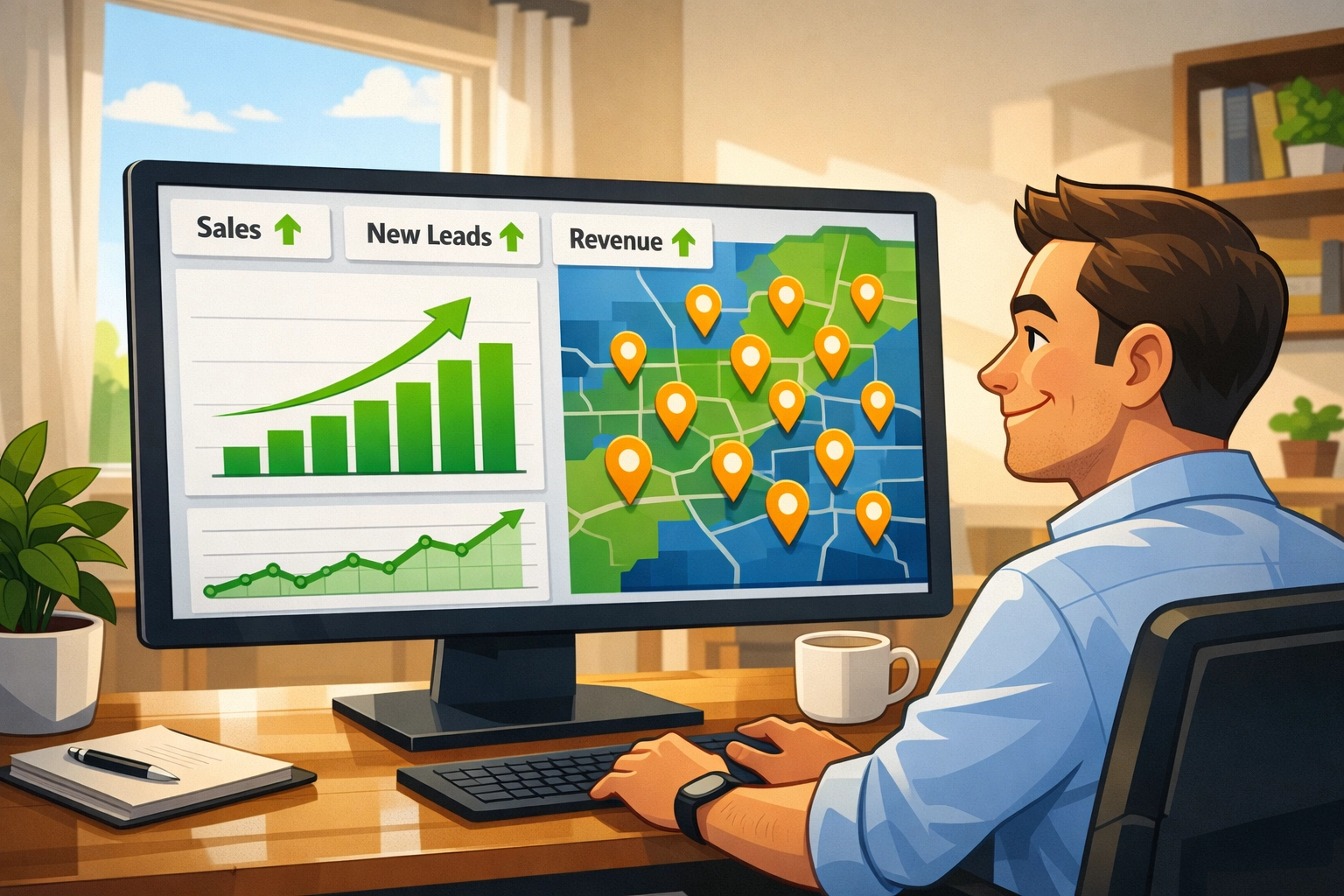
A cartoon-style landscape of a high-tech control room where a business owner is watching a screen showing leads flowing in from different local social media accounts.
The 1% Formula for Local Success
If you want to be in the 1% of businesses that actually make money from influencers, follow this framework:
- Prioritize Local Relevance over Follower Count: 2,000 local followers are worth more than 2,000,000 global ones.
- Build Long-Term Partnerships: One post is a “blip.” Four posts over four months is a “relationship.” The local hero playbook suggests that frequency builds the trust needed for high-ticket service sales.
- Empower the Influencer: Don’t give them a script. Give them the service. Let them document the actual experience of your plumber arriving on time, wearing boot covers, and being polite. Authenticity is the only thing that sells in 2026.
- Integrate with SEO: Social signals matter. When people see you on Instagram and then search for you on Google, your Google Business Profile optimization needs to be rock solid to catch that traffic.
Influencer marketing for local services isn’t about “going viral.” It’s about owning the digital conversation in your neighborhood. Stop looking for fame and start looking for the people your customers already trust.
Does this work for “boring” businesses like plumbing?
Absolutely. In fact, it often works better because the competition is lower. While every fashion brand is fighting over the same influencers, very few plumbers are reaching out to the local “Home DIY” or “Neighborhood News” accounts. You can dominate the space quickly.
How much should I pay a local influencer?
For micro-influencers (2k-10k followers), you shouldn’t be paying thousands. Often, a free service plus a small “creation fee” of $100-$300 per post is the standard. If they are bringing you $2,000 in new business, the ROI is a no-brainer.
How do I find these influencers?
Start by looking at your own “Followers” on Instagram or Facebook. You might already have a local influencer following you. You can also search local hashtags like #CityNameMoms, #CityNameEats, or check who is active in local community Facebook groups.
What if the influencer has a bad experience with my service?
This is the risk of authenticity. This is why you must ensure your operations are tight before you start inviting influencers to document your work. However, a “real” review that mentions a small hiccup and how you fixed it can actually be more trustworthy than a perfect, scripted ad.
How long does it take to see results?
Direct leads can happen within 24 hours of a post, but the real “trust effect” usually takes 2-3 mentions over a few weeks. It works best when integrated into a broader strategy that includes local SEO services.