Your last post didn’t fail because of the algorithm. It failed because your audience checked your credibility before they decided to care.
We spend an extraordinary amount of time agonizing over hook variations, trending audio tracks, and optimal posting times. Yet, when someone scrolls past your latest Reel or LinkedIn carousel, they rarely make their decision based on that single asset. Instead, they perform a subconscious audit. They look at who you are, how you treat your community, whether your followers look like real human beings, and if your digital presence matches reality.
If those foundational layers are shaky, no amount of creative polish will save your reach. Trust on social media isn’t built from the top down through clever content. It is built from the bottom up through cumulative, undeniable evidence that you are worth paying attention to.
What is the Social Media Credibility Stack?
When modern consumers encounter a brand on social media, they evaluate trustworthiness in tiers. Think of this as a structural pyramid. If the base is weak, the entire structure collapses under the weight of skepticism.

Let’s break down the six distinct layers that form the social media credibility stack:
- Layer 1: Visual Consistency: Does your brand look professional, coherent, and established across all touchpoints?
- Layer 2: Comment Integrity: How do you treat people who engage? Do you respond with canned bot replies, or do you have real conversations?
- Layer 3: Content Depth: Is there genuine substance behind your surface-level hooks, or is every post just a thinly veiled pitch?
- Layer 4: Audience Authenticity: Are your followers real, engaged human beings, or is your profile artificially inflated with ghost accounts?
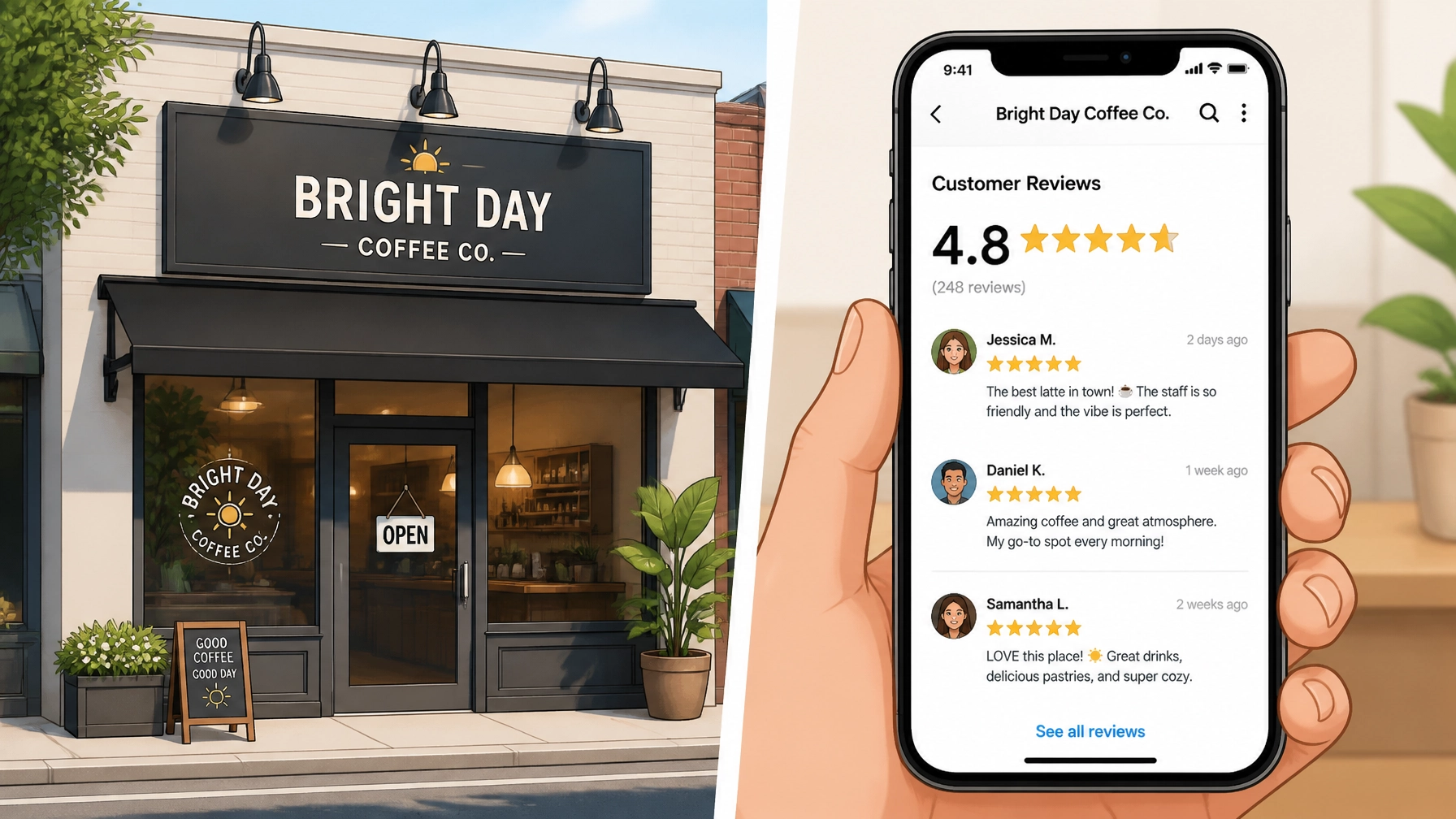
- Layer 5: Real-World Proof: Does your brand exist beyond the platform? Can customers see real people, real work, and real operations?
- Layer 6: External Validation: What do independent third parties say about you when you’re not in the room?
Most brands obsess entirely over Layers 1 and 3. They invest heavily in slick graphic design and engaging video production, assuming that eye-catching content equals instant authority. Meanwhile, they leave comments empty, neglect community management, and display a follower-to-engagement ratio that raises immediate red flags.
“In an era of synthetic content and algorithmic saturation, consumers no longer judge a brand by its loudest broadcast. They judge a brand by the friction it removes, the transparency it exhibits, and the structural integrity of its digital footprint.”
Why the Top-Layer Trap Keeps Brands Invisible
When you focus exclusively on publishing clever content while ignoring foundational trust signals, you fall into the top-layer trap. Your impressions might spike temporarily, but your conversion rates remain stubbornly flat.
As we’ve explored previously when discussing The Context Collapse, an audience quickly rejects messaging that feels disconnected from the underlying reality of the brand. If your content promises elite expertise, but your comment section is a ghost town of unanswered customer questions, the cognitive dissonance immediately breaks the sale.
Furthermore, credibility is deeply asymmetric. Building your reputation takes months of consistent value, but destroying it takes a single overlooked signal. One ignored customer complaint left visible on a public post can undo the goodwill generated by ten viral videos.
To understand how full-stack credibility diverges from surface-level optimization, consider this comparison:
| Credibility Dimension | Top-Layer Only Brands | Full-Stack Credibility Brands |
|---|---|---|
| Visual Strategy | Trendy templates with high aesthetic polish but inconsistent messaging | Coherent visual identity rooted in brand truth and real-world assets |
| Comment Management | Automated replies, emojis, or complete silence on tough questions | Thoughtful, timely dialogue that addresses objections and builds rapport |
| Content Depth | High-frequency surface tips designed purely for algorithmic quick hits | Substantive insights, operational transparency, and educational value |
| Community Health | Large follower counts with negligible comments, shares, or actual engagement | Modest follower counts with active discussions and loyal returning advocates |
| Offline Proof | Studio-only imagery with no connection to physical operations or real teams | Behind-the-scenes glimpses, job-site footage, and authentic staff presence |
| Third-Party Signals | Isolated promotional claims with no external reviews or cross-references | Integrated links to verified reviews, case studies, and industry citations |
How Full-Stack Credibility Wins in Practice
Let’s examine how two different businesses approach this dynamic in the real world.
Consider a regional home services contractor. In the past, they posted generic stock photos of clean kitchens with standard promotional captions twice a week, yielding almost zero inbound DMs. When they restructured their social strategy around full-stack credibility, everything shifted. They stopped buying stock graphics and started posting raw, unpolished photos of their actual technicians on job sites, detailed explanations of local building codes, and direct replies to every single comment within an hour. They even pinned screenshots of verified local Google reviews to their profile highlights. Despite cutting their posting frequency in half, their inbound lead generation tripled within ninety days.
Conversely, look at an online specialty apparel brand that spent thousands on high-end aesthetic product photography and influencer seeding. Their top-layer metrics looked incredible: impressions were high, and the feed looked like a glossy fashion magazine. However, their comment section was riddled with unaddressed sizing complaints, and their follower base clearly showed signs of artificial inflation. Shoppers who clicked through from ads noticed the disconnect immediately, resulting in cart abandonment rates above 80%.
As The Verification Economy highlights, authenticity is no longer a nice-to-have brand attribute; it is the fundamental filter modern buyers use to separate noise from genuine expertise.
Cultivating Sustainable Social Trust
If you want your social media channels to drive predictable revenue rather than vanity metrics, you need to audit your credibility stack from the bottom up.
Start by reviewing your comment integrity. Are you treating your comment section like a broadcast megaphone, or are you treating it like a customer service front desk? Next, examine your real-world proof. Can a stranger visiting your profile instantly tell that real human beings run your organization?
In today’s digital landscape, the most trustworthy brands on social media don’t necessarily have the largest follower counts. They have the most evidence of being real. When you align your foundational layers with your creative output, you stop fighting the platform and start building lasting equity with the people who matter most.
Frequently Asked Questions
What is the Social Media Credibility Stack?
The Social Media Credibility Stack is a conceptual framework describing the six foundational tiers: ranging from visual consistency and comment integrity to real-world proof and external validation: that audiences subconsciously audit before deciding to trust a brand online.
Why do most social media marketing strategies fail to convert?
Many brands focus exclusively on top-layer metrics like aesthetic design and posting frequency while neglecting foundational trust signals such as comment responsiveness, audience authenticity, and real-world operational proof.
How does comment management impact overall brand credibility?
Your comment section serves as a public audit of your customer service. Prompt, transparent, and helpful responses build immediate trust, whereas ignored questions or automated replies signal corporate detachment.
What is the difference between top-layer optimization and full-stack credibility?
Top-layer optimization focuses on making content look appealing to algorithms. Full-stack credibility ensures that every underlying layer of the brand: from community health to verified external reviews: reinforces authentic trust.
How many followers do I need to establish social media trust?
Follower count is a vanity metric that holds very little weight with modern buyers. Trust is driven by engagement health, transparency, real-world proof, and consistent value delivery rather than sheer audience size.
Where should I start when auditing my brand’s social credibility?
Begin by reviewing your lowest foundational layers: check how quickly and thoughtfully you respond to comments, verify the authenticity of your engagement, and ensure your profiles clearly connect to your real-world business operations.