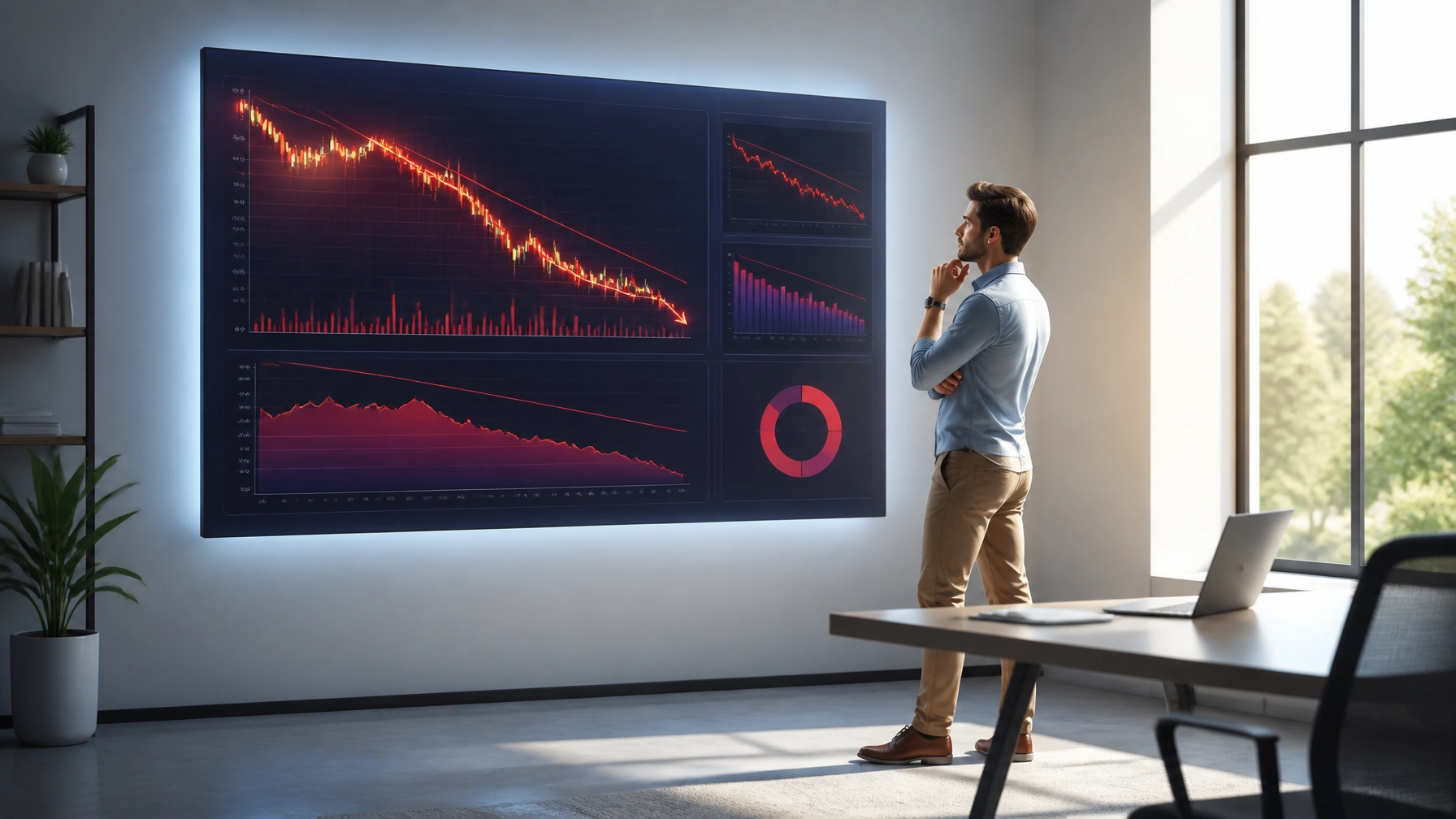
Your ad isn’t failing because of the algorithm. It’s failing because your audience has already seen it: even if you just launched it last week.
When performance dips, the instinct for most business owners is to blame the platform. We check the bidding strategy, tweak the targeting parameters, or wonder if the “AI” is having an off day. But more often than not, the problem isn’t technical. It’s psychological. You are likely running into the “Creative Decay” wall: a point where your message has become part of the digital wallpaper, and your audience has developed a subconscious immunity to your call to action.
In a world where the average person is exposed to thousands of ads every month, attention isn’t just scarce; it’s defensive. To maintain growth, you must stop treating your ad creative as a long-term asset and start treating it as a perishable good with a finite shelf life.
Understanding the Creative Half-Life
Every ad you launch enters the market with a “creative half-life.” This is the period during which it maintains its peak effectiveness before the audience begins to tune it out. In 2026, research indicates that for most social and display platforms, this window has shrunk dramatically.
For cold audiences, the effectiveness of a static ad can begin to slide in as little as 7 to 10 days. By the third week, the performance of that once-stellar creative has often decayed by 20% or more. This isn’t because the offer is bad; it’s because the novelty has evaporated. The human brain is wired to prioritize new information. Once a user has seen your specific visual or headline two or three times, their brain classifies it as “known” and stops processing it with the same level of intensity.
Managing this decay requires a shift in how you view campaign longevity. Instead of looking for one “winning” ad to run for six months, you should be looking for a winning system that allows you to rotate fresh concepts into the mix every 14 days.
The Lagging Indicator Problem
The most dangerous part of creative fatigue is that your dashboard won’t tell you there’s a problem until you’ve already wasted significant budget. Performance metrics like Cost Per Acquisition (CPA) and Return on Ad Spend (ROAS) are lagging indicators: they reflect what has already happened.
By the time your CPA spikes, your creative has likely been decaying for a week. To stay ahead, you need to watch the leading indicators:
- Click-Through Rate (CTR) Trends: A steady decline in CTR over a 7-day period, while impressions remain stable, is the first signal that your audience is bored.
- Creative Frequency: This measures how many times the average person has seen a specific asset, not just the campaign. When frequency on a single ad passes 2.0 or 3.0 for a cold audience, you are entering the danger zone.
- Engagement Rate: If people stop liking, commenting, or sharing: even on direct-response ads: the “stopping power” of your visual has failed.
That said, many businesses get stuck because they rely on surface-level data. True performance intelligence requires digging deeper into the 5% of your data that actually moves the needle.

Attention Management vs. Frequency Management
Traditional advertising focuses on frequency: hitting the same person enough times that they finally succumb and buy. Modern performance marketing focuses on attention management.
Frequency management asks: “How many times can I show this ad before they click?”
Attention management asks: “How can I change the presentation of my message to earn a fresh look?”
You don’t always need a new offer to combat decay. Sometimes, you just need to change the “wrapper.” Data shows that simple visual shifts: changing a background color, swapping a headline, or moving from a static image to a short video: can extend the life of an ad concept by several days. Video, in particular, tends to have a creative half-life twice as long as static images because the movement provides more “hooks” for the brain to latch onto.
| Metric / Attribute | Fresh Creative | Fatigued Creative |
|---|---|---|
| Audience Response | High “stopping power”; active engagement | Subconscious ignoring; “blindness” |
| CTR Trend | Stable or climbing during initial learning | Consistent 7-day decline |
| CPA Trajectory | Low and efficient | Trending upward without targeting changes |
| Brand Perception | Innovative, relevant, and helpful | Repetitive, annoying, or invisible |
| Recommended Action | Scale budget slowly | Rotate asset or refresh visual “wrapper” |
The Reality of Ad Blindness
The scale of the creative decay problem is backed by sobering statistics. As consumers become more sophisticated, their ability to filter out non-essential information has sharpened.
“Ad blindness now affects approximately 86% of consumers. While the average user may see over 1,700 ads per month, they only consciously remember five. Furthermore, performance typically drops by 15-20% within the first two weeks of an asset’s lifespan.”
This means your ads are fighting a massive psychological headwind from the moment they go live. If you aren’t refreshing your creative, you aren’t just standing still; you are actively losing ground to competitors who are providing the “newness” the platforms crave.
Practical Examples of Creative Rotation
The Home Service Pivot
A regional painting contractor was running the same “15% Off Your Whole House” ad for three months. Their CPA had climbed from $45 to $82. Instead of increasing the discount, they kept the offer identical but changed the creative system. They moved from professional “after” photos to a series of “Work in Progress” phone videos. By rotating three different versions of these videos every two weeks, they dropped their CPA back to $42. The offer didn’t change: the attention did.
The E-commerce Identity Shift
An e-commerce brand selling premium cookware realized their ads were fatiguing because they were showing the same product shots to the same audience too often. Instead of just showing the product, they began rotating creative based on “identity buckets.” One week the ads focused on the “Aspiring Home Chef,” the next on the “Health-Conscious Parent.” By treating their creative as a rotation of different personas, they avoided the fatigue that comes from seeing the same pot and pan every day. This approach addresses why e-commerce shoppers buy who they want to become, rather than just what they need.

Building a Creative Inventory System
To solve the creative decay problem permanently, you have to move away from the “Campaign” mindset and toward an “Inventory” mindset.
Most brands treat ad creative as a one-off project. They hire a designer, get four ads, launch them, and hope they work for months. When those ads die, there’s a panic to produce more, leading to gaps in performance.
A performance-intelligent agency treats creative as inventory that must be constantly restocked. This involves:
- Modular Production: Creating assets in pieces (3 hooks, 3 bodies, 3 CTAs) so they can be mixed and matched to create “new” ads without a full production cycle.
- A 72-Hour Kill Rule: If a new creative isn’t hitting baseline metrics within 3 days, it isn’t “warming up”: it’s failing. Cut it early and move to the next.
- Testing Cadence: Dedicating a small portion of your budget (10-20%) specifically to testing new visual concepts while the “winners” do the heavy lifting.
Your Audience Gets Tired Before You Do
One of the hardest things for business owners to accept is that they will get sick of their ads long after their audience does. You see your ads every day in your dashboard and your own feed. You think, “We just launched this.” But your audience only gives you a fraction of a second. If they’ve seen it before, they’ve already scrolled past it.
Winning in digital advertising in 2026 isn’t about out-bidding the competition; it’s about out-interesting them. By acknowledging the reality of creative decay and building a system to combat it, you transform your paid media from a fluctuating expense into a predictable growth engine.
How often should I really change my ad creative?
For high-spend social media campaigns (like Meta or TikTok), you should aim to introduce new creative variations every 1 to 2 weeks. For search ads or lower-frequency display campaigns, a monthly refresh is usually sufficient. The key is to monitor your CTR; if it drops for 7 consecutive days, it’s time for a change.
Does changing the headline count as a “refresh”?
Yes. A refresh doesn’t always require a new photoshoot. Changing the “hook” (the first line of text or the headline) or swapping the thumbnail of a video can reset the algorithm’s delivery and give you a few more days of peak performance.
Can I reuse old ads that performed well?
Absolutely. This is called “Creative Cycling.” If an ad worked well six months ago, you can often bring it back after a long “rest” period. The audience has likely forgotten it, and it will feel fresh again.
Why is my frequency high but my CTR still good?
This usually happens with very high-intent audiences or retargeting. If someone is close to buying, they may need to see the ad 5 or 6 times before they take the final step. In these cases, high frequency is acceptable as long as the CPA remains within your target range.
Will the “AI” in the ad platforms fix fatigue for me?
Only to a point. Platforms like Meta use “Dynamic Creative” to mix and match elements, which helps delay fatigue. However, the AI can only work with the assets you give it. If all your assets are similar or “tired,” the AI cannot magically make them interesting again.