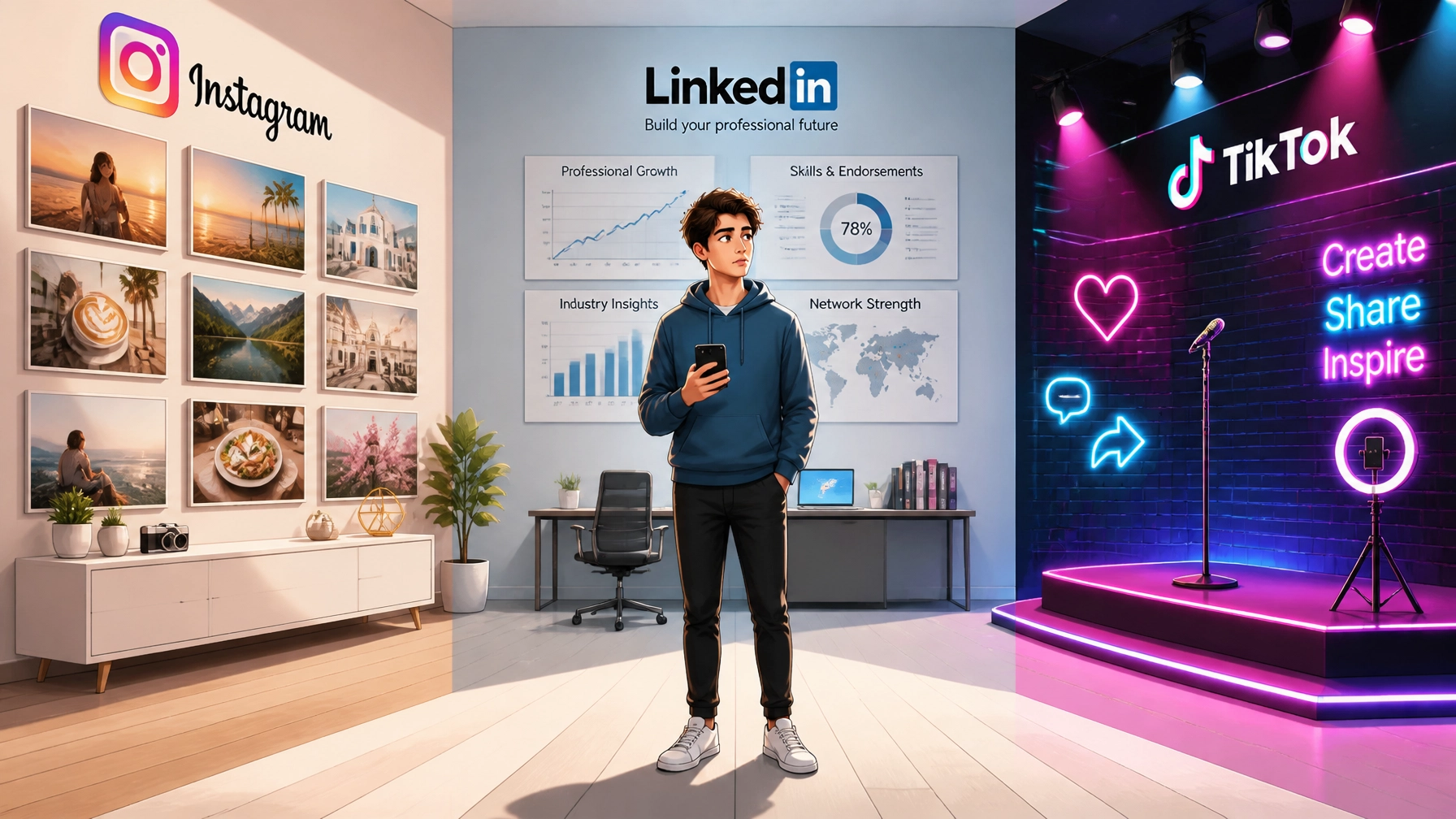
Your content isn’t failing because it’s bad. It’s failing because it’s talking to the wrong room.
Imagine walking into a high-stakes board meeting and attempting to perform a stand-up comedy routine. Even if the jokes are brilliant, the reaction will be stone-cold silence. Conversely, if you walk into a crowded nightclub and try to deliver a 20-minute presentation on Q4 revenue projections, you’ll be ignored before you finish your first sentence.
In both scenarios, the content was “good” in a vacuum, but it violated the social contract of the space. In digital marketing, we call this Context Collapse.
For years, brands have been taught that “content is king” and that “consistency is key.” This led to a decade of lazy cross-posting: taking a single video or image and blasting it across Instagram, LinkedIn, TikTok, and X simultaneously. But in 2026, the audience has evolved. They no longer see social media as one giant “feed.” They see it as a collection of distinct digital rooms, each with its own unwritten rules, etiquette, and psychological expectations.
The Invisible Social Contract
When a user opens an app, they aren’t just looking for “content”; they are entering a specific mindset. This mindset acts as a filter through which every post is judged. If your brand message doesn’t align with that filter, the user experiences a cognitive disconnect. They don’t just scroll past; they feel a subtle sense of intrusion.
Context collapse occurs when you assume that “good content” is universal. It’s the mistaken belief that a high-production brand film meant for YouTube will work as a TikTok, or that a casual behind-the-scenes selfie from Instagram belongs on LinkedIn.
Each platform has a distinct social contract:
- Instagram is about Identity and Aspiration: Users go here to see the “best version” of things. It’s a visual gallery of aesthetics, lifestyle, and brand vibe.
- LinkedIn is about Credibility and Professional Utility: Users are in “work mode.” They want insights, industry shifts, and content that makes them feel smarter or more capable in their careers.
- TikTok is about Entertainment and Discovery: The expectation is raw, fast-paced, and educational. It’s where users go to learn a new hack or be entertained by something that feels “real.”
- Reddit is about Depth and Honest Conversation: This is the home of the “anti-brand.” Users here crave granular detail and zero-fluff transparency.
When you ignore these contextual expectations, you aren’t just missing engagement; you’re actively eroding trust.

The High Cost of the “Copy-Paste” Strategy
Modern audiences are hyper-sensitive to “un-native” content. They can sense within milliseconds if a video was filmed for a different platform and simply “re-sized” for the current one. This sensitivity has created a new barrier to entry for brands.
As we discussed in our exploration of The Wrong Metric Hypothesis, focusing on raw reach across all platforms often masks the fact that your engagement is shallow and your conversion is non-existent. You might be getting “views” on a cross-posted video, but if that video feels out of place, those viewers aren’t moving any closer to a purchase.
“In 2026, trust is the ultimate ‘stop signal’ in the scroll. Audiences are no longer just looking for information; they are looking for signals that a brand understands the culture of the space they are in. When a brand uses the wrong ‘language’ for a platform, it signals a lack of cultural fluency that modern consumers find deeply unappealing.”
Mapping Your Content to the Room
To succeed, you must move from “transcribing” your brand message to “translating” it. This requires understanding how the same core value proposition should look and feel across different environments.
| Platform | Platform Expectation | Common Brand Mistake | The Right Strategic Approach |
|---|---|---|---|
| Visual Aspiration & Story | Low-quality, cluttered ads | High-aesthetic “mood” shots and polished storytelling. | |
| Professional Value & Growth | Casual personal updates with no takeaway | Data-backed insights, case studies, and strategic “why” content. | |
| TikTok | Raw Authenticity & Education | Over-produced, “commercial” looking video | Lo-fi, face-to-camera tips, and “behind-the-scenes” reality. |
| YouTube | Deep Dive & Narrative | Short, superficial clips | 10+ minute “how-to” guides or deep narrative brand documentaries. |
| Honest Peer-to-Peer Dialogue | Corporate PR speak or hidden ads | Radical transparency, technical Q&As, and admitting mistakes. |
Real-World Translation: From Photos to Stories
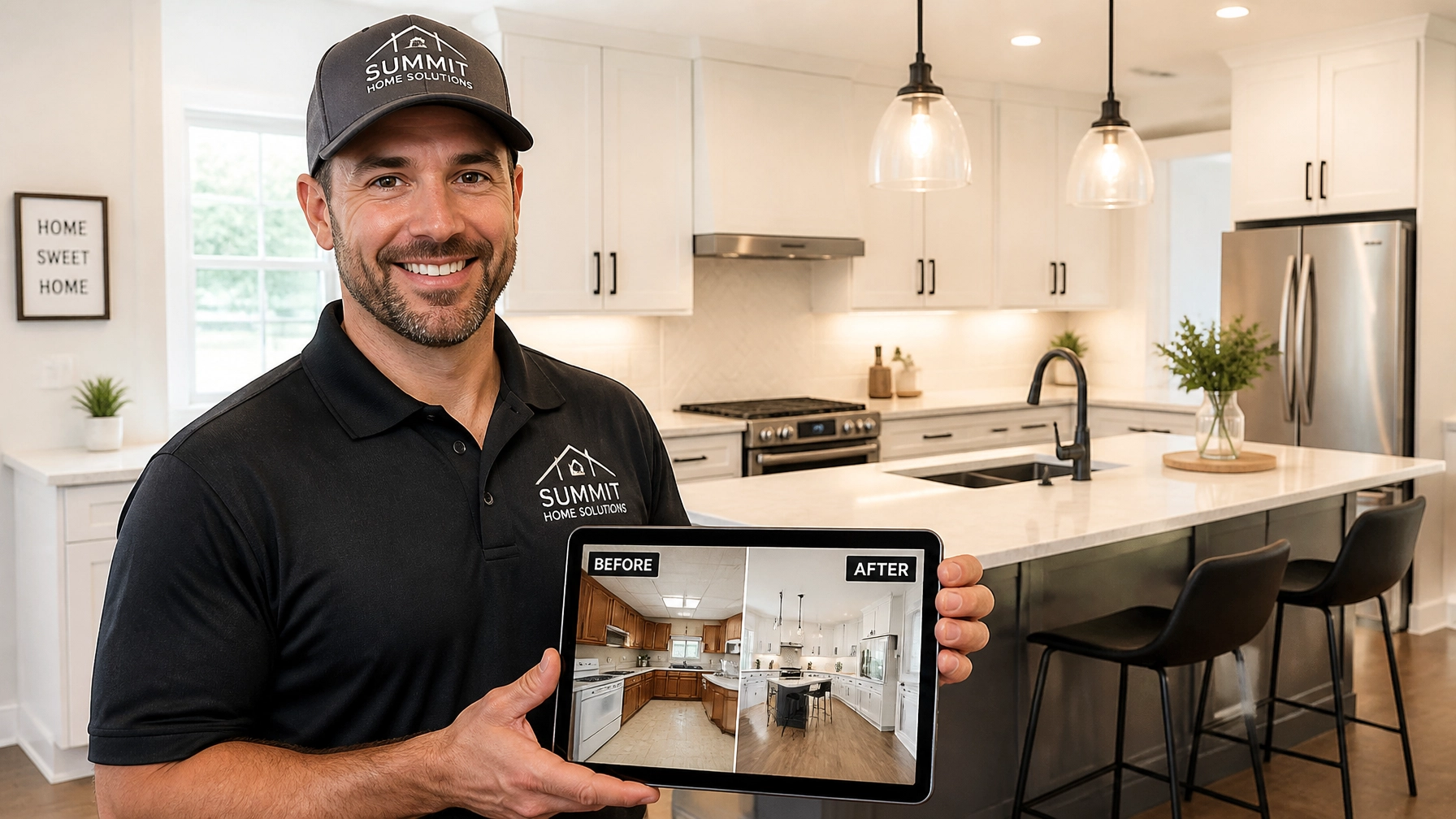
Let’s look at a home services brand: specifically, a high-end kitchen remodeler. Traditionally, they might take one “After” photo of a finished kitchen and post it everywhere. This is the “Copy-Paste” trap.
Instead, a strategically aware brand translates that one project into multiple contextual assets:
- On Instagram: They post a carousel of high-resolution, perfectly lit “After” shots that focus on the design aesthetic. The goal is aspiration.
- On LinkedIn: They post a write-up about the “Business of Remodeling,” discussing how this specific project increased the home’s value by 22% and the supply chain challenges they overcame to finish on time. The goal is professional credibility.
- On TikTok: The lead contractor does a 60-second “top 3 mistakes people make when choosing marble” video using raw footage from the job site. The goal is education and authority.
By respecting the room, the brand earns the right to be there. This is how you bridge The Reality Gap in e-commerce and service marketing: by ensuring that your digital presence matches the physical quality of your work.
Earning Engagement Through Cultural Fluency
The shift from “broadcasting” to “participating” is what separates thriving modern brands from those struggling with content fatigue. Today’s audiences are moving away from open feeds and toward smaller, more meaningful digital spaces: what we call “context reconstitution.” They are looking for brands that behave like people: imperfect, responsive, and, above all, aware of where they are.
If you treat every platform as a megaphone, you will eventually be tuned out. But if you treat every platform as a conversation, you begin to build a community. This doesn’t mean you need to be on every platform. In fact, it’s often better to dominate two platforms by speaking their native language fluently than to be present on five platforms while sounding like a tourist in all of them.
Ultimately, the goal of social media marketing in 2026 is not to be seen by everyone; it is to be understood by the right people in the right context. When you stop collapsing the context, you start building the trust that drives long-term revenue.

What exactly is “Context Collapse” in social media?
Context collapse is the flattening of diverse audiences into a single digital space. It occurs when a brand posts the same content to different platforms (like LinkedIn and TikTok) without acknowledging that the users on those platforms have different mindsets, expectations, and social contracts.
Why does cross-posting the same content hurt my brand?
Cross-posting signals to the audience that you don’t understand the “culture” of the platform. It feels intrusive or lazy, which can lower engagement and make your brand appear out of touch with modern digital behavior.
Do I need to create entirely new content for every platform?
Not necessarily. You can “translate” your core message. For example, a single case study can be turned into a visual gallery for Instagram, a strategic insight post for LinkedIn, and a quick “tip” video for TikTok. It’s about changing the framing, not necessarily the entire subject.
Which platform is best for building trust?
Trust is built differently on each platform. On LinkedIn, trust is built through expertise and data. On TikTok, it’s built through authenticity and transparency. On Instagram, it’s built through consistent aesthetic and brand identity. The “best” platform is the one where your target audience’s mindset aligns with your brand’s core value.
How can I tell if my content is suffering from context collapse?
Look at your engagement-to-reach ratio. If you are reaching a lot of people but getting very few meaningful interactions (comments, shares, saves), it’s a sign that your content is being seen but is being judged as “out of context” by the audience.