Your click-through rate is high. Your dashboards are glowing with bright blue spikes, and your cost-per-click is lower than it has been in months. On paper, the campaign is a runaway success.
But when you check your bank account or your CRM, the story changes. Revenue is flat. Lead quality is plummeting. The phone isn’t ringing with ready-to-buy customers; it’s ringing with people who didn’t realize what they were clicking on.
This is the Click-Through Mirage.
In the high-speed world of digital advertising, we’ve been trained to treat the click as the ultimate validation of interest. We optimize for it, we bid for it, and we celebrate it. However, a click is a lagging indicator of curiosity, not a leading indicator of intent. When you optimize purely for the click, you aren’t necessarily buying customers, you might just be buying accidental interruptions.
The Post-Click Gap: Where Trust Is Built or Destroyed
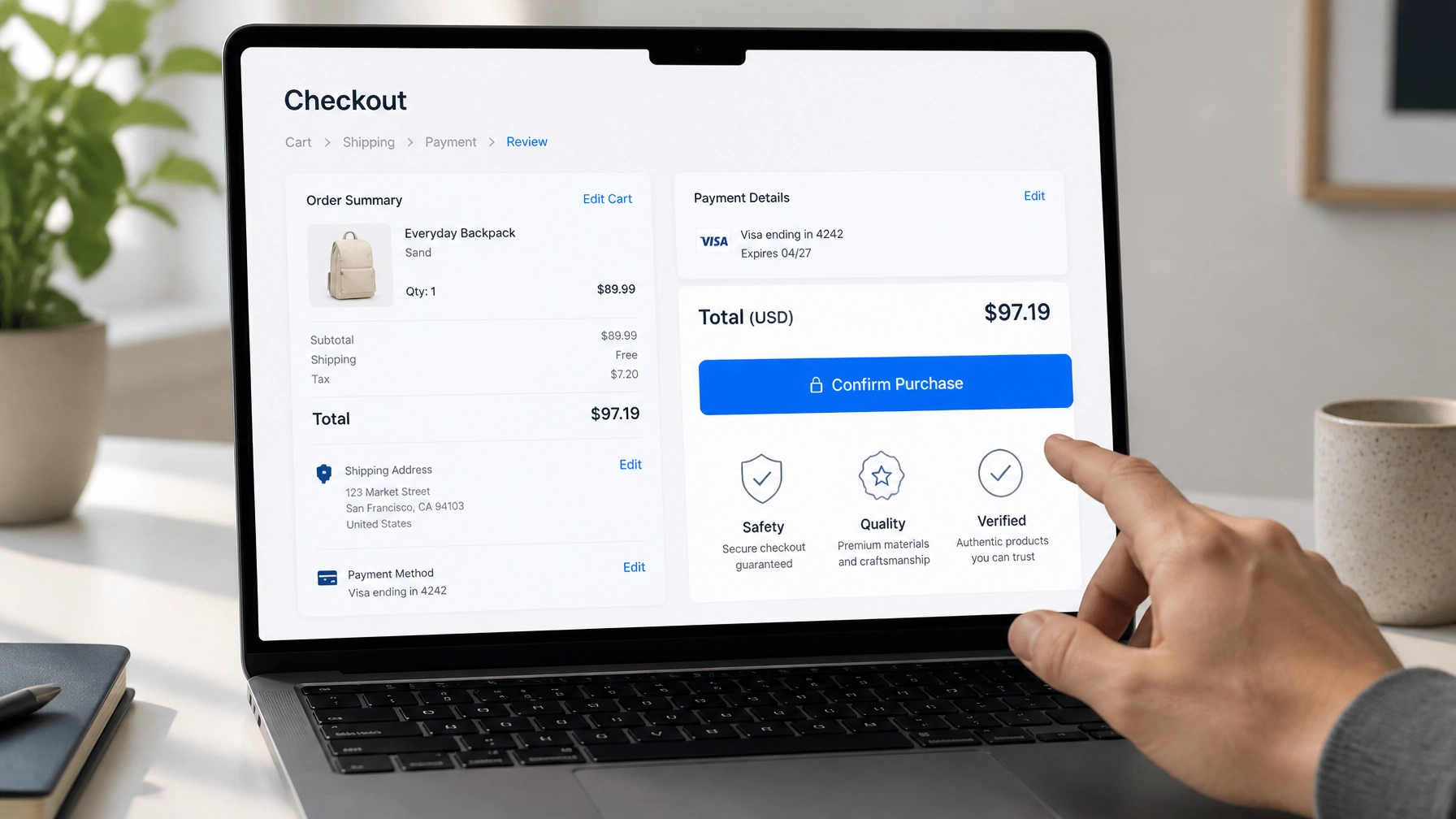
Most digital advertising strategies fail not in the ad itself, but in the “post-click gap.” This is the psychological space between the moment a user clicks your ad and the moment they decide to take action on your landing page.
If your ad uses “clickbait” tactics, vague promises, high-drama imagery, or misleading hooks, you might see a 5% or 10% click-through rate (CTR). But if the landing page doesn’t immediately validate that specific curiosity with deep, structural clarity, the user bounces. They feel misled, and your brand equity takes a silent hit.

At TrustMedia, we’ve observed that the most successful campaigns often have a lower CTR but a significantly higher “Decision Quality.” By being more specific, and even slightly exclusionary, in your ad copy, you filter out the curiosity seekers and invite only the decision-makers.
As we discussed in The Wrong Metric Hypothesis, focusing on the wrong KPI can quietly sabotage your growth. If you optimize for the cheapest click, you are essentially telling the algorithm to find the people who click on everything. Usually, those aren’t the people who buy anything.
Optimizing for Decision Quality vs. Curiosity
To move beyond the mirage, businesses must shift their focus from “How many people clicked?” to “What was the quality of the decision they made after the click?”
This requires a fundamental change in how you structure your campaigns, your creative, and your offers. You aren’t just trying to win a click; you’re trying to win an informed customer.
| Strategy Component | CTR-Optimized Campaigns | Decision Quality Campaigns |
|---|---|---|
| Primary Goal | Maximum traffic at lowest cost | Maximum intent at relevant cost |
| Creative Approach | High-emotion, vague hooks | Problem-solving, specific utility |
| Landing Page | Generic sales pitch | Guided education & proof |
| Success Metric | Click-Through Rate (CTR) | Post-Click Conversion & LTV |
| Customer Profile | Curiosity seekers & “clickers” | Qualified buyers with high intent |
When you optimize for decision quality, your ad becomes a filter. It identifies who has the problem you solve and provides enough context so that the click is a deliberate step toward a solution, not a mindless thumb-tap. This is closely related to The Creative Decay Problem, where ad performance drops because the creative stops being relevant to the right audience and starts being ignored by everyone else.
“The most expensive click in digital advertising is the one that results in a bounce. You’ve paid for the traffic, but you’ve lost the trust. In 2026, performance isn’t about volume; it’s about the density of intent within that volume.”
The Hidden Cost of “Cheap” Clicks
It is a common trap to believe that a $0.50 CPC is inherently better than a $5.00 CPC. But let’s look at the math. If the $0.50 click comes from a broad, non-specific audience, your conversion rate might be 0.1%. If the $5.00 click comes from a highly targeted ad that answers a specific query, like we see in The Search Signal, your conversion rate might be 10%.
The “expensive” click actually delivers a lower Customer Acquisition Cost (CAC) because you aren’t wasting budget on 999 people who have no intention of buying.

Real-World Example: Home Services
A regional HVAC contractor was spending $4,000 a month on “Emergency AC Repair” ads with a generic “Call Now” button. Their CTR was 8%, but 70% of the calls were for price-shopping or services they didn’t offer.
We shifted their strategy to “Decision Quality” creative. Instead of “Call Now,” we ran ads for a “Free Guide: 5 Signs Your AC Needs a Minor Repair vs. a Full Replacement.” The CTR dropped to 3%, but the lead quality skyrocketed. Because the guide pre-educated the customer, the calls they did get were from people who already trusted their expertise. Revenue increased by 22% while ad spend remained the same.
Real-World Example: E-commerce
A high-end baby gear brand was optimizing for “View Content” and “Clicks.” They were getting massive traffic from social media, but their cart abandonment rate was 85%. By shifting their optimization goal to “Add to Cart” and “Purchase,” and updating their ad creative to focus on safety certifications and durability rather than just “Sale” prices, they saw a shift.
Traffic volume decreased by 40%, but total revenue grew by 15%. They stopped paying for “window shoppers” and started paying for parents who were ready to invest in quality. This strategy aligns with The Content Lifecycle, where the value of a single asset is maximized by targeting the right intent rather than just chasing new eyeballs.
Strategic Observations for 2026
Modern advertising is moving away from the “volume game.” Platforms like Google and Meta are increasingly using AI to predict not just who will click, but who will convert. If you give these algorithms “Click” data as your primary success signal, they will find you more clickers. If you give them “Conversion Value” or “Qualified Lead” data, they will find you more customers.
- Stop Punishing Low CTR: If a campaign has a 1% CTR but a 20% conversion rate, it is your best-performing asset. Do not let “low engagement” metrics scare you away from high-intent results.
- Messaging Over Mechanics: The best targeting in the world won’t fix a weak offer or a confusing landing page.
- Clarity is the New Clever: In a crowded feed, being the most “useful” brand is more effective than being the “loudest” one.
The goal of your advertising should be to make the purchase decision inevitable for the right person. When your ad, your landing page, and your product all sing the same song of clarity and value, the “mirage” disappears, and real growth takes its place.
Why is my click-through rate high but my sales are low?
This usually indicates a “relevance gap.” Your ad is successfully grabbing attention, but the landing page isn’t fulfilling the promise, or you are attracting an audience that is curious but not ready to buy.
Is a low CTR always a bad thing?
No. A low CTR can be a sign of a “filtering” ad that excludes non-qualified users. If your conversion rate and ROI are healthy, a low CTR is often a strategic advantage.
How do I improve my “Decision Quality” in ads?
Be more specific about who the product is for: and who it isn’t for. Use educational hooks, transparent pricing, or “How it Works” visuals to pre-qualify the user before they click.
Should I stop using “Clickbait” styles entirely?
While high-drama hooks can work for awareness, they rarely drive high-quality conversions. For local services and professional practices, utility-based hooks almost always outperform “shouting” for attention.
What is the “Post-Click Gap”?
It is the moment of friction between clicking an ad and taking an action. Minimizing this gap requires a landing page that perfectly mirrors the ad’s tone, offer, and visual style.
How does AI influence these metrics in 2026?
Ad platform AI now prioritizes “signals” over “clicks.” By feeding the AI data on your most profitable conversions rather than just total clicks, you help it find your ideal customers more efficiently.
Can I run ads without a landing page?
You can use Lead Forms or Direct-to-DM ads, but even then, the “Post-Click” interaction happens inside the form or the chat. The quality of that interaction still dictates your final ROI.
How often should I change my ad creative?
If your “Decision Quality” metrics (like lead-to-close ratio) start to slip, it’s a sign of creative fatigue. We recommend reviewing performance every 14–30 days depending on your budget volume.