You’ve likely seen the data: a visitor spends three minutes on your product page, adds an item to their cart, initiates checkout, and then: silence. They vanish.
In the high-stakes world of e-commerce, the default reaction to this abandonment is often a discount. We send a “15% off” email or plaster a “Limited Time Offer” banner across the site, hoping price is the only lever left to pull. But modern buyer behavior suggests a different reality. Most shoppers don’t leave because the price is too high; they leave because the mental effort required to finish the transaction became too heavy.
This is the “Clarity Advantage.” While discounts provide a temporary spike in volume, clarity provides a permanent lift in conversion. By understanding the psychology of friction and the architecture of trust, brands can move beyond the race-to-the-bottom pricing strategy and build a shopping experience that feels like a natural extension of the customer’s intent.
The Psychology of the “Micro-Stall”
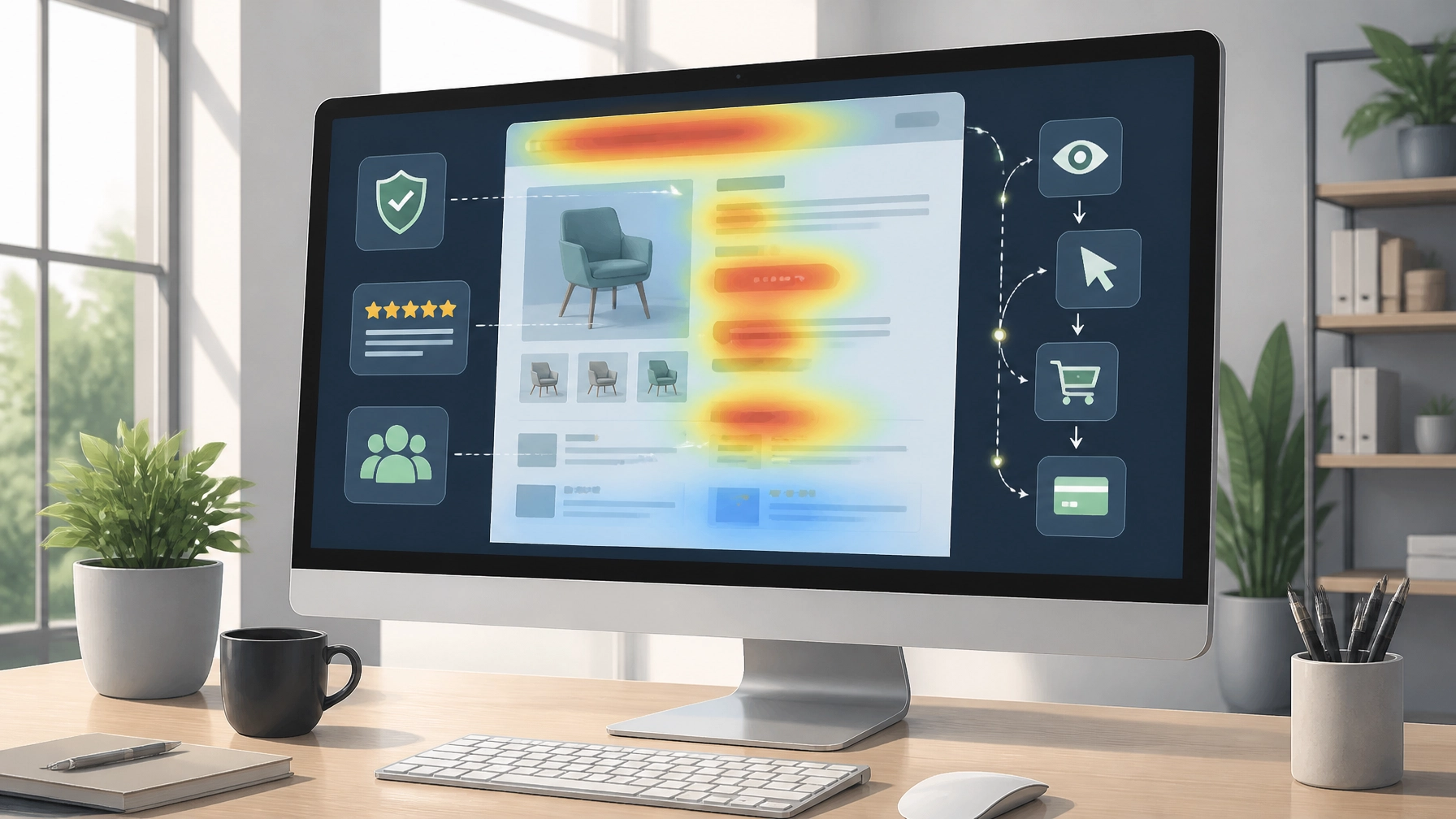
Every click, every form field, and every ambiguous shipping policy represents a “micro-stress” for your customer. These don’t always cause immediate abandonment, but they accumulate. In behavioral economics, we call this cognitive load. When the mental energy required to understand an offer exceeds the perceived value of the product, the brain defaults to the easiest path: leaving.
Shoppers today are background-checking your brand in real-time. They aren’t just looking for the best price; they are looking for the path of least resistance and maximum certainty. When a shopper hesitates, they are often stuck in what we call The Hesitation Gap: a space where micro-doubts about sizing, shipping times, or return policies outweigh the excitement of the purchase.
“Confidence becomes the new conversion currency in 2026. Decisions hinge on certainty rather than mere persuasion. That certainty is built through delivery windows, sizing accuracy, and transparent policies that confirm a shopper’s choice.” : Global E-commerce Trends Report
The Impact: Clarity vs. Discounts
Research shows that while a discount might lift conversion by 1-2 percentage points, optimizing for clarity: specifically through reviews, transparent pricing, and fast load times: can produce relative lifts of up to 270%.
| Factor | Strategic Impact | Long-Term Result |
|---|---|---|
| Site-wide Discount | Temporary volume spike; margin erosion. | Trains customers to wait for sales. |
| Product Clarity | Permanent conversion lift; reduced support tickets. | Builds brand authority and trust. |
| Frictionless Checkout | 18% reduction in abandonment (avg). | Increases Customer Lifetime Value (LTV). |
| Transparent Returns | High confidence at decision point. | Lowers perceived risk for first-time buyers. |

Reducing Friction: The Practical Playbook
To win on clarity, you must audit your store not through the eyes of a marketer, but through the eyes of a skeptical, time-poor customer. Friction hides in the places we take for granted.
1. Product Detail Page (PDP) Certainty
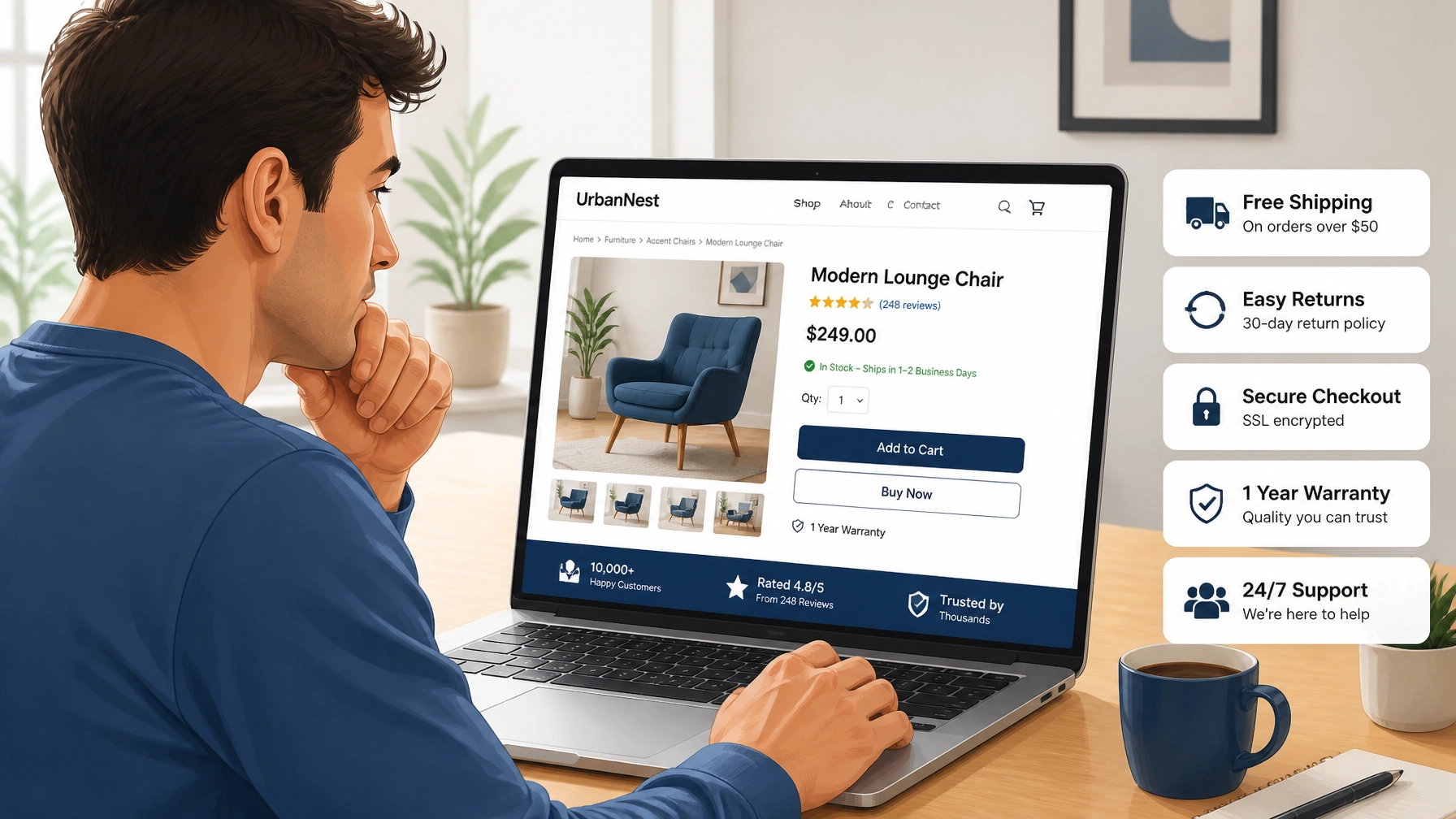
Your PDP is not a brochure; it is a decision-support tool. Most shoppers aren’t looking for more adjectives; they are looking for data that proves the product fits their life.
- Visual Hierarchy: Use high-resolution, contextual images that show the product in use. If you sell a 20oz water bottle, show it in a standard car cup holder.
- The “Above the Fold” Truth: Price, stock status, and a clear delivery window should be visible without scrolling.
- Sizing and Technical Accuracy: Don’t just provide a size chart. Provide a “how it fits” guide based on real customer feedback (e.g., “Runs small, 70% of customers recommend sizing up”).
2. The Post-Click Experience
Trust isn’t just about what happens before the “Buy” button; it’s about what the customer expects will happen after. This is where The Decision Debt starts to pile up. If a customer isn’t sure when the item will arrive or how hard it will be to return, they will hold onto their credit card.
- Transparency over Polish: A “Free 30-day returns” badge is worth more than five paragraphs of marketing copy.
- Shipping Honesty: If you can’t ship for three days, say so. Unexpected delays are trust-killers; expected delays are merely logistics.
3. The Invisible Checkout
The best checkout experience is one the customer barely remembers. This is the peak of decision anxiety, and every extra field is a reason to quit.
- Guest Checkout by Default: Forcing account creation is the digital equivalent of asking for a marriage license before the first date.
- Wallet Integration: Apple Pay, Google Pay, and Shop Pay remove the physical friction of finding a wallet and typing numbers. In 2026, biometric authentication is the gold standard for mobile conversion.
- Cost Transparency: Surprise taxes or shipping fees at the very last step are the leading cause of cart abandonment. Show the total cost as early as possible.

Why Clarity Beats Discounts for Long-Term Growth
Relying on discounts to drive sales creates a “performance mirage.” You see revenue numbers climb, but your margins shrink and your customer quality degrades. High-discount shoppers are rarely loyal; they are loyal to the price, not the brand.
Conversely, a strategy built on clarity attracts high-intent buyers. These customers value their time and their peace of mind. When you make the decision easy for them, you aren’t just selling a product: you’re selling a reliable experience. This is how you cross The Clarity Threshold, the point where your site stops being a vending machine and starts being a trusted partner in the customer’s buying journey.
Strategic Observations for 2026:
- Predictive Personalization: Use AI to reduce the search effort. Instead of showing “related products,” show “the most likely next purchase” based on their specific browsing pauses and scroll depth.
- Sustainability as Trust: Transparent supply chains (often documented through Digital Product Passports) are becoming a requirement for trust, not just a “nice-to-have” for eco-conscious shoppers.
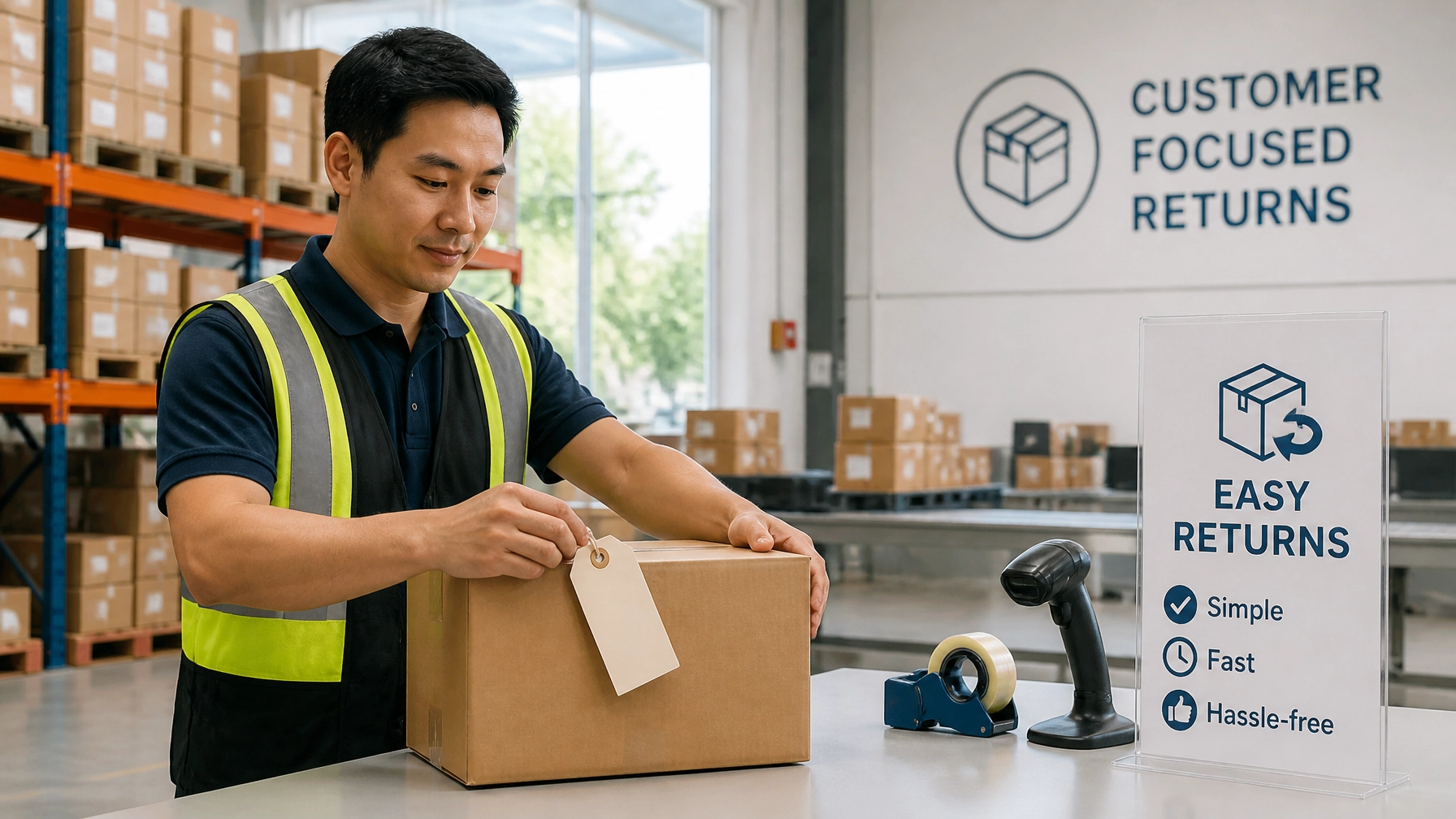
- The Return on Returns: Brands that offer “no-box, no-label” returns often see a higher initial conversion rate because the psychological risk of a “bad buy” is effectively neutralized.
Building the Frictionless Future
At TrustMedia, we view e-commerce marketing as a balance of psychology and performance. We don’t just look at how much traffic we can drive; we look at how much friction we can remove. Whether you are an established eCommerce brand or a local business expanding your online footprint, the goal remains the same: create a path so clear that the customer doesn’t have to think twice.
If your current strategy feels like it’s stalling despite heavy ad spend or deep discounts, the problem likely isn’t your price: it’s your clarity. By investing in a frictionless journey today, you build a foundation for retention that no discount code can match.
Why do shoppers abandon carts even when they are interested?
Shopper abandonment is rarely about a lack of interest. Most often, it’s caused by “micro-stalls”: unexpected shipping costs, a confusing return policy, or a forced account creation. These small frictions create cognitive load that outweighs the desire for the product.
How can I build trust on my e-commerce site without over-explaining?
Trust is built through transparency and social proof. Use verified customer reviews that mention specific use cases, clearly display your return policy near the “Add to Cart” button, and use familiar, secure payment gateways like Shop Pay or Apple Pay.
Are discounts still effective in 2026?
Discounts are a tactical tool, not a long-term strategy. They are effective for clearing inventory or acquiring a specific segment, but they can erode brand value if used too frequently. Clarity and trust signals generally produce a higher and more sustainable conversion lift than price cuts.
What is the post-click experience and why does it matter?
The post-click experience refers to everything that happens after a customer interacts with your site or ad. It includes the ease of checkout, the transparency of shipping updates, and the simplicity of the return process. A positive post-click experience is the primary driver of repeat purchases and long-term customer loyalty.