
Think about the last time you opened an email from a brand within seconds of it hitting your phone. What made you do it? It probably wasn’t a flashing “90% OFF” banner or a desperate “Please Come Back” subject line. More likely, it was a message from a brand you actually like, arriving exactly when you were thinking about their product, offering something that felt specifically designed for you.
In a world where we are bombarded by thousands of digital signals every day, the inbox remains one of the few semi-private spaces left. It is where we receive bank statements, letters from family, and flight confirmations. When a business is invited into that space, it isn’t just a marketing opportunity: it’s a massive transfer of trust.
Yet, most businesses treat this invitation like a megaphone. They blast generic updates to everyone at once, wondering why their open rates are plummeting and their “Unsubscribe” numbers are climbing. If you want to turn your email list into a consistent engine for revenue, you have to stop thinking about “campaigns” and start thinking about relationships.
Trust: The Hidden Currency of the Inbox
Digital marketing has evolved into a battle for attention, but in 2026, attention is no longer enough. You need intention. While social media algorithms decide what your followers see, email is a direct line that you own. However, that line is fragile.
Every time you send an email that provides no value, you spend a little bit of your “trust capital.” When that capital runs dry, your emails start getting ignored, or worse, marked as spam. According to recent data, 69% of recipients report emails as spam based solely on the subject line, and over 56% of consumers will unsubscribe if they receive more than four marketing messages from the same company within a month.
Building trust in the inbox means moving away from the “transactional” and toward the “relational.” This involves:
- Consistency over Intensity: Sending one high-quality, relevant email a week is infinitely better than three desperate ones.
- Radical Transparency: Being clear about why you are emailing and making it easy to opt-out.
- Value-First Communication: Providing insights, education, or entertainment before asking for a credit card number.
By positioning yourself as a helpful guide rather than a persistent salesperson, you solidify your brand’s place in the customer’s life. This is the core philosophy behind our Email & SMS marketing services: engineering certainty and reliability into every touchpoint.
Segmentation: The Architecture of Relevance
If you are sending the same email to a first-time browser that you send to a customer who has spent $5,000 with you over five years, you are failing both of them. One needs an introduction; the other needs a “thank you” and a VIP preview.
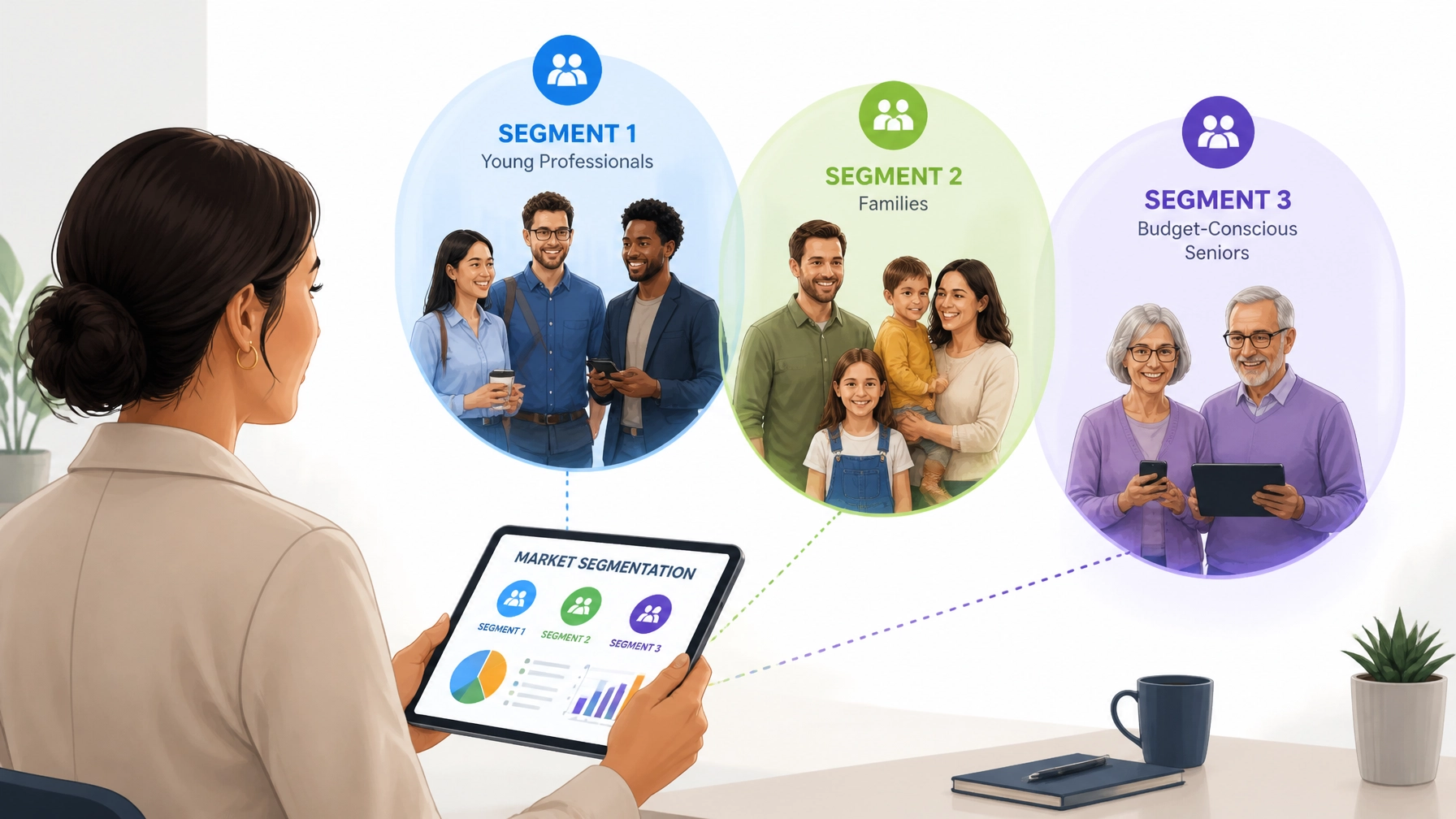
Segmentation is the process of breaking your list into smaller groups based on shared characteristics. It is the closest thing a digital marketing agency has to a superpower. When you segment, your “open rates” become a secondary metric; the real winner is the “relevance score” in the mind of the recipient.
Consider these high-impact segments for 2026:
- Lifecycle Stage: Are they a new lead, a first-time buyer, or a loyal advocate? Each requires a different narrative.
- Behavioral Triggers: Have they visited your pricing page three times in the last 48 hours? That’s a signal they need a final nudge or a specific FAQ.
- Purchase Frequency: Your “VIPs” should feel like they have a private back-channel to your brand.
- Zero-Party Data: Use surveys to ask them what they care about. If a customer tells you they only care about “Outdoor Gear,” stop sending them “Indoor Furniture” promos.
As we discussed in our guide on mapping the e-commerce customer journey, the goal is to make the reader feel like the email was written just for them.
The Psychology of Timing and Automation
The biggest mistake in email marketing is the “Blast.” A blast is an email sent to everyone at a time that is convenient for the business, not the customer. Automation, on the other hand, allows you to send emails at the exact moment they are most relevant to the individual.
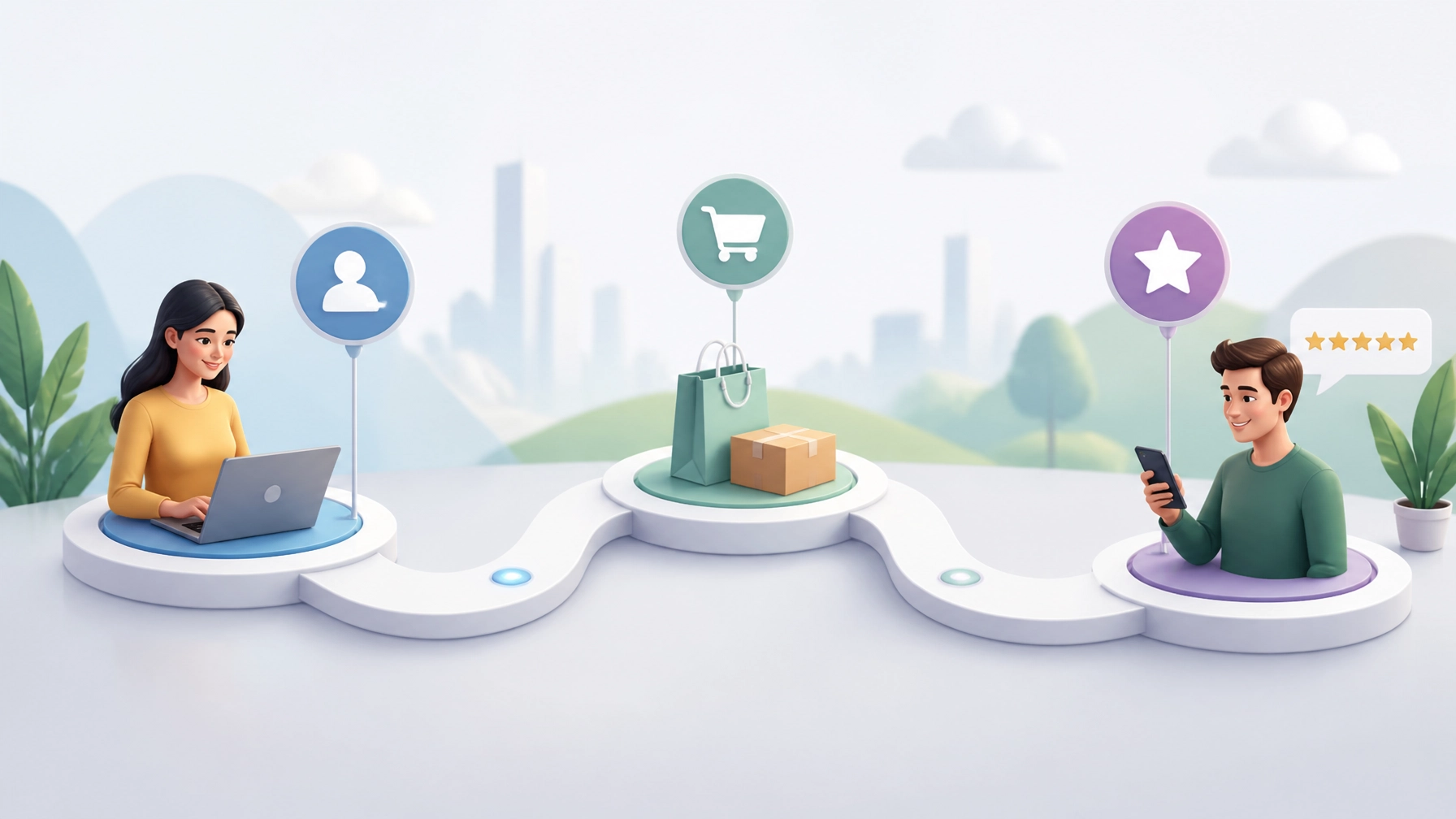
Effective automation isn’t about being “robotic”: it’s about scaling empathy. It’s knowing that a customer who just bought a complex piece of equipment probably needs a “How-to” guide three days later, not a coupon for a different product.
“Brands implementing true omnichannel email and automation see 90% higher customer retention and 250% higher lifetime value than single-channel approaches.” : Industry Benchmark Study, 2026
By setting up triggers based on customer behavior, you can bridge the hesitation gap that often prevents a second or third purchase.
Comparing Two Approaches to the Inbox
| Feature | The “Generic Blast” Approach | The “Trust-First” Strategic Approach |
|---|---|---|
| Primary Goal | Short-term revenue spikes | Long-term Customer Lifetime Value (LTV) |
| Audience | Everyone on the list | Specific behavior-based segments |
| Content | Discounts and sales announcements | Education, trust-building, and curated offers |
| Timing | Company-centric schedule | Customer-centric behavior triggers |
| Result | High churn and “promo tab” fatigue | High retention and brand advocacy |
Supporting the Decision-Making Process
Modern customers don’t just buy; they research. They compare. They hesitate. Your email strategy should support this messy middle of the buying journey. Instead of just pushing for a sale, use your emails to answer the questions they haven’t asked yet.
- Social Proof: Share stories of other customers who had the same problem and solved it with your help.
- Risk Reversal: Use emails to explain your warranty, your return policy, or your support process. This engineers certainty in the mind of a hesitant buyer.
- Educational Content: If you sell a service, teach them how to identify the problem themselves. If you sell a product, show them innovative ways to use it.
When you help a customer make a better decision, even if that decision isn’t to buy from you right this second, you have won. You have become a trusted advisor, and in the long run, the advisor always gets the business.
Optimizing for the Modern Reader
Finally, we must address the “how” of email. In 2026, the vast majority of your emails are being read on a mobile device, likely while the user is multitasking. If your email is a wall of text or has broken images, it will be deleted before the first sentence is read.
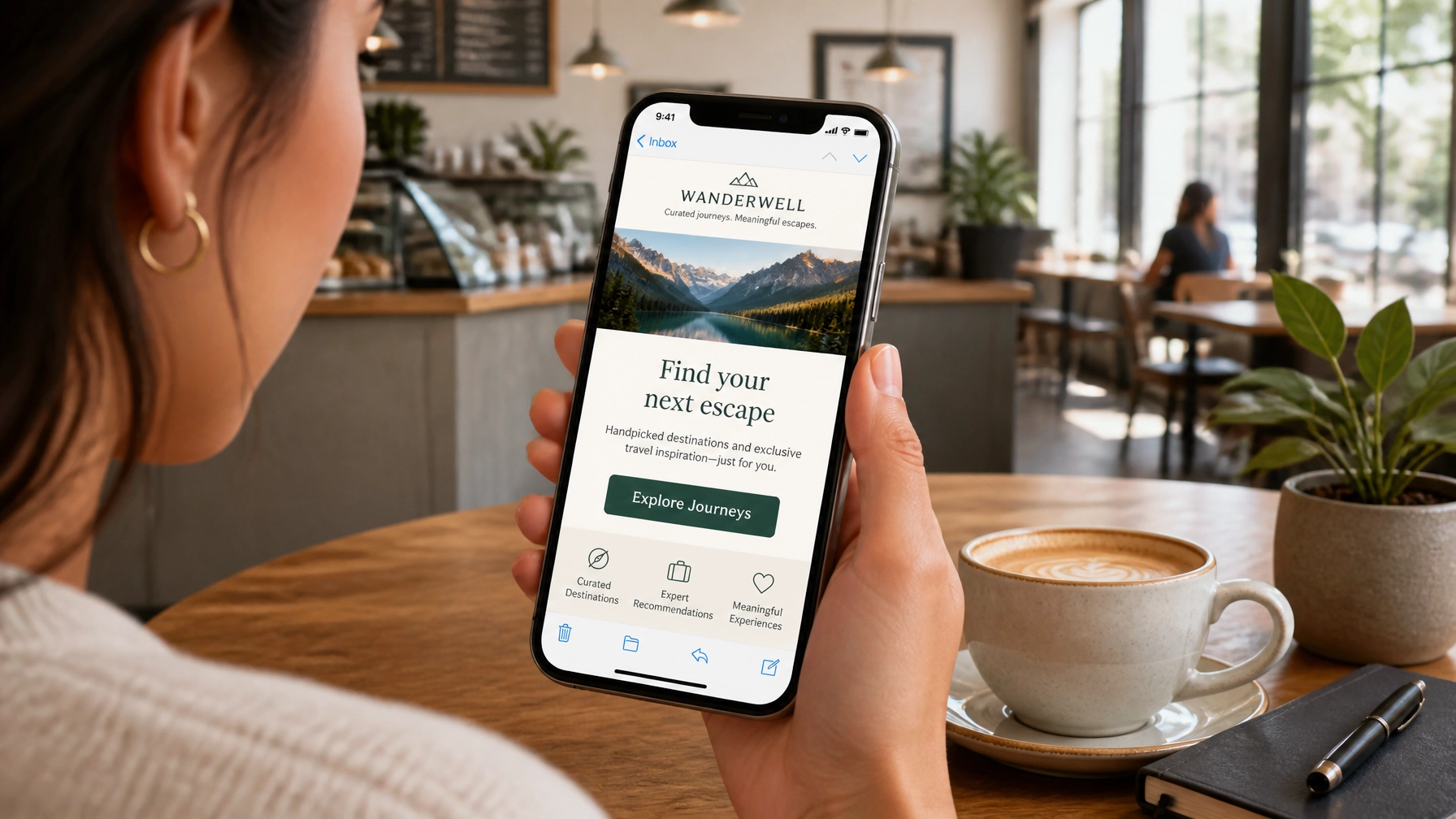
Strategic optimization includes:
- The 3-Second Rule: Can the reader understand the value and the “Call to Action” within three seconds of opening?
- Dark Mode Ready: Ensure your logos and colors don’t disappear when the user’s phone switches to dark mode.
- Accessibility: Use alt-text for images and clear, readable fonts.
At Trust Media, we believe that mobile-UX secrets aren’t just for websites: they apply to every pixel you send out.
Action Steps for Your Next Campaign
To transition from a “sender” to a “partner,” start with these three steps:
- Audit Your Frequency: Look at your unsubscribe rates. Are they spiking after a certain number of sends? Find your “sweet spot” and stick to it.
- Clean Your List: It’s better to have 1,000 engaged fans than 10,000 people who never open your mail. Regularly remove inactive subscribers to protect your deliverability.
- Implement One Automation: Don’t try to build a 50-step sequence overnight. Start with a robust “Welcome” flow that sets expectations and introduces your brand’s personality.
Email marketing is not dead; it has simply matured. It is no longer about who can shout the loudest, but who can listen the best and respond with the most relevance. When you master the art of the inbox, you don’t just build a list: you build a business that people actually want to hear from.
Is email marketing still effective with all the privacy changes?
Absolutely. In fact, privacy changes like Apple’s Mail Privacy Protection (MPP) make strategy even more important. Since “Open Rates” are less reliable, we focus on deeper metrics like click-through rates, conversion rates, and revenue per subscriber. These are “hard” metrics that prove actual business growth.
How often should I really be emailing my customers?
There is no “perfect” number, but the data suggests that for most local and e-commerce brands, 1–2 high-value emails per week is the limit before you see diminishing returns. However, automated flows (like cart abandonment) should trigger as often as the behavior occurs.
Do I need a huge list to see a return on investment?
Not at all. A small, highly segmented list of 500 people who trust you will always outperform a generic list of 5,000. Email is about depth of relationship, not just breadth of reach.
Should I use “Plain Text” or designed templates?
It depends on your brand. Professional services often see higher engagement with “Plain Text” because it feels like a personal note from a founder. E-commerce brands usually need visuals to showcase products. The best approach is often a mix of both.
How do I stop my emails from going to the Promotions tab?
Avoid “spammy” triggers like excessive capitalization, too many exclamation points, and “shouty” sales words in the subject line. Most importantly, encourage your subscribers to move your email to their primary inbox or “whitelist” your address early in your welcome sequence.


