In the high-velocity ecommerce landscape of 2026, the battle for customer attention has evolved into a battle for customer confidence. For years, the industry focused on the “how” of selling, more traffic, faster load times, and flashier ads. But today, the most successful brands are obsessed with the “why” behind the click. They recognize that every digital interaction is a delicate exercise in choice architecture.
When a customer lands on your site, they aren’t just looking for a product; they are looking for a reason to trust you. Modern ecommerce isn’t about overwhelming a visitor with options; it’s about reducing the cognitive load required to make a decision. By understanding the psychological triggers that drive or derail a purchase, you can transform your store from a simple catalog into a guided experience that feels both intuitive and inevitable.
The Paradox of Choice and Hick’s Law
One of the most common mistakes in ecommerce marketing is the “more is better” fallacy. We assume that providing fifty variations of a product gives the customer freedom. In reality, it often leads to analysis paralysis. Psychologically, this is known as Hick’s Law: the time it takes to make a decision increases with the number and complexity of choices.
In 2026, high-trust brands solve this by becoming curators rather than just retailers. Instead of forcing a user to sift through endless grids, they use predictive personalization to present the “best next step.”
Strategies for Guiding the Choice
| Strategy | Psychological Trigger | Implementation |
|---|---|---|
| Good/Better/Best | Comparison Bias | Presenting three clear tiers to simplify value assessment. |
| Predictive Sorting | Relevancy | Defaulting search results to “Recommended for You” based on micro-behaviors. |
| Progressive Disclosure | Cognitive Ease | Hiding complex specifications behind a “View More” button to keep the initial view clean. |
By narrowing the field, you aren’t limiting your customer; you are protecting their mental energy. This builds an immediate, albeit subconscious, level of trust. They feel that your platform “understands” what they need, which significantly reduces the friction of discovery.

Reducing Invisible Friction: The Cognitive Load Theory
Friction in ecommerce is rarely a broken link or a 404 error. Most friction is “invisible”, it’s the slight hesitation when a form is too long, the confusion over a shipping window, or the annoyance of having to create an account. These micro-frictions accumulate until they outweigh the desire for the product.
According to Cognitive Load Theory, our working memory has a limited capacity. Every time you ask a user to think about something other than the product, like “Where is the checkout button?” or “Will this arrive by Thursday?”, you are draining that capacity.
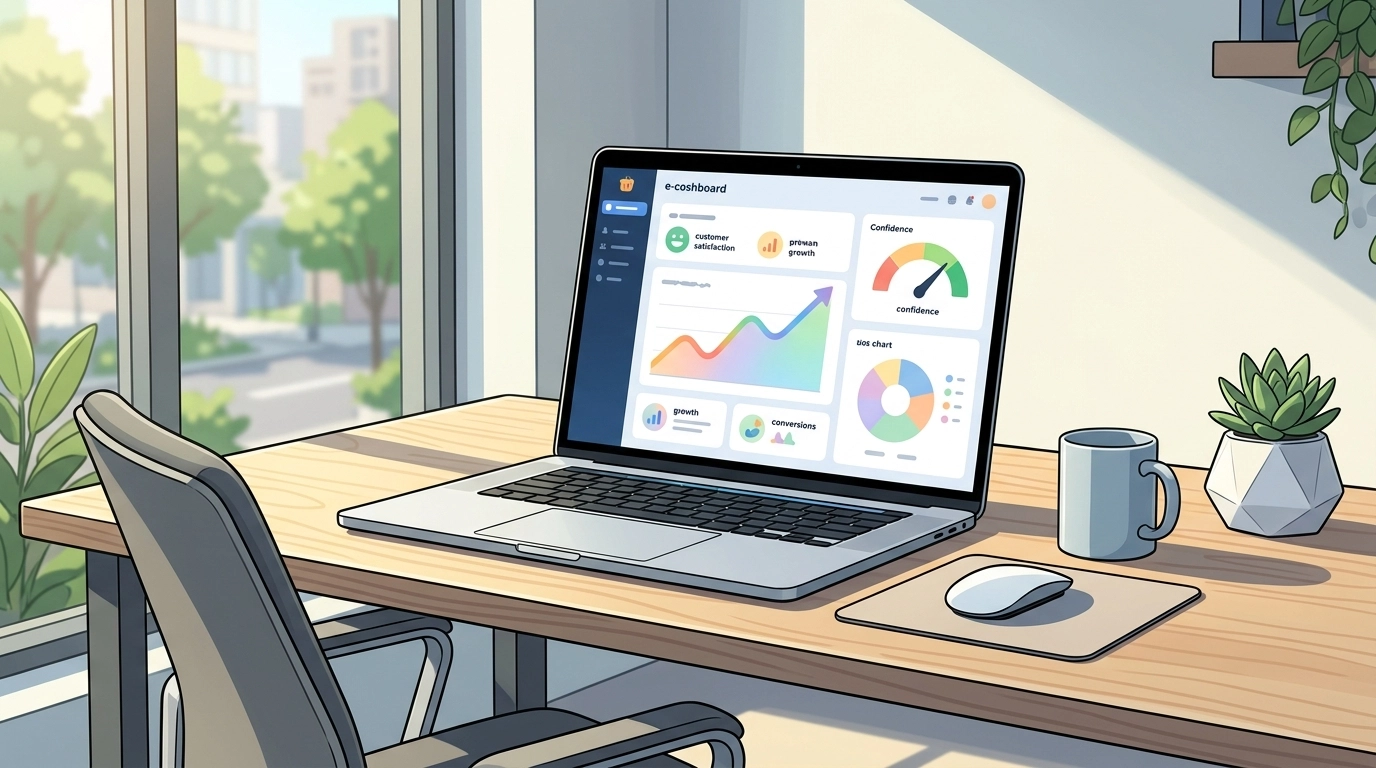
“Confidence becomes the new conversion currency. In 2026, journeys compress into fewer steps because AI assistants and decisive search allow customers to make decisions in a single sitting.” , BlueConic 2026 Retail Trend Report
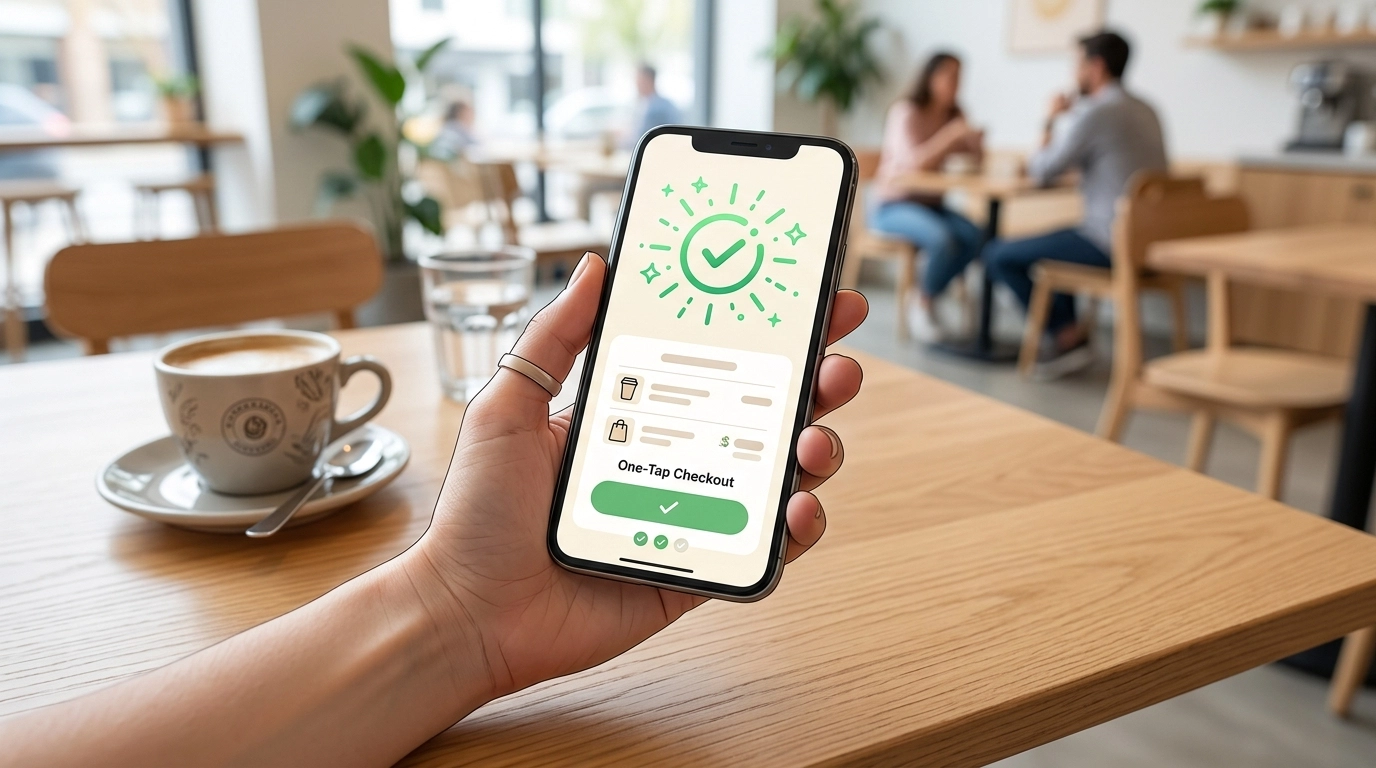
To combat this, your website strategy must focus on “flow.” Flow is the state where a user is so engaged with the experience that the interface disappears. This is why one-click checkouts and biometric payments have moved from “nice-to-have” to “non-negotiable.”
Trust as a Measurable Currency
Trust is often seen as a vague concept, but in high-conversion ecommerce, it is highly structural. It is built through transparency and social proof that feels authentic rather than manufactured. In an era where AI-generated content is everywhere, customers have developed a “bullshit detector” for overly polished marketing.
Real trust in 2026 is built on three pillars:
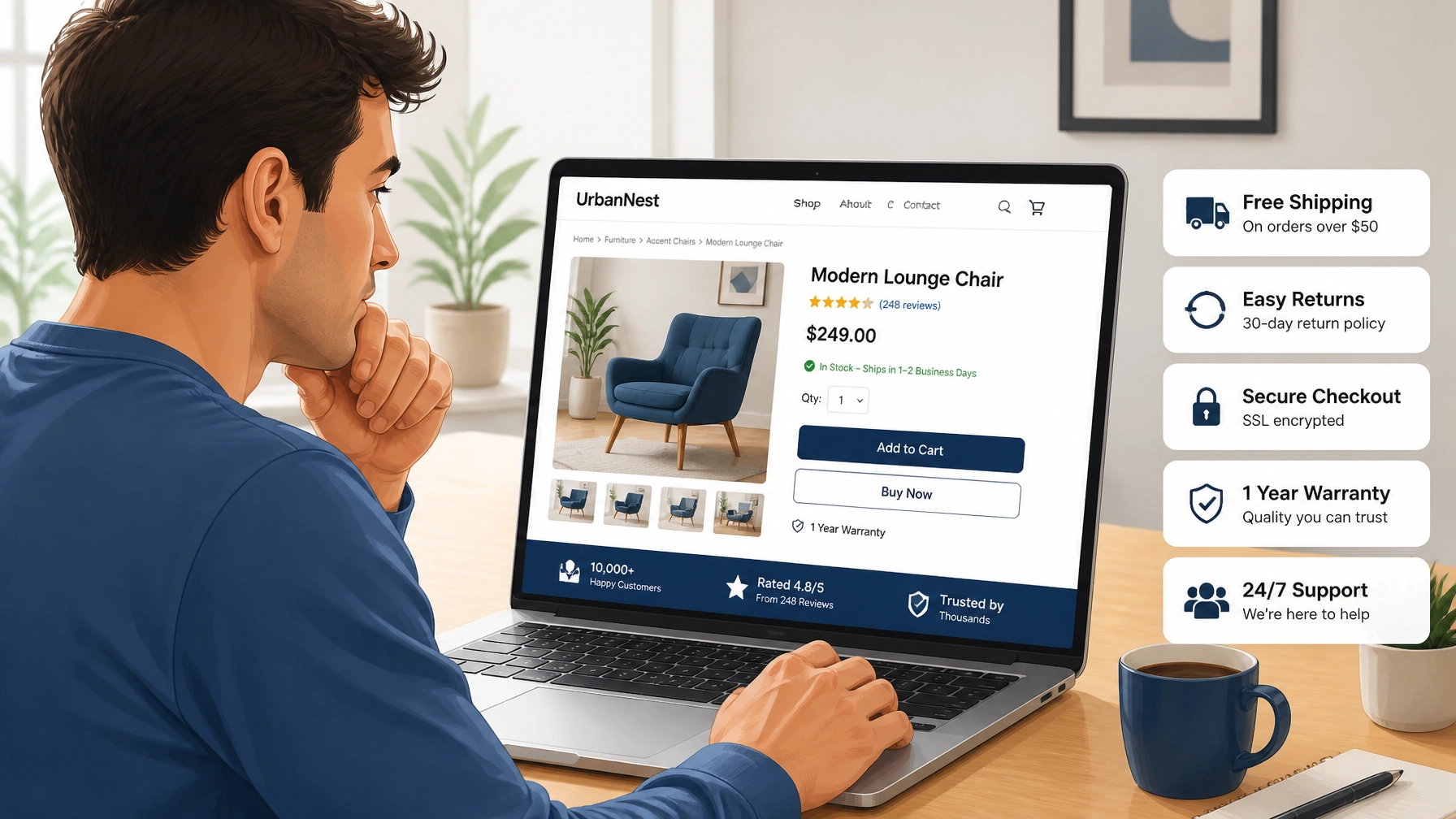
- Operational Transparency: Showing real-time inventory and precise delivery windows on the product page, not just at checkout.
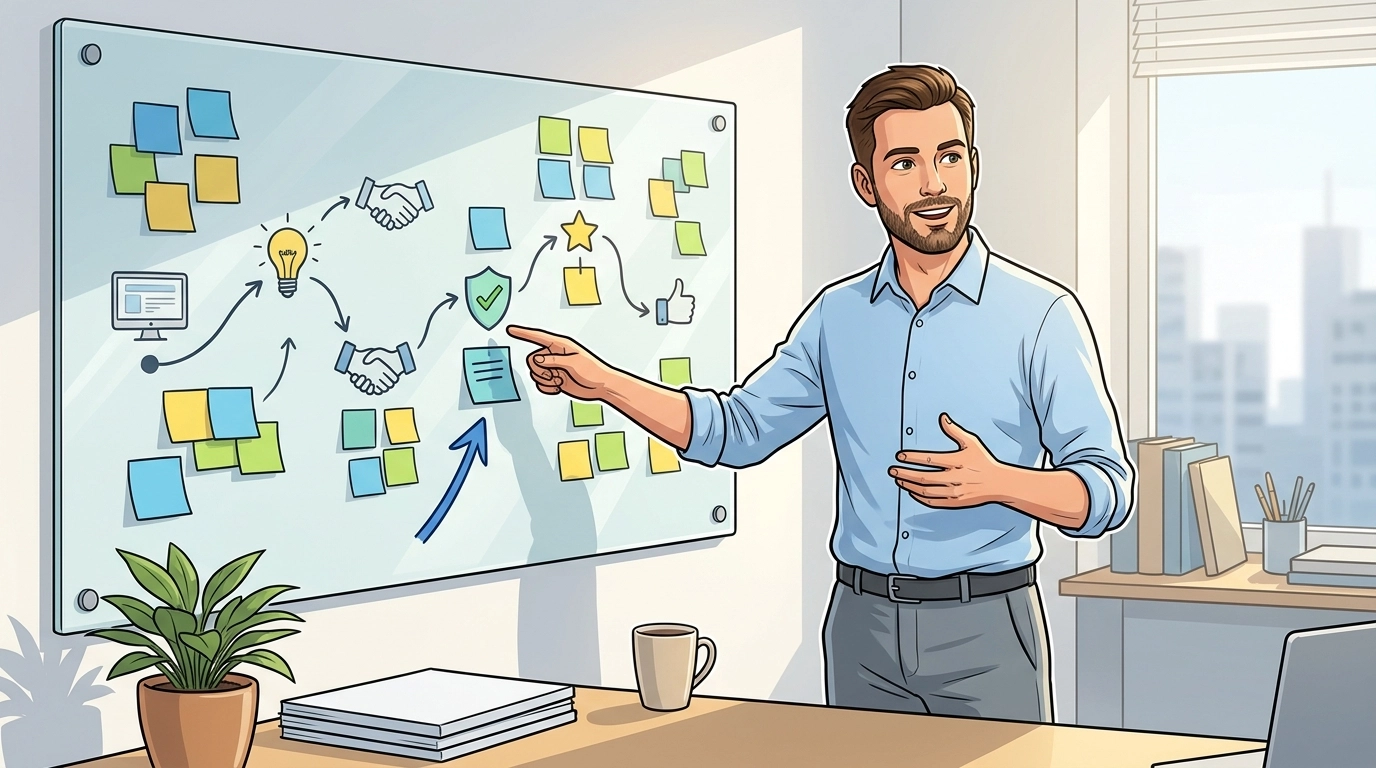
- Verified Social Proof: Moving beyond star ratings to include user-generated content (UGC) that shows the product in real-world settings.
- Risk Reversal: Making the return policy so visible and generous that the “cost of being wrong” drops to zero.
When you display a message like “Arrives by Thursday if ordered in the next 2 hours,” you aren’t just using an urgency tactic; you are providing a trust signal. You are telling the customer that your logistics are sophisticated enough to guarantee their satisfaction.
Behavioral Architecture in Email Marketing
The psychology of choice doesn’t stop once a visitor leaves your site. In fact, email marketing is where you can most effectively use behavioral data to reinforce trust and drive retention.
Instead of generic “We Miss You” blasts, modern retention strategies use “event-triggered architecture.” If a customer spent three minutes looking at a specific category but didn’t buy, the follow-up shouldn’t just be a discount code. It should be a piece of content that addresses the likely psychological barrier, perhaps a “Buying Guide” for that category or a showcase of top-rated reviews.
Personalization vs. Relevance
There is a critical difference between being “personal” (using their name) and being “relevant” (solving their current problem).
- Personal: “Hi John, we have a sale on shoes.”
- Relevant: “Hi John, we noticed you were looking at the TrailRunner 5.0. Here is how it compares to the version you bought last year.”
Relevant communication signals that you are paying attention to the customer’s needs without being intrusive. This creates a feedback loop of trust that keeps your brand top-of-mind for their next purchase.
The Strategic Shift: From Growth Hacks to Behavioral Logic
The brands that will dominate the late 2020s are those that stop looking for “hacks” and start looking at the human brain. Conversion optimization is not about tricking someone into clicking a button; it’s about architecting an environment where the “Yes” is the most logical and comfortable response.
Whether you are refining your paid advertising or rebuilding your checkout flow, ask yourself: Am I adding mental work for my customer, or am I taking it away?
By focusing on choice architecture, friction reduction, and radical transparency, you build more than just a high-converting store. You build a brand that people rely on. In a world of infinite options, being the “trusted choice” is the ultimate competitive advantage.
How does choice architecture differ from simple UX design?
While UX design focuses on the usability and functionality of an interface, choice architecture specifically focuses on how the presentation of options influences decision-making. It uses behavioral economics to guide users toward specific outcomes, like selecting a higher-value bundle or opting for a subscription, by making those choices the most appealing or the path of least resistance.
Why is operational transparency considered a trust signal?
Operational transparency involves showing the “work” behind the scenes, such as real-time stock levels, live shipping updates, or even the origins of materials. Psychologically, this reduces “ambiguity aversion,” which is the human tendency to avoid options with unknown risks. When a customer knows exactly when a product will arrive, they feel more in control of the transaction.
Can reducing options actually lead to fewer sales?
If done poorly, yes. The goal of choice architecture is not to eliminate variety but to organize it. The “Paradox of Choice” suggests that while people are attracted to variety, they are often paralyzed by it. By using smart filters, “Best Seller” tags, and curated bundles, you provide the variety people want while giving them the psychological shortcuts they need to choose.
How do I measure the “friction” on my ecommerce site?
Friction can be measured through several key metrics: Cart Abandonment Rate (at which specific step are they leaving?), Time to Purchase (how long does the average session take from landing to checkout?), and Form Completion Rate. If you see a high drop-off on a mobile checkout page compared to desktop, that is a clear indicator of interaction friction.
What is the role of AI in 2026 ecommerce psychology?
AI acts as the engine for “predictive paths.” In 2026, AI doesn’t just show “Related Products”; it anticipates intent. For example, if a shopper is hovering over comparison charts, the AI might trigger a chat prompt offering a detailed spec breakdown. It moves the experience from a static store to a dynamic, responsive environment that adapts to the user’s psychological state in real-time.