The days of patients simply typing “dentist near me” into a search bar are fading faster than you might think. We are entering the era of the “Agentic Web,” where AI assistants don’t just show a list of links, they navigate the web on your behalf, book appointments, and provide specific recommendations based on complex, multi-layered questions.
If you run a clinic or a dental practice, the rules of the game have fundamentally changed. It’s no longer just about ranking #1 on a screen; it’s about being the “chosen one” in a conversational interface. Whether it’s ChatGPT, Google Gemini, or specialized voice assistants, these tools are becoming the primary gatekeepers for local discovery.
This isn’t just another buzzword in the realm of emerging technologies. It is a structural shift in how local SEO for dentists and medical professionals functions. In this guide, we’ll explore how agentic technology is reshaping your patient pipeline and what you need to do to stay visible.
The Shift from Keywords to Conversations
In the past, local discovery was a keyword-matching game. If your website had the right phrases and a decent number of backlinks, you showed up. Today, patient behavior is pivoting toward conversational queries. Instead of “orthodontist Chicago,” a patient might ask their AI assistant, “Which orthodontist near Lincoln Park accepts Cigna, has great reviews for Invisalign, and is open after 5 PM on Tuesdays?”
This type of query is significantly more complex. To answer it, an AI must cross-reference your insurance list, your office hours, your proximity to the user, and the sentiment of your reviews.

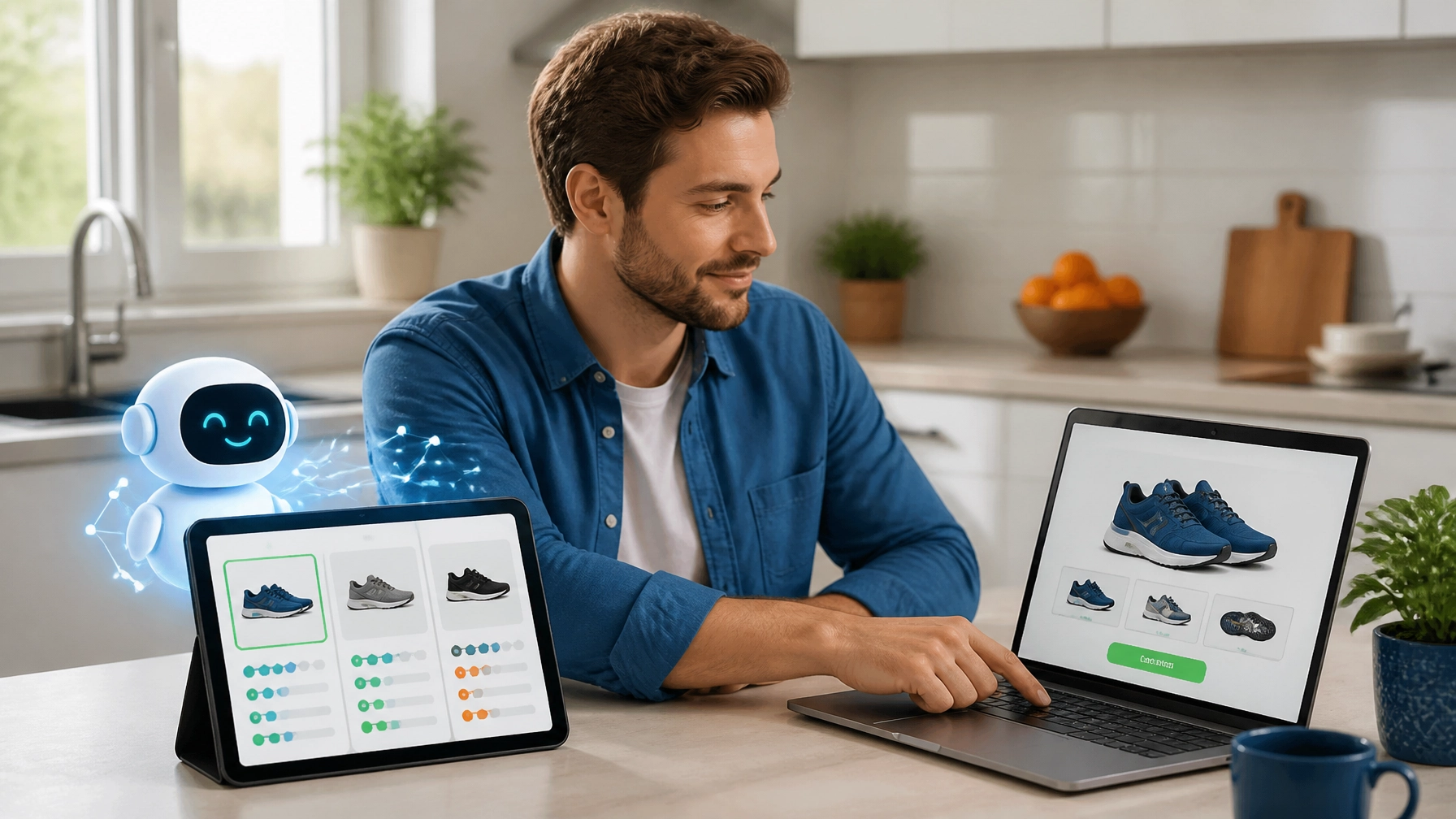
A cartoon-style landscape illustration showing a patient talking to a friendly robot assistant that is scanning a digital map of local clinics.
Recent data suggests that this isn’t a niche trend. Approximately 75% of ChatGPT users now rely on these conversational queries for local service searches. For specialized practices, the impact is even more pronounced. In some medical sectors, AI-attributed traffic saw a massive jump, with ChatGPT-related referrals increasing from 22% to 73% in just one year.
“Achieving AI visibility can be up to 30 times harder than traditional local SEO success, with less than 50% overlap between clinics that rank well on Google and those that AI platforms recommend.” , Source: Search Engine Journal Research on Local AI Discovery (2025)
Why Google Business Profile Optimization is Still the Foundation
You might think that if AI is taking over, your Google Business Profile (GBP) doesn’t matter as much. In reality, the opposite is true. Google Gemini, the AI powerhouse, relies heavily on the Google Knowledge Graph. This graph is fueled by the data you provide in your profile.
Effective google business profile optimization is now your most important data feed. If your hours are inconsistent or your service categories are vague, the AI assistant will simply skip you. It views conflicting data as a risk. If your website says you close at 6 PM but your GBP says 5 PM, the AI won’t recommend you to a patient looking for an evening slot because it can’t guarantee the information is accurate.
For dental practices, this means ensuring every detail is hyper-accurate to win the Google Maps mastery battle. You need to treat your profile as a live database rather than a “set it and forget it” listing.
How Agentic Systems Compare
Different AI “agents” have different ways of looking at your practice. While Google is the leader in local data, other players like Perplexity and ChatGPT are gaining ground by pulling from a variety of directories.
| AI Platform | Primary Data Sources | Best For | Clinic Strategy |
|---|---|---|---|
| Google Gemini | Google Maps, GBP, Web Crawl | Real-time local accuracy | Maximize GBP data and Google Reviews |
| ChatGPT | Bing, Yelp, OpenWeb, Direct Integrations | Complex, multi-step queries | Focus on high-authority healthcare directories |
| Perplexity | Real-time Web Index, Reddit, Specialized Databases | Fact-checking and comparison | Build local backlinks and FAQ pages |
| Apple Intelligence | Apple Maps, Yelp, Private Cloud Compute | iPhone/Siri voice search | Maintain high Yelp ratings and Apple Maps accuracy |
The “Hardness” of AI Discovery
As mentioned in the quote earlier, ranking in an AI response is significantly harder than showing up in the traditional “3-pack.” This is because AI agents prioritize “trust signals” over simple keyword density.

A cartoon-style landscape scene depicting a digital “Knowledge Graph” connecting a clinic’s reviews, website, and social media signals.
To be recommended, your practice must be a “verified entity” in the AI’s mind. This involves more than just why Google My Business is essential for local visibility; it requires a holistic digital footprint. This includes:
- Sentiment Consistency: AI sentiment analysis reads your reviews. It doesn’t just look at the star rating; it looks for themes. If your reviews constantly mention “short wait times,” the AI will recommend you for queries involving “fast appointments.”
- Schema Markup: Using advanced medical schema on your website helps AI agents understand your specific services, practitioners, and credentials.
- Local Backlinks: When local news sites or medical directories link to you, it solidifies your “entity” in the eyes of an AI. Understanding how local backlinking boosts your online presence is vital here.
Moving Toward Agentic Booking
The next phase of this technology isn’t just discovery, it’s action. We are seeing the rise of agentic AI ending manual management for small tasks. An AI agent won’t just tell a patient about your clinic; it will call or use an API to book the appointment directly.
For this to work, your digital infrastructure must be ready. If your booking system is clunky or doesn’t integrate with modern APIs, you’ll be bypassed for a competitor who offers a seamless “AI-to-Clinic” handshake. This is part of the conversion-first blueprint that separates successful practices from those stuck in 2020.

A cartoon landscape of a modern clinic with a digital “Open” sign that is glowing with binary code, representing an AI-integrated booking system.
The Role of Google Maps SEO in 2026
Google Maps SEO is no longer just about the map app. It is the data source for voice search through Android Auto, Google Home, and Gemini on mobile devices. If you want to dominate the local market, you have to realize that the AI search evolution is making Google Maps the central nervous system of local discovery.
For clinics, this means you should:
- Upload high-quality photos regularly: AI can “see” what’s in your photos to confirm you have a clean, modern facility.
- Respond to every review: This signals an active, trustworthy business to agentic systems.
- Use the Q&A section: Answer common questions yourself to provide the AI with pre-written “facts” it can use in its responses.
Future-Proofing Your Practice
The transition to agentic discovery might feel overwhelming, but it follows a simple logic: AI wants to provide the most accurate, trustworthy, and convenient answer to the user. By focusing on data consistency and user experience, you naturally align with what these algorithms want.
A cartoon-style landscape showing a dentist and a digital marketing specialist looking at a glowing holographic chart of increasing patient leads.
Make sure you are also looking at maximizing local SEO with online directory listings, as these act as secondary verification sources for AI agents. If your information is the same across the web, your “trust score” rises, making you a safe bet for the AI to recommend.
Q&A
What is agentic technology in local search?
Agentic technology refers to AI “agents” that can perform tasks, reason through complex queries, and interact with websites on a user’s behalf. In local search, this means an AI doesn’t just show a link; it evaluates clinics and may even book an appointment for the patient.
Does traditional SEO still matter for my clinic?
Yes, but the focus has shifted. Traditional SEO factors like high-quality content and backlinks are now used by AI to verify your practice’s authority and sentiment. Without a strong SEO foundation, AI agents won’t “trust” your business enough to recommend it.
How can a dentist optimize for voice search?
Focus on natural language and long-tail questions. Create an FAQ page that answers specific questions like, “Does [Practice Name] offer emergency dental care in [City] on weekends?” This helps AI assistants find direct answers for voice queries.
Why is data consistency so important for AI discovery?
AI systems cross-reference multiple sources (GBP, Yelp, your website). If they find conflicting information: like different phone numbers or hours: they perceive your business as “unreliable data” and will likely recommend a competitor with consistent information instead.
Which AI platform is most important for local clinics?
Currently, Google Gemini is the most critical because it pulls directly from Google Business Profiles and Maps. However, keeping your information updated on Yelp and Apple Maps is also vital for capturing users on ChatGPT and Apple Intelligence.