The retail landscape is no longer a battle between physical stores and digital screens. In reality, the most successful local businesses in 2026 have realized that their website isn’t just a place to sell products, it’s a high-performance engine designed to drive physical foot traffic. For a local retailer, “scaling” doesn’t necessarily mean shipping boxes across the country; it means using digital tools to capture local intent and funnel it through your front door.
You might feel the pressure of massive online marketplaces, but you possess an advantage they can never replicate: physical proximity and immediate gratification. By integrating e-commerce strategies with local search signals, you can transform your digital presence from a static brochure into a dynamic invitation to visit your shop.
The Power of Local Inventory Visibility
The journey of a modern customer almost always begins with a search query. Whether they are looking for “local seo for plumbers” to fix a leak or searching for a specific pair of running shoes, they want to know if what they need is available nearby. If your website doesn’t display your real-time stock, you are essentially invisible to a massive segment of the market.
Local inventory visibility bridges the gap between digital browsing and physical buying. When a customer sees that an item is “In Stock” at a location five miles away, the friction of the purchase vanishes. They don’t have to wait for two-day shipping; they can have it in twenty minutes.
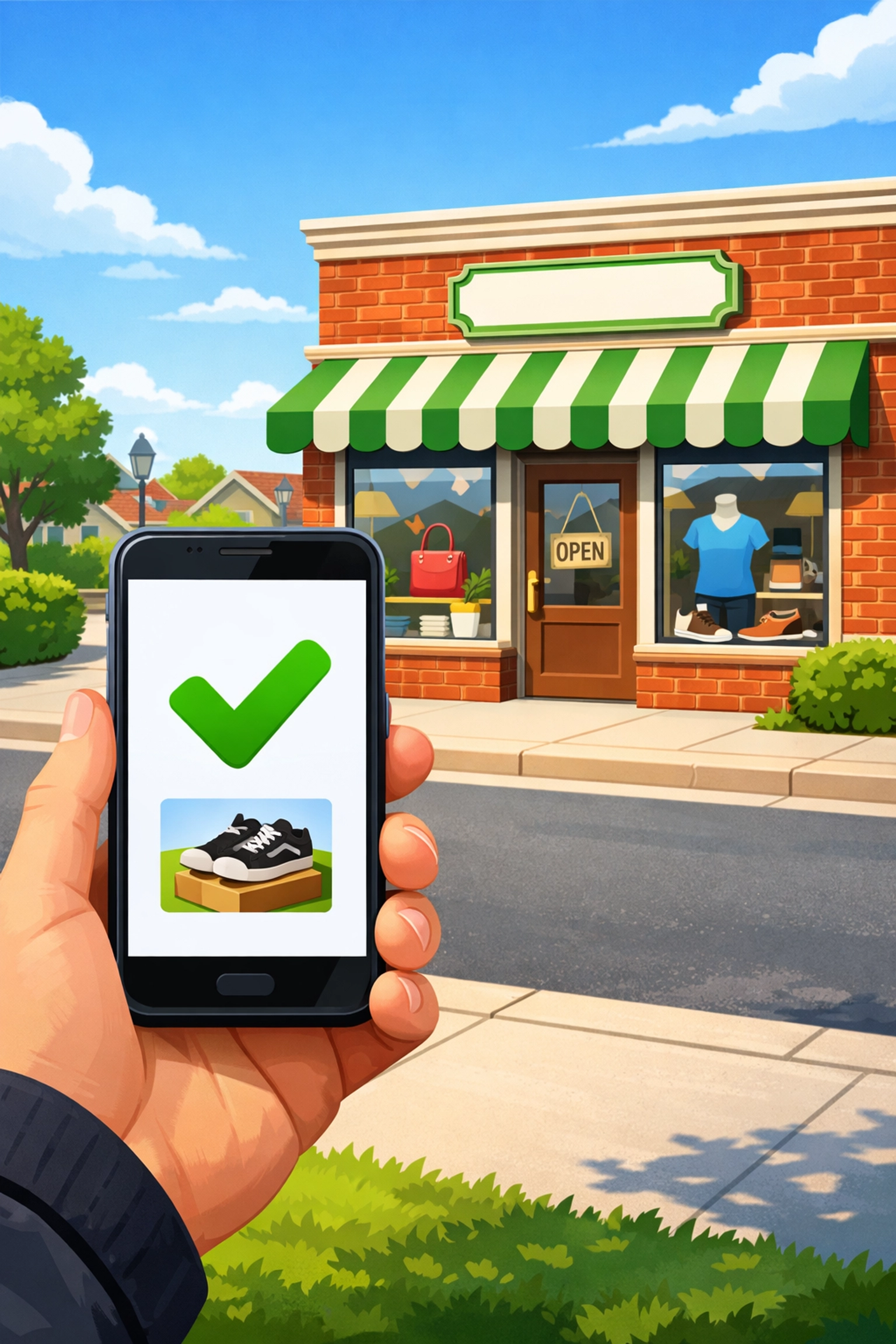
A colorful, landscape-oriented cartoon illustration showing a customer looking at a smartphone displaying “In Stock” while standing in front of a friendly local storefront.
Research shows that this transparency is no longer optional for businesses that want to survive the digital shift.
“76% of consumers prefer to shop at retailers that offer local inventory visibility, as it provides convenience and immediacy.” , [Source: Local Retail Consumer Trends Report]
By leveraging tools like Google Local Inventory Ads, you can display your products directly in search results when users look for items “near me.” This strategy effectively turns your e-commerce platform into a lead-generation tool for your physical location.
Click-and-Collect: The Ultimate Foot Traffic Driver
Buy Online, Pick Up In-Store (BOPIS) has moved from a “nice-to-have” feature to a fundamental consumer expectation. This fulfillment model is the perfect hybrid of e-commerce efficiency and retail experience. For you, the retailer, the benefit is twofold: you secure the sale online, and you get the customer inside your store.
Once a customer walks through your doors to pick up an order, the opportunity for upselling increases significantly. They might realize they need an accessory for the item they bought, or they might be drawn in by a seasonal display. This is a strategy used by professional service providers too; just as data that delivers helps a clinic predict patient flow, e-commerce data helps you predict which products will drive the most pick-up traffic.
| Fulfillment Strategy | Customer Benefit | Business Benefit |
|---|---|---|
| BOPIS (Pick-up) | No shipping costs, immediate item access. | Increased foot traffic, higher impulse buy potential. |
| Local Delivery | Ultimate convenience, supports local. | Competes with Amazon, builds brand loyalty. |
| In-Store Reservation | Risk-free “try before you buy.” | Captures high-intent leads without payment friction. |
| Curbside Pickup | Maximum speed and safety. | Streamlines operations for high-volume periods. |
Email Marketing: Personalizing the Local Experience
While e-commerce platforms handle the transactions, email marketing acts as the glue that keeps local customers coming back. For a digital marketing agency for small business, email is often the highest ROI channel because it leverages owned data rather than rented social media audiences.
Effective local e-commerce marketing involves more than just blasting coupons. It requires segmenting your audience based on their physical location and past purchase behavior. For instance, if you run an outdoor gear shop, you can email customers within a 10-mile radius about an upcoming in-store workshop on hiking safety, linking to the gear they’ll need on your e-commerce site.
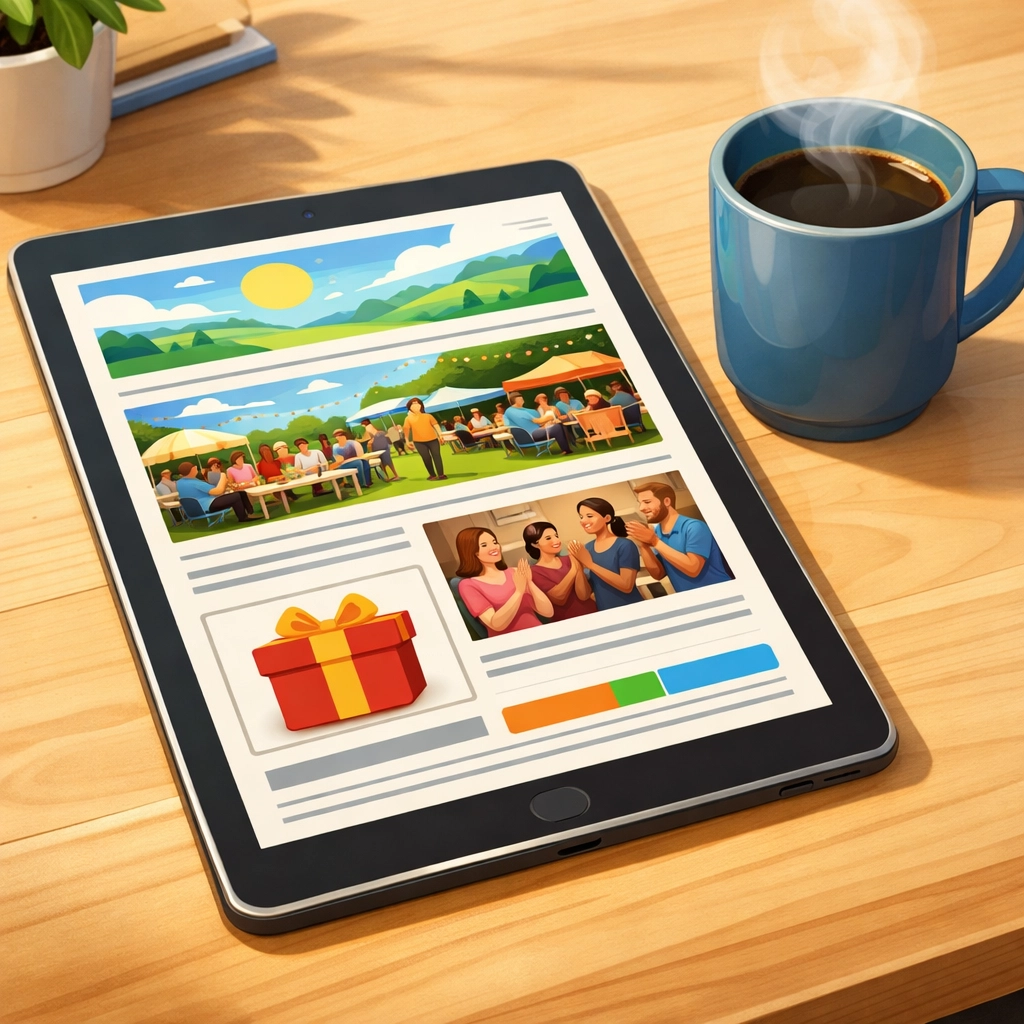
A landscape cartoon style image featuring a digital tablet showing a vibrant email newsletter with “Local Event Tonight!” and “Exclusive In-Store Discount” written on it.
We’ve seen how using sentiment analysis can humanize these interactions. Instead of a generic “Buy Now” button, your emails should invite the community into your space. Whether you are providing local seo services for a boutique or managing a large retail inventory, the goal remains the same: use digital communication to foster physical community.
Integrating SEO for Maximum Local Reach
To drive traffic to your store, your e-commerce site must be optimized for local search intent. This involves more than just standard product descriptions. You need to ensure your google business profile optimization is fully synced with your online store.
Many retailers treat their website and their Google Maps listing as two separate entities, but they are deeply interconnected. High-quality product images on your website can feed into your Google Business Profile, improving your google maps seo.
Consider these essential steps for local retail SEO:
- Conduct a local seo audit: Ensure your Name, Address, and Phone number (NAP) are consistent across all platforms.
- Use location-based keywords: Incorporate the names of your neighborhood or city into your product categories.
- Build local backlinks: Partner with local bloggers or news outlets to link to your store’s events or unique product launches.
This level of optimization isn’t just for retail; it’s the same framework we use when providing local seo for contractors or seo for dentists. The algorithm rewards businesses that prove they are relevant to their specific geographic area.
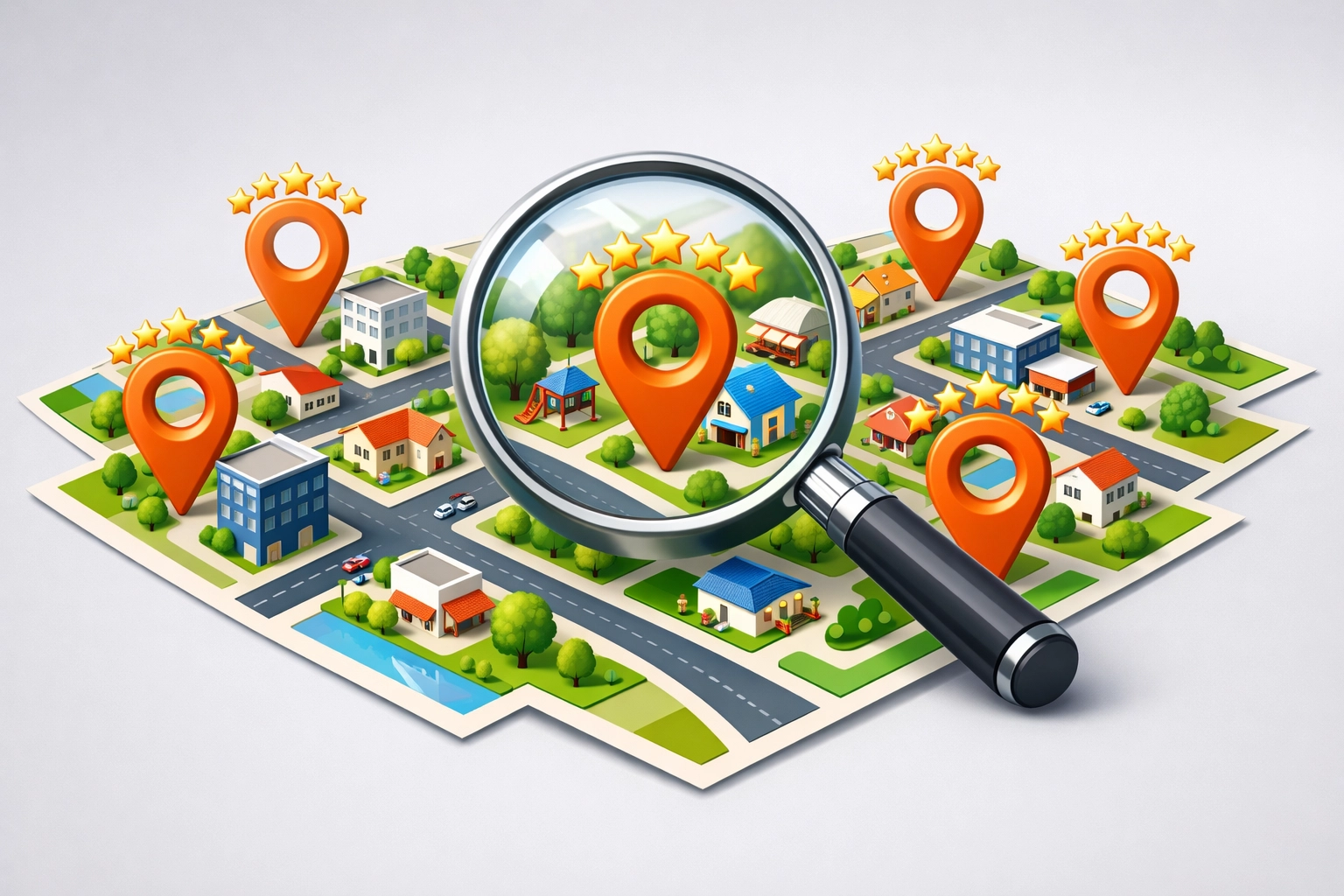
A landscape cartoon style illustration of a magnifying glass hovering over a city map, with little store icons popping up with 5-star ratings.
Leveraging Emerging Tech and AI
The “AI Assistant Era” isn’t just for tech giants. Local retailers are now using agentic technology to handle customer inquiries about stock levels and store hours. As we’ve noted in our look at the AI search evolution, customers are increasingly using voice search and AI chat to find products.
If a customer asks an AI assistant, “Where can I find a cast-iron skillet near me right now?” your store should be the top answer. This requires your e-commerce backend to be structured in a way that AI crawlers can easily understand your inventory and location. Modern agencies are helping businesses move away from manual updates and toward automated systems that ensure your digital footprint is always accurate. Just as agentic AI is redefining discovery for clinics, it is also helping retailers scale without needing a massive marketing department.
Creating a Seamless Omnichannel Feedback Loop
The ultimate goal is to create a “flywheel” effect. Your e-commerce site drives a customer to your store. Their positive in-store experience leads them to leave a review on your Google Business Profile. That review improves your search ranking, which drives more traffic back to your website.
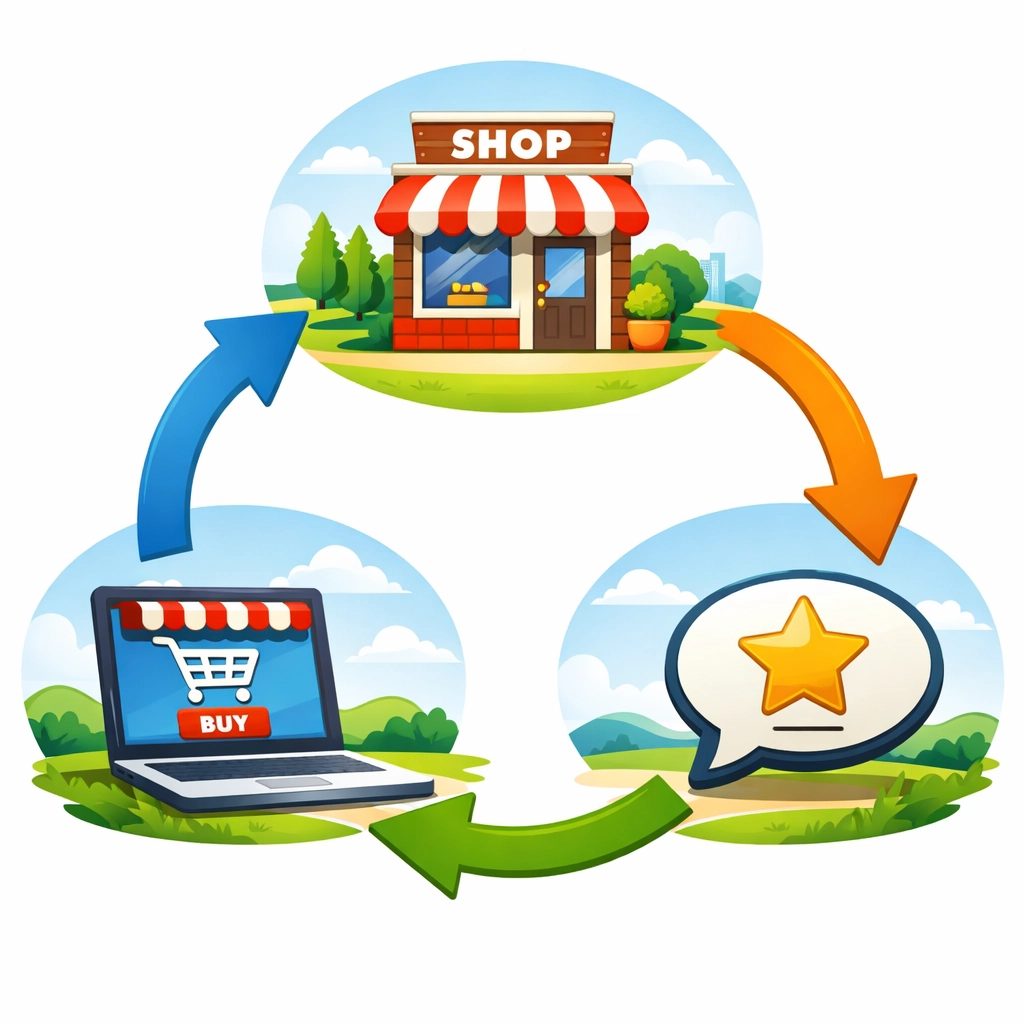
A landscape cartoon style graphic showing a circular “flywheel” with icons representing a website, a physical store, and a 5-star review, all connected by arrows.
To maintain this, you must treat your digital and physical experiences as one. A customer should be able to check their “loyalty points” on your website and redeem them at the checkout counter. This level of integration builds the kind of trust that keeps local businesses thriving in a global economy. When you focus on the user experience, much like the UX framework used for professional service websites, you turn casual browsers into lifelong advocates.
What is the difference between standard e-commerce and local e-commerce?
Standard e-commerce focuses on shipping products to a customer anywhere, while local e-commerce focuses on using online tools to facilitate local transactions, such as local delivery or in-store pickup.
How does showing my inventory online help my store rankings?
Google prioritizes businesses that provide helpful, real-time information. By showing that you have products in stock, you increase your relevance for “near me” searches, which can improve your position in the Google Maps 3-Pack.
Do I need a massive budget to run Local Inventory Ads?
No. Local Inventory Ads can be highly cost-effective because you only pay when someone clicks on your ad when they are physically near your store. It’s a targeted way to spend your marketing budget.
Is email marketing still effective for local shops in 2026?
Yes, it is one of the most effective ways to drive repeat foot traffic. By sending localized, personalized content and offers, you keep your brand top-of-mind for people who can actually visit your location.
How can a digital marketing agency for small business help with this?
An agency can help synchronize your inventory with Google, manage your local SEO audit, and set up automated email campaigns that trigger based on customer behavior, allowing you to focus on running your shop.