
For a decade, the recipe for digital advertising was simple: find the keywords your customers type into a search bar, bid on them, and hope your landing page was relevant enough to convert. But as we move through 2026, that playbook is gathering dust. The “search bar” is no longer the primary gateway to your business. Instead, your customers are having conversations: with AI assistants, with smart home devices, and with agentic search engines that understand intent better than any human copywriter ever could.
If you are still obsessing over exact-match keywords, you are likely missing the massive shift toward conversational discovery. Today’s landscape is about building a digital presence that an AI can understand, verify, and recommend. We’ve moved from “selling to people who search” to “influencing the AI that decides.”
Why Semantic Intent Killed the Keyword
Back in 2023, you might have targeted “best plumber in Chicago.” In 2026, a user tells their AI agent: “My kitchen sink is leaking, I need someone who can be here within two hours, has 4.5 stars, and takes Apple Pay.” The AI doesn’t just look for those keywords; it analyzes your business entity, your real-time availability, and your service history.
This shift toward AI-driven Google Ads means your advertising must be built on semantic clusters rather than isolated words. Search engines now use Large Language Models (LLMs) to map the relationships between concepts. If your website mentions “leak repair” but doesn’t structurally signal “emergency 24/7 response,” you won’t show up in that conversational query, no matter how much you bid.
“By 2026, 80% of digital creative will be informed by generative AI to improve performance and personalization, shifting the focus from broad targeting to individual intent-matching.” : Gartner Research, Strategic Predictions for 2026.
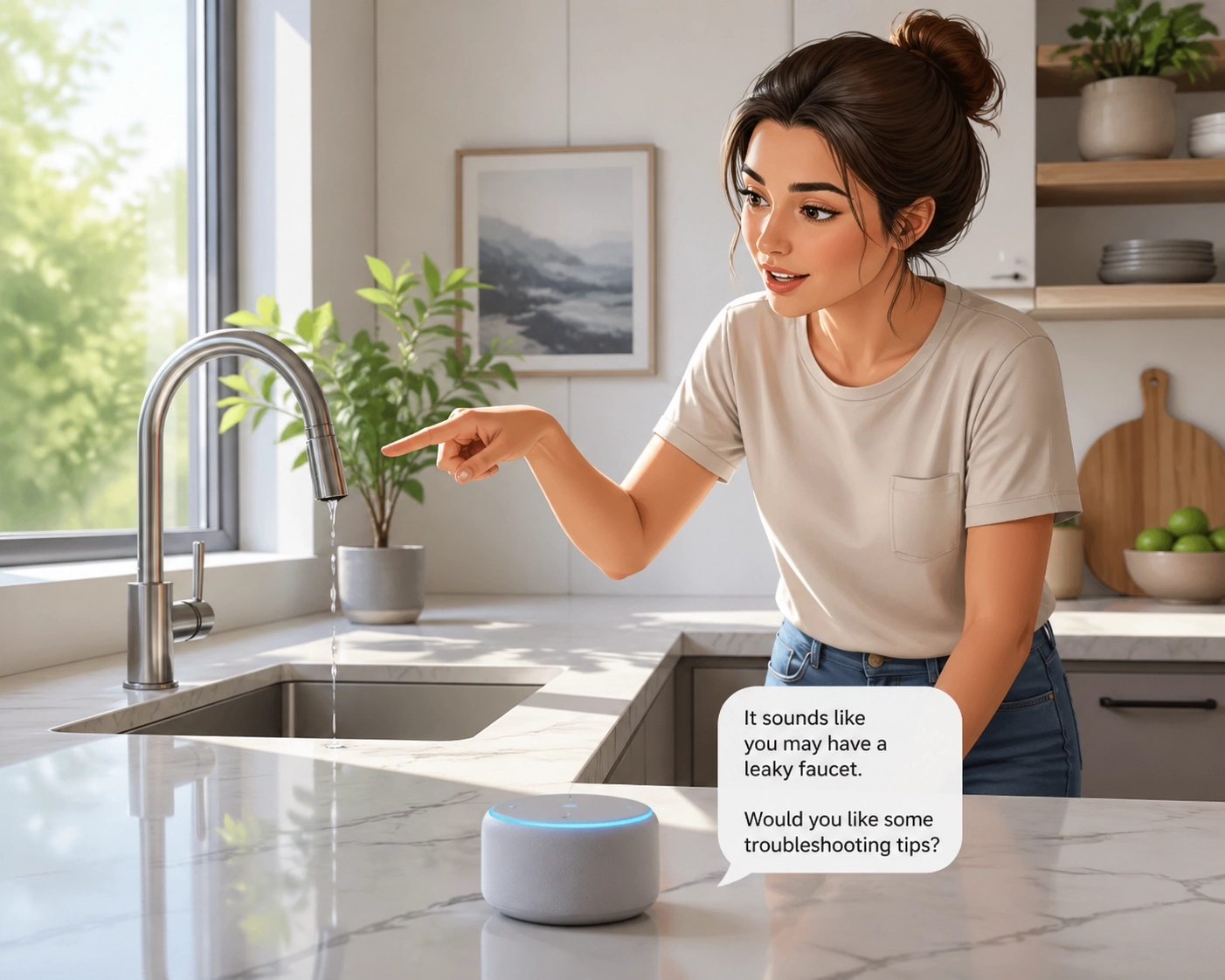
A landscape cartoon showing a person talking to a friendly floating robot assistant while a traditional billboard with “Keywords” written on it fades into the background.
The Rise of the Agentic Customer
One of the most profound changes we’ve seen at Trust Media is the emergence of the “AI Agent” as a proxy customer. Many of your leads are no longer coming from humans browsing your site. They are coming from AI agents doing the “boring” research for the human.
For professional services like law firms or dental practices, this means your local advertising playbook must cater to “Ask Maps” and other agentic interfaces. When an agent queries the web for a “family-friendly dentist near me,” it’s looking for structured data and social proof it can trust.
| Feature | Old Keyword Strategy (2023) | Conversational AI Strategy (2026) |
|---|---|---|
| Primary Goal | High Click-Through Rate (CTR) | High Recommendation Probability |
| Targeting | Specific Search Terms | User Intent & Contextual Clusters |
| Ad Creative | Static A/B Testing | Dynamic Creative Optimization (DCO) |
| Measurement | Cost Per Click (CPC) | Cost Per Conversation/Qualified Lead |
| User Journey | Linear Funnel | Multi-Touch Agentic Discovery |
Dynamic Creative Optimization (DCO) in 2026
In the past, you’d write three versions of an ad and see which one performed best over a month. That’s too slow for today’s market. In practice, agentic AI is revolutionizing digital advertising by generating thousands of ad variations in real-time.
If a user is browsing at 8:00 PM on a rainy Tuesday, the AI might serve an ad featuring a “cozy, indoor service” angle. If it’s a sunny Saturday morning, the messaging shifts to “outdoor efficiency.” This isn’t just about changing words; it’s about changing the entire visual and emotional context of the ad to match the conversation the user is already having with their environment.
This level of personalization requires a robust foundation of first-party data. Since cookies are a relic of the past, your analytics strategy must focus on capturing direct interactions. The more the AI knows about your specific customers, the better it can predict which creative “conversation” will trigger a conversion.
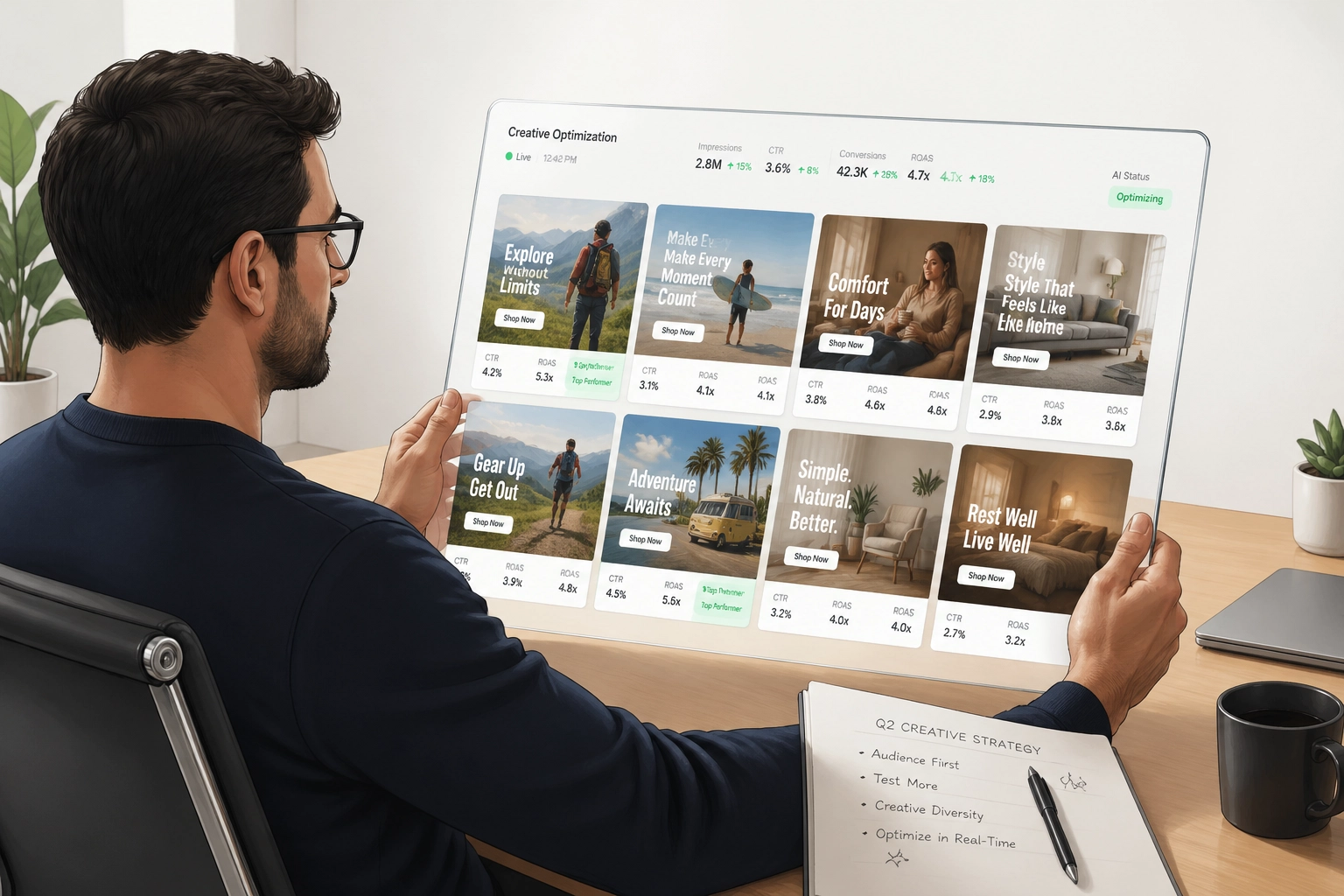
A landscape cartoon illustrating a digital factory where one single ad idea is being split into hundreds of colorful, unique puzzle pieces representing different user preferences.
Practical Steps for Local Businesses
Whether you’re running a construction company or a medical spa, the transition to conversational advertising requires a change in how you present your business online.
- Optimize for Natural Language: Stop writing for bots and start writing for answers. Use a Q&A format on your service pages. If people ask, “How much does a kitchen remodel cost in 2026?”, have a section that answers exactly that.
- Focus on Entity Authority: Ensure your business is recognized as a “trusted entity” across the web. This involves keeping your Google Business Profile updated with high-quality photos and responding to reviews with specific, context-rich language.
- Leverage Structured Data: Use Schema markup to tell AI agents exactly what you do, where you do it, and what your prices are. This makes it easier for an agent to “recommend” you during a conversational search.
- Shift to Multi-Touch Attribution: Since a conversation might start on TikTok, move to an AI assistant, and finish on Google Maps, you can’t rely on “last-click” metrics anymore. You need to look at the total impact of your digital footprint.
“Companies that integrate AI-driven conversational interfaces into their customer journey see a 25% increase in operational efficiency and a significantly higher customer satisfaction rate.” : Salesforce State of Marketing Report.
Scaling with Predictive Insights
The final piece of the 2026 puzzle is moving from historical data to predictive insights. Instead of looking at what happened last month, we now look at what is likely to happen next week based on current conversational trends. If there is a sudden spike in people asking AI assistants about “drought-resistant landscaping,” your ads should automatically shift to highlight those services before your competitors even see the trend.
This proactive approach is what separates the leaders from the laggards. By the time a trend shows up in a keyword research tool, the conversational AI has already moved on to the next topic.

A landscape cartoon of a business owner looking through a futuristic telescope labeled “Predictive Insights” to see a clear path of gold coins leading to the future.
The Human Element in an AI World
It might seem counterintuitive, but as advertising becomes more AI-driven, the human element becomes more valuable. AI can optimize your bids and personalize your copy, but it cannot invent your brand’s unique story. The most successful local businesses in 2026 are those that use AI to handle the “math” of advertising while they focus on the “magic” of customer service and community trust.
In other words, let the AI start the conversation, but you: the human expert: must be the one to finish it.
What is conversational digital advertising?
It is a shift away from targeting specific keywords toward targeting user intent and natural language. It involves optimizing your ads and content so that AI assistants and “agentic” search engines can understand and recommend your business during a natural dialogue with a user.
Do I still need to use keywords in my ads?
Keywords aren’t completely gone, but they are now just one signal among many. Instead of focusing on exact-match strings, you should focus on “topics” and “entities.” The AI will use your keywords to understand your category, but it will use your overall content and data to determine your relevance.
How does Agentic AI help my local business?
Agentic AI can act as a 24/7 sales representative. It can answer customer questions, schedule appointments, and provide quotes based on the information it finds in your digital advertising and website. This reduces the friction between a customer’s “need” and your “service.”
What happens if I don’t adapt to the conversational shift?
As more users move away from traditional search bars and toward AI interfaces like ChatGPT, Gemini, or specialized AI agents, businesses that rely solely on old-school SEO and keyword bidding will see their visibility drop. You risk becoming invisible to the next generation of “agent-assisted” shoppers.