For years, the formula for local business success was relatively simple: find the right keywords, build some backlinks, and ensure your Google Business Profile was verified. However, as we move through 2026, the goalposts have shifted. Today, search engines like Google are no longer just “reading” your website; they are “feeling” it through the eyes of your customers.
The convergence of AI-driven search and sophisticated user behavior tracking means that User Experience (UX) is no longer a luxury, it is the primary driver of your search visibility. When you invest in local seo services, you are increasingly investing in how easily a customer can navigate your digital storefront. If your site is a maze, Google won’t just penalize your conversion rate; it will hide you from the search results entirely.
The Shift from Keywords to Behaviors
In the past, search engines prioritized technical “on-page” factors. While those still matter, the 2026 algorithm prioritizes engagement signals. Google monitors whether a user clicks your link and immediately hits the “back” button (a bounce) or if they stay to explore your services. These behavioral signals tell the algorithm everything it needs to know about your business’s relevance.
If you are working with a digital marketing agency for small business, the conversation should center on “Search Experience Optimization.” This means every design choice must serve a dual purpose: pleasing the human user while signaling authority to the AI crawler.

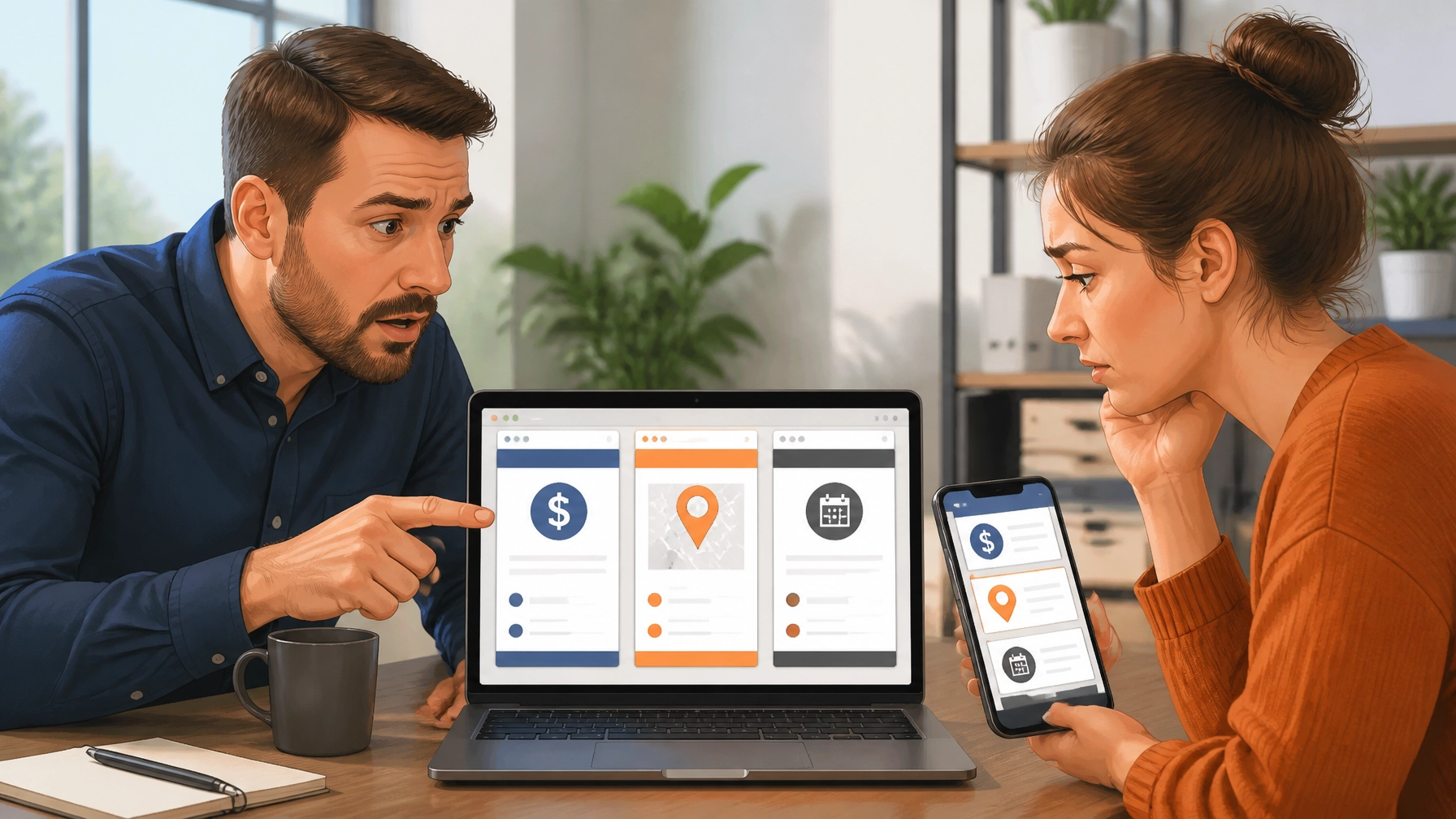
A cartoon illustration showing a local business owner standing at a crossroads between a clunky, old-fashioned website and a sleek, modern mobile interface that attracts happy customers.
“By 2026, behavioral signals such as ‘dwell time’ and ‘interaction depth’ have surpassed traditional backlink counts in importance for local service rankings. Search engines now treat a seamless user journey as the ultimate proof of a business’s credibility.” , Referencing UX Collective’s 2026 State of Search Report.
Comparing UX vs. Traditional SEO in 2026
To understand why design is taking over the SEO landscape, we need to look at how traditional tactics have evolved into experience-based requirements.
| Element | Traditional SEO Focus (2020-2023) | 2026 UX-Driven SEO Focus |
|---|---|---|
| Content | Keyword density and length | Scannability and “Time to Answer” |
| Speed | Server response time | Visual stability and instant interactivity |
| Navigation | Broad hierarchical menus | Personalized “Path-to-Purchase” flows |
| Mobile | Responsive (fits the screen) | Mobile-Native (thumb-friendly buttons) |
| Conversion | Contact forms at the bottom | One-tap booking and AI chat integration |
This transition is why we often recommend starting with a 10-point local SEO audit. It helps identify where your technical foundation is strong but your user experience is failing to keep visitors engaged.
Why Personalization and Speed Drive Local Wins
In 2026, “fast” is no longer a competitive advantage; it is the baseline. Users expect your site to load in under a second, especially when searching for urgent local services like plumbing or emergency dental care. But beyond speed, the site must feel personalized.
Modern UX design uses location-based data to show the user exactly what they need. If someone searches for a contractor in a specific neighborhood, your website should ideally highlight projects completed in that exact area. This level of web design that works creates an immediate psychological bond of trust.

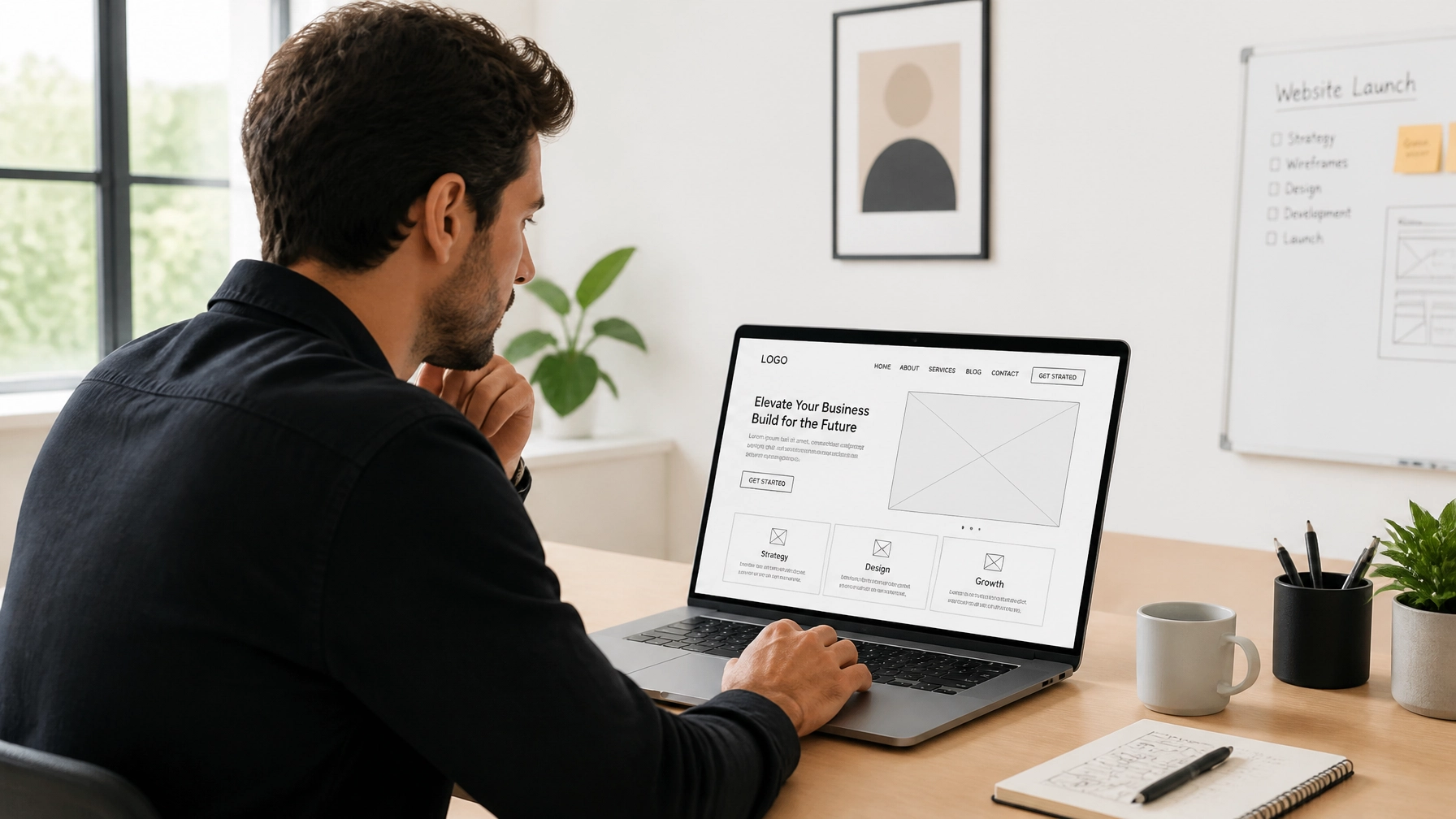
A landscape cartoon showing a fast-loading website on a smartphone with a “Get an Instant Quote” button, while a timer in the background shows a fraction of a second.
When your design is optimized for speed and personalization, your “time to conversion” drops significantly. This is a key metric in what we call The New ROI. It isn’t just about how many people landed on your page; it’s about how many of them took action before the “back” button became tempting.
The Rise of AEO (Answer Engine Optimization)
With the dominance of AI Overviews, many users never even click through to a website. They get their answers directly on the Google results page. To survive this, your UX must be structured to feed these “Answer Engines.”
This involves using clear headings, bulleted lists, and FAQ schemas. However, once a user does click through to your site, the experience must be even better than the AI summary they just read. If the AI promised a “simple booking process” and the user arrives at a clunky 10-field form, they will leave. That disconnect sends a negative signal to Google, telling them that your site didn’t live up to the AI’s recommendation.
For local pros, this is why surviving AI overviews requires a design that prioritizes immediate value over fluff.
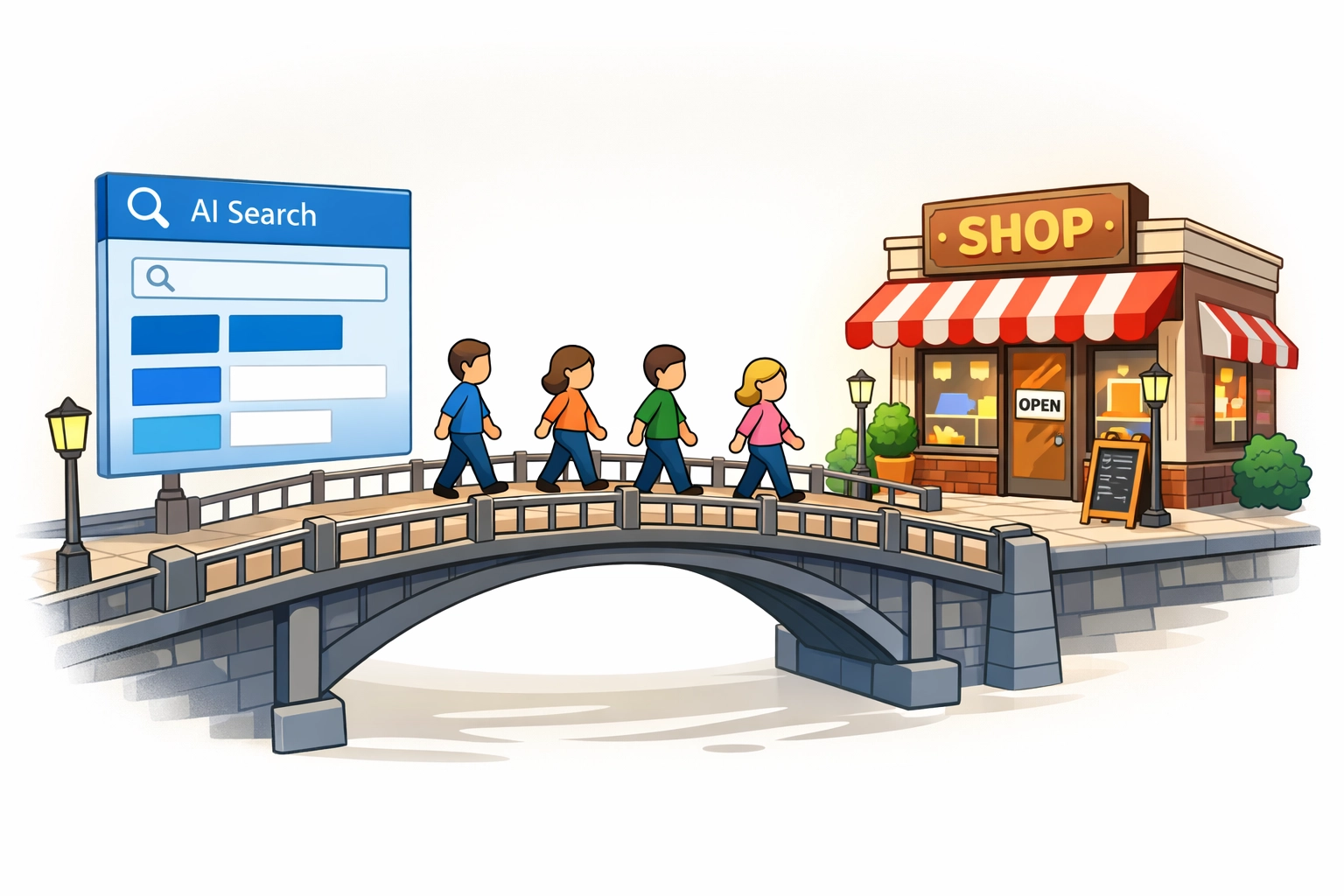
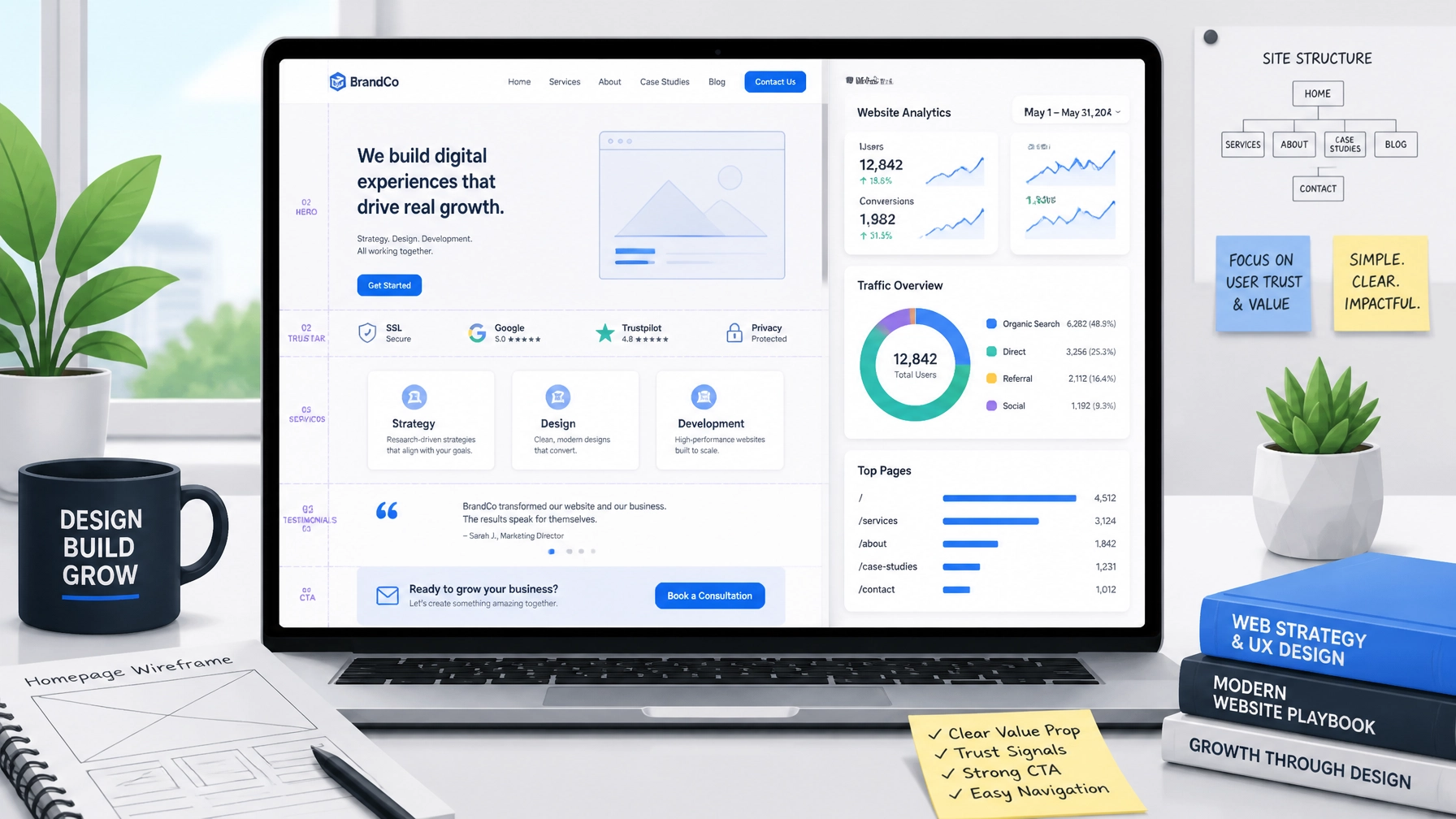
A cartoon depicting a bridge where one side is “AI Search Results” and the other side is “Local Business Website,” with users crossing the bridge smoothly because the design matches the search intent.
Turning Traffic into Phone Calls
Ultimately, a beautiful website that doesn’t generate leads is just an expensive digital business card. For local service providers, the primary goal of UX is to lower the friction between “interest” and “action.”
This often involves implementing lead intelligence tools like heatmaps. Heatmaps allow you to see exactly where users are getting stuck. Are they trying to click an image that isn’t a link? Are they scrolling past your primary Call to Action (CTA)? By analyzing these behaviors, you can make UX tweaks that double your conversions.
“Websites that prioritize ‘Click-to-Call’ accessibility and localized social proof see a 45% higher conversion rate than sites focusing solely on aesthetic high-resolution imagery.” , Research findings from eDesign Interactive on local business conversion benchmarks.
The Local Trust Factor: UX as Social Proof
In the digital age, trust is a currency. Your website’s design is the first indicator of whether you are a professional operation or a “fly-by-night” service. High-quality UX incorporates social proof, like reviews and case studies, naturally into the flow of the page rather than hiding them on a separate “Testimonials” tab.
Integrating your Google Business Profile success directly into your site design bridges the gap between search and your brand. For many, deciding between a physical address or a service area setup is a technical SEO choice, but the UX choice is how you display that information to make the customer feel you are “right around the corner.”
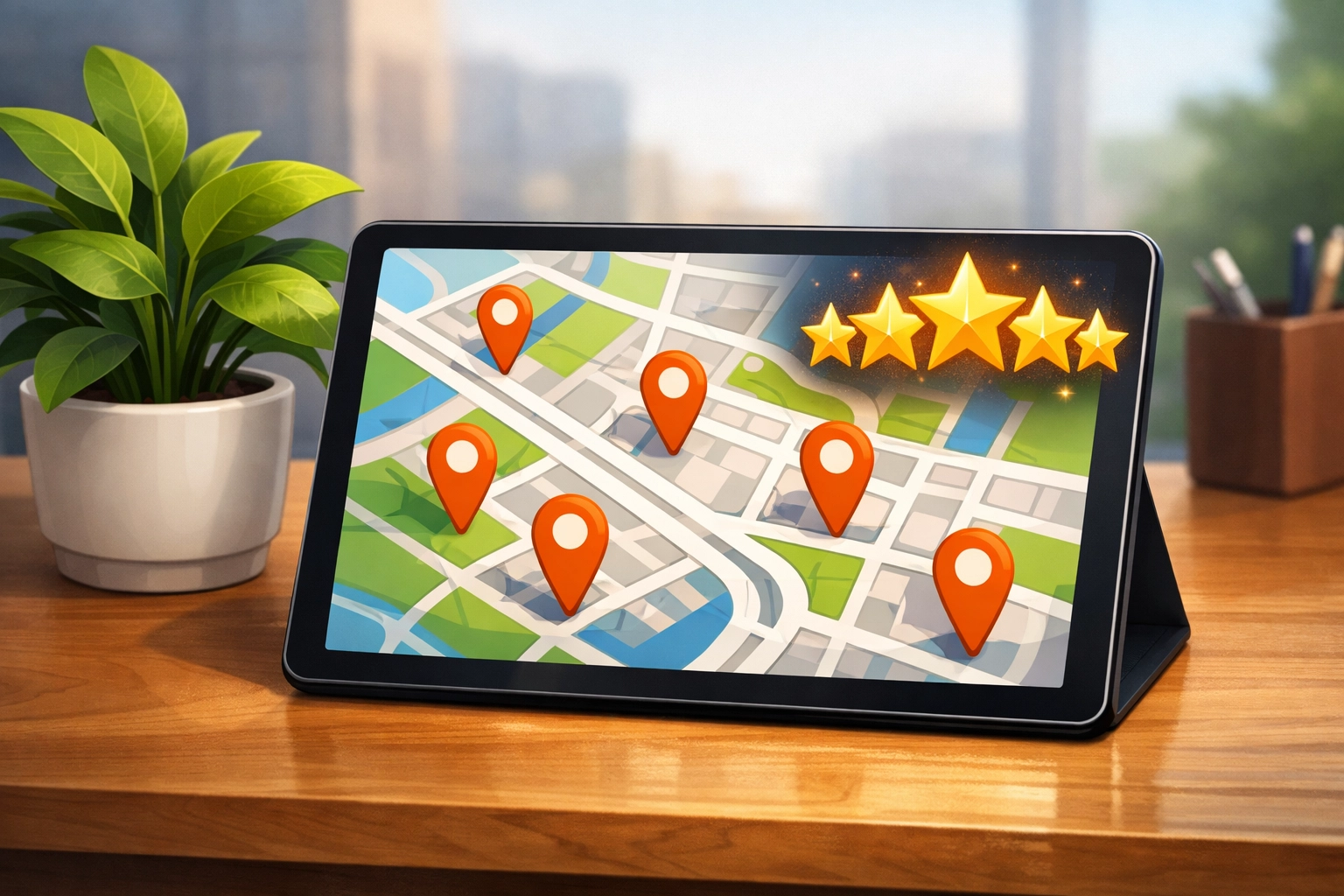
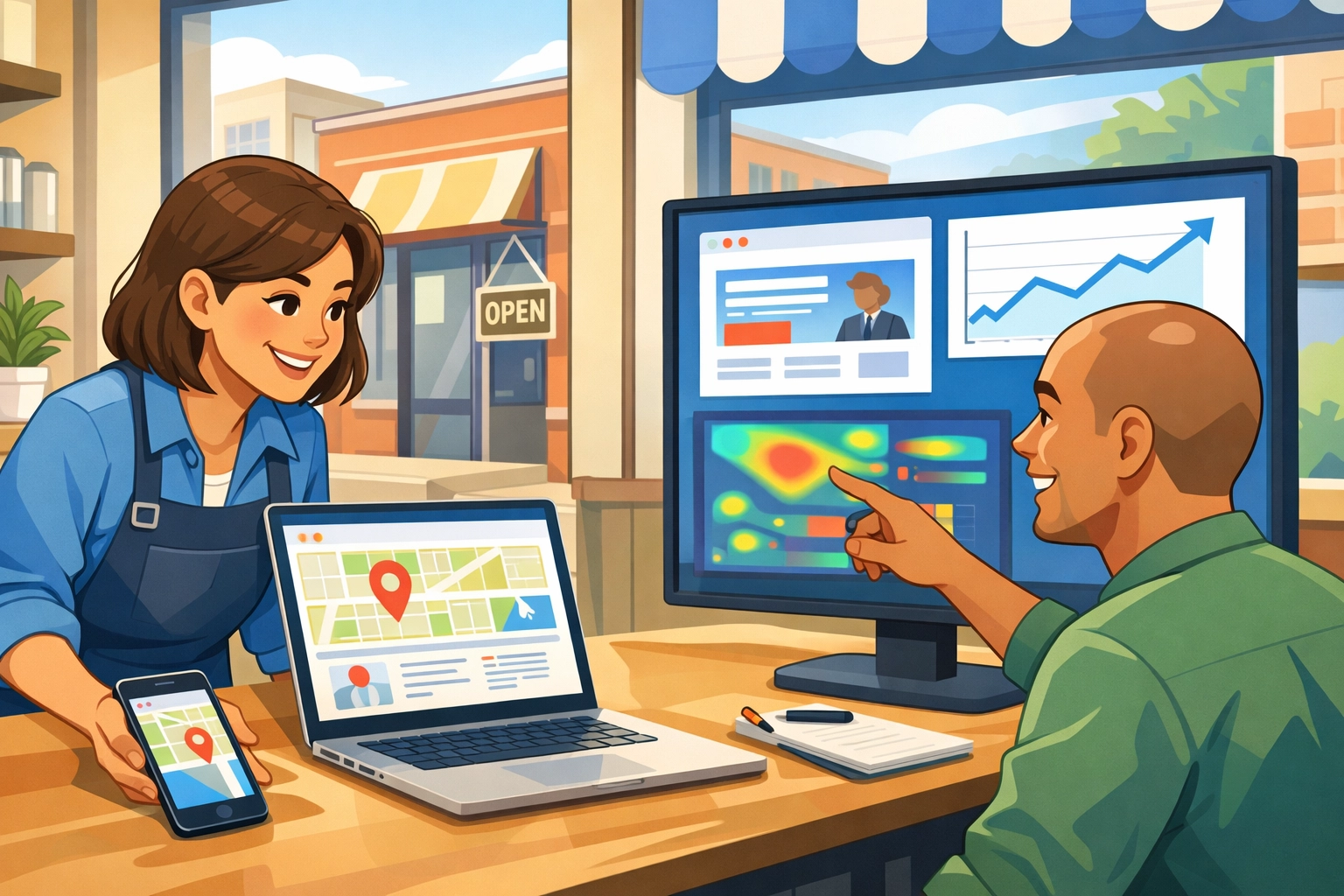
A landscape cartoon of a “Trust Meter” on a website, showing it filling up as a customer sees local reviews and clear service area maps on the screen.
Actionable Steps for 2026 UX Success
If you want to ensure your web design is helping rather than hurting your SEO, consider these three moves:
- Simplify Your Forms: If you don’t need their ZIP code or middle name to give a quote, don’t ask for it. Every extra field is a reason for a customer to leave.
- Optimize for the “Thumb Zone”: Most local searches are mobile. Ensure your most important buttons (Call, Book, Navigate) are within easy reach of a user’s thumb.
- Visual Consistency: Ensure your website design matches the vibe of your Google Maps presence. A jarring transition from a professional Google listing to a broken website destroys trust instantly.
Design is no longer just about looking “pretty.” It is a strategic component of your search engine visibility. By focusing on the user, you aren’t just improving your website, you are future-proofing your business against the next decade of algorithm updates.
Is UX more important than traditional SEO in 2026?
While technical SEO (like keywords and schema) still provides the foundation, UX is what determines your final ranking. Google prioritizes sites that users find helpful and easy to use. Without good UX, your SEO efforts will likely fail to result in top-tier rankings.
How do I know if my website’s UX is driving away customers?
Check your “Bounce Rate” and “Average Session Duration” in your analytics. If users are leaving within seconds or only viewing one page, your design or site speed is likely the issue. Using heatmaps can also show you exactly where users are clicking or getting frustrated.
Does a better design actually help my Google Maps ranking?
Yes. Google tracks the “End-to-End” user journey. If users find you on Maps, click through to your site, and then stay engaged, Google sees your business as a high-quality result. This positive engagement can boost your authority within the “Local Pack.”
What is the biggest UX mistake local businesses make?
The most common mistake is burying the contact information. Local customers are often in a hurry. If they have to hunt for your phone number or a booking button, they will leave and click on your competitor instead. Your Call to Action should be visible at all times.