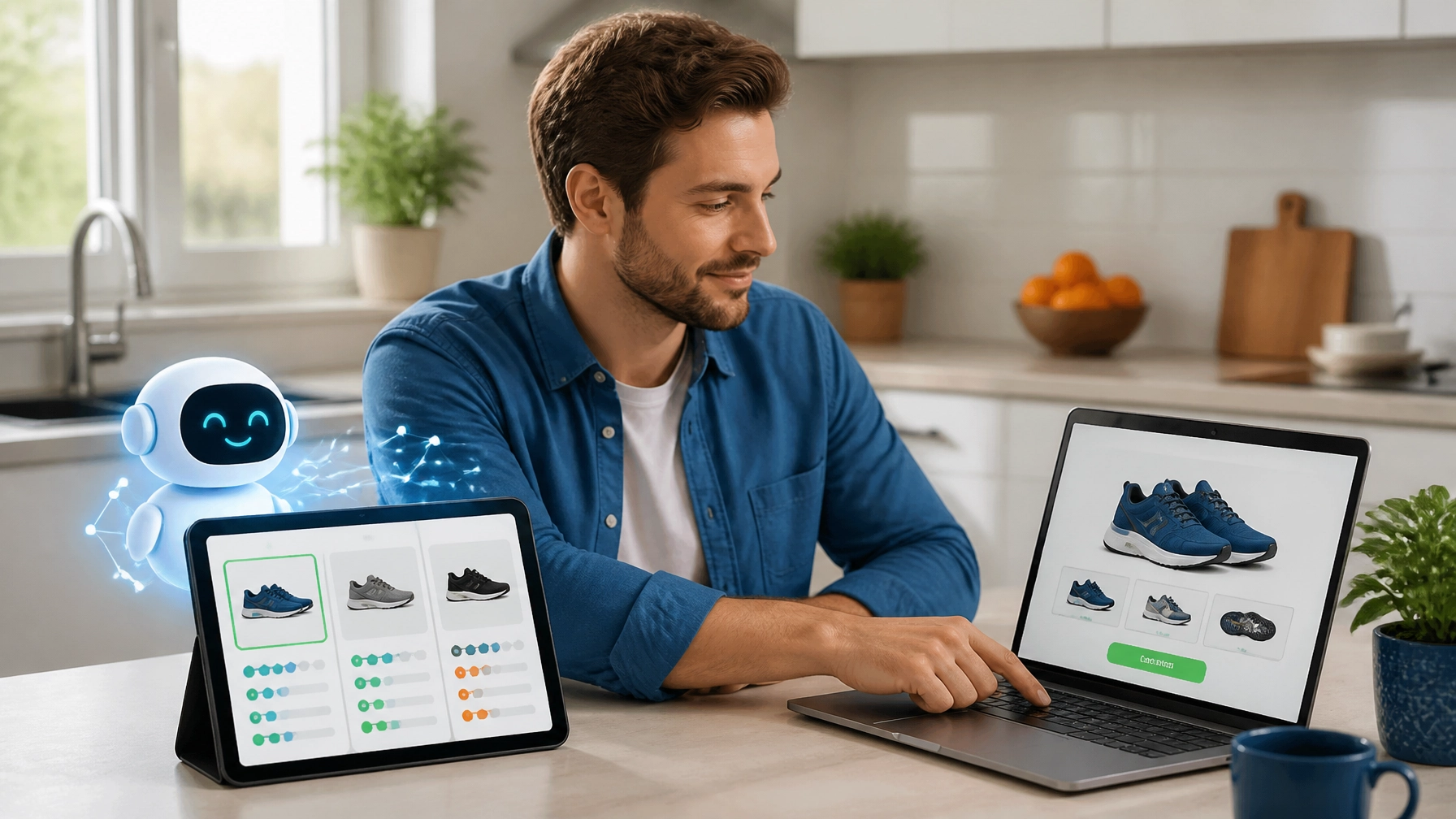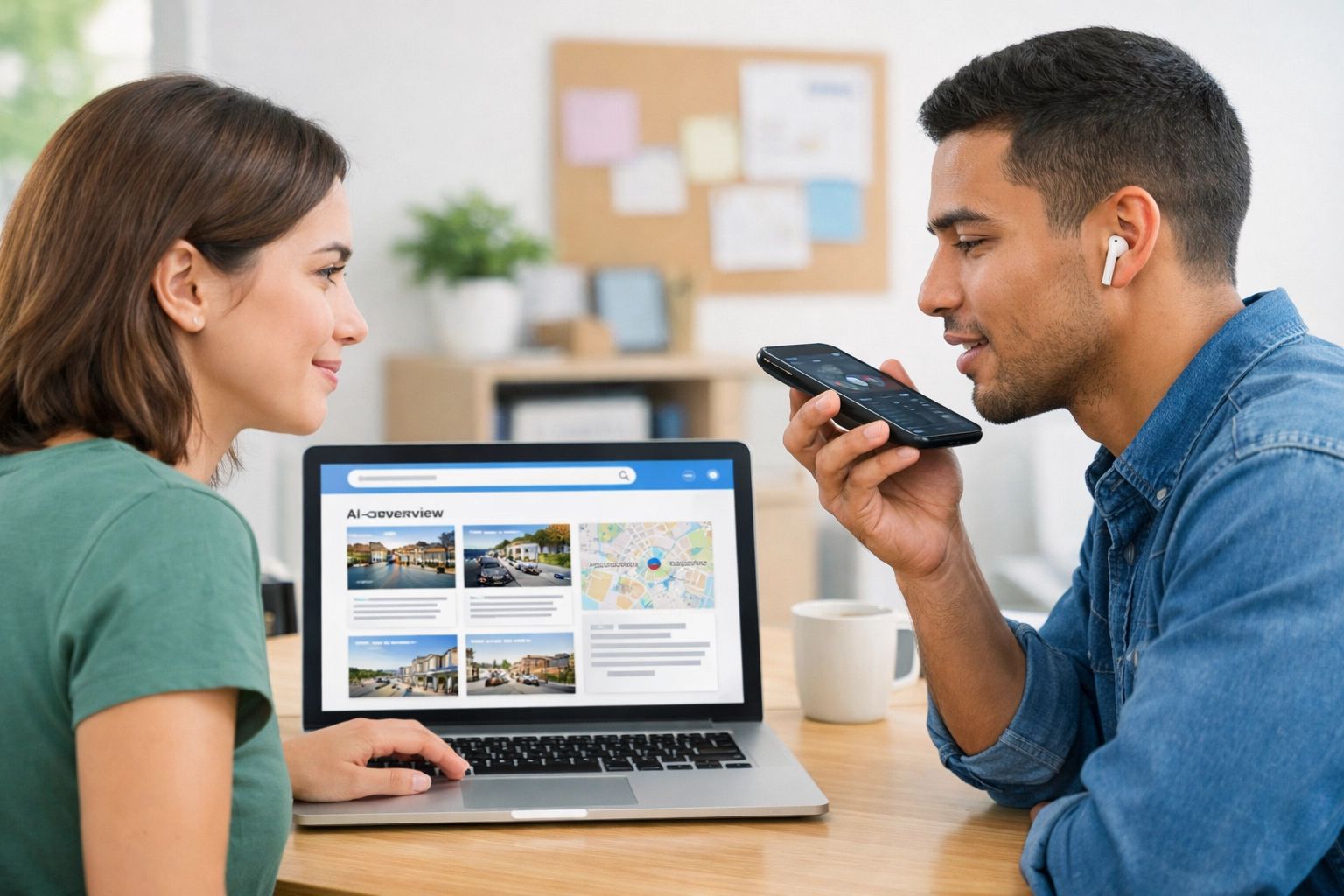
The digital landscape has shifted beneath our feet. If you’re still optimizing your local business for the “10 blue links” of the past, you’re essentially marketing to a ghost town. By early 2026, the traditional search bar has evolved into a sophisticated conversational partner. Your customers aren’t just typing keywords; they’re having full-blown dialogues with AI agents, smart glasses, and voice-activated assistants.
We’ve moved into the era of GEO, Generative Engine Optimization. This isn’t just a fancy new acronym; it’s a fundamental change in how your business gets discovered. Whether you run a high-end dental practice, a multi-state construction firm, or a specialized law office, being “findable” now means being “citable” by AI.
The Death of the Click and the Birth of the Answer
For years, local SEO was about getting into the “3-Pack.” While Google Maps remains vital, the way users interact with those maps has changed. Google Gemini now sits at the heart of the local experience, synthesizing reviews, website content, and even social media sentiment to provide a single, definitive recommendation.
“Google has integrated Gemini directly into Google Maps, allowing users to ask complex questions like ‘Which dental clinic in the suburbs has the best pediatric wait-room amenities?’ rather than just searching for ‘dentist near me.’” , Source: Google AI Discovery Report 2025.
This shift means that “Survival of the Scannable” is no longer just about your blog posts, it’s about your entire digital footprint. You can read more about how scannable content structure impacts these AI models in our recent breakdown of modern content readability. If an AI can’t parse your data in milliseconds, it won’t recommend you to the user.

A friendly, colorful cartoon illustration of a digital robot “reading” a local business website and presenting a gold star to a user holding a smartphone in a landscape orientation.
Understanding the New Visibility Metrics
In 2026, the metrics we track have shifted from simple “impressions” to “recommendation rates.” If ChatGPT or Perplexity suggests your business as the best solution for a user’s problem, that’s a high-intent lead that skips the traditional search results page entirely.
Recent data shows a massive migration in user behavior. According to reports from SOCi and Street Fight, the traditional “3-Pack” visibility is no longer the sole king of local lead generation.
| Visibility Metric | 2023 Traditional Search | 2026 AI-First Search |
|---|---|---|
| Direct Link Click-Through Rate | 45-55% | 18-22% |
| AI Summary Citation Rate | < 2% | 62% |
| Voice Discovery Engagement | 25% | 65% |
| Conversational Follow-up Leads | Negligible | 35% |
This table highlights why a local SEO audit is now a mandatory exercise for any business owner looking to survive this year. Without clear, structured data, you are invisible to the algorithms that now make decisions for your customers.
Mastering Voice Discovery and Interactive Agents
Voice discovery isn’t just “Siri, find a plumber” anymore. In 2026, voice agents use technology like Whisper Flow and ElevenLabs to conduct natural, back-and-forth conversations. A potential client might ask their car, “I need a contractor who can handle a kitchen remodel and has experience with sustainable materials, find one with great reviews that can see me this week.”
“Over 65% of local searches are now voice-activated or conducted via conversational AI interfaces, moving discovery away from screens and into the flow of daily life.” , Reference: Street Fight Local Tech Trends 2026.
To win in this environment, your google business profile optimization must be flawless. AI agents rely heavily on the “NAP” (Name, Address, Phone) data, but they also scrape your “From the Business” description and your recent Q&A sections to understand your specific expertise.

A landscape cartoon showing a person talking to their smart car dashboard, with a holographic map popping up to show a local business with a checkmark.
GEO: The Three Pillars of Generative Engine Optimization
If you want to be the business the AI recommends, you need to focus on three specific areas of GEO:
- Authority Signals: AI models look for “consensus.” This means your reviews on Google, Yelp, and industry-specific sites must tell a consistent story. If your website says you’re a “luxury dental provider” but your reviews focus on “affordable pricing,” the AI might get confused and skip you for a more consistent competitor.
- Structured Data & Schema: This is the language of AI. By using advanced local schema, you’re literally handing the AI a map of your services, hours, and service areas. This is a core part of how we approach search in the age of AI.
- Conversational Content: Your website should answer the “long-tail” questions your customers actually ask. Stop writing for keywords and start writing for intent.
The Role of Google Maps SEO in 2026
Google Maps is no longer just a navigation tool; it’s a discovery engine. The integration of “Search with Live View” and AI-driven summaries means that your visual content is more important than ever. AI now analyzes the photos you upload to your Google Business Profile to verify your services. If you say you do “custom cabinetry” but only have photos of generic kitchens, the AI’s confidence in your business drops.
We’ve found that businesses with high-resolution, categorized photos see a 40% higher inclusion rate in AI Overviews. This is why google maps seo has evolved into a multimedia strategy.

A landscape cartoon of a professional photographer taking a photo of a clean, modern storefront, with digital “tags” floating around the camera lens like ‘Quality,’ ‘Local,’ and ‘Trusted.’
Actionable Steps for Local Dominance
If you’re feeling overwhelmed by these changes, start with these three high-impact moves:
- Refresh Your GBP: Ensure every attribute is filled out. Use the “Products” and “Services” tabs to list everything you offer in plain, conversational English.
- Audit Your Reviews: Don’t just get five-star reviews; get descriptive ones. Encourage clients to mention specific services and locations in their feedback.
- Implement Local Schema: Use a tool or a partner to ensure your website’s code explicitly tells search engines who you are and what you do.
In practice, these shifts aren’t about reinventing your business, they’re about making sure the most powerful technology in the world can actually see you. The transition from the search bar to AI discovery is the biggest opportunity for local businesses since the launch of the iPhone. Those who adapt now will capture the lion’s share of the market, while those who wait will find themselves buried on page two of a search result that nobody is looking at anymore.
How is GEO different from traditional SEO?
Traditional SEO focuses on ranking high in search engine results pages (SERPs) using keywords and backlinks. GEO (Generative Engine Optimization) focuses on making your business the “preferred answer” for AI models like Gemini and ChatGPT, prioritizing structured data, conversational authority, and citation frequency.
Does my Google Business Profile still matter for voice search?
Yes, it is more important than ever. Voice assistants and AI agents use your Google Business Profile as a primary source of truth for your location, hours, and service offerings. A profile that is incomplete or unoptimized is unlikely to be suggested by a voice assistant.
How do AI Overviews affect my website traffic?
You may see a decrease in “low-intent” clicks as users get quick answers directly in the search interface. However, the traffic that does reach your site is often higher quality, as the AI has already “vetted” your business for the user’s specific needs.
What is the best way to get cited in AI Overviews?
The best way is to provide clear, factual, and expert content that directly answers common customer questions. Using proper schema markup and maintaining a consistent reputation across multiple platforms (Google, Yelp, social media) increases the AI’s confidence in citing your business.
Do I need to change how I ask for reviews?
Yes. Instead of just asking for “five stars,” ask customers to describe the specific problem you solved. AI models scan reviews for context; a review that says “They fixed my leaky roof in Seattle during a storm” is much more valuable for GEO than “Great service.”