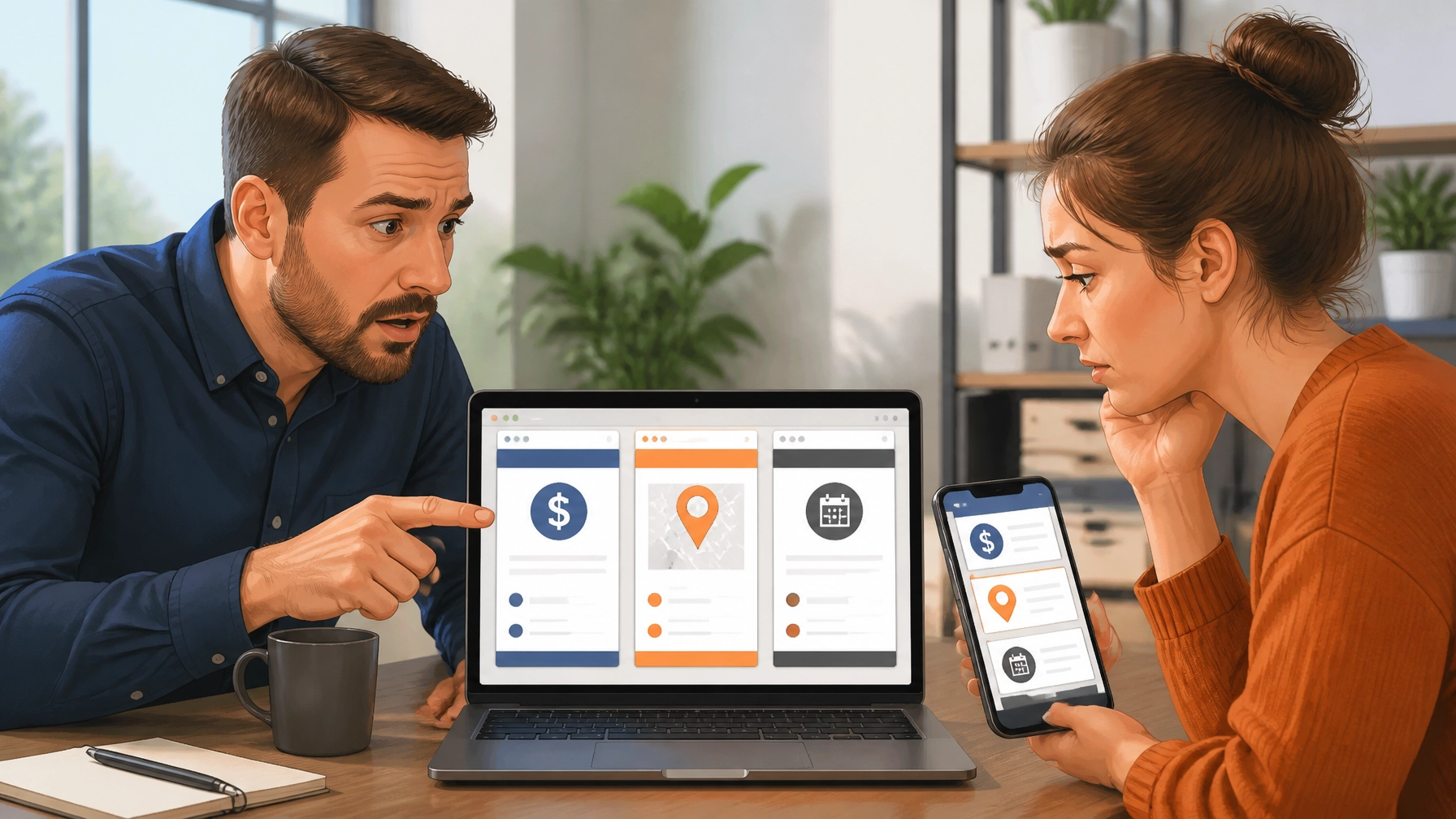
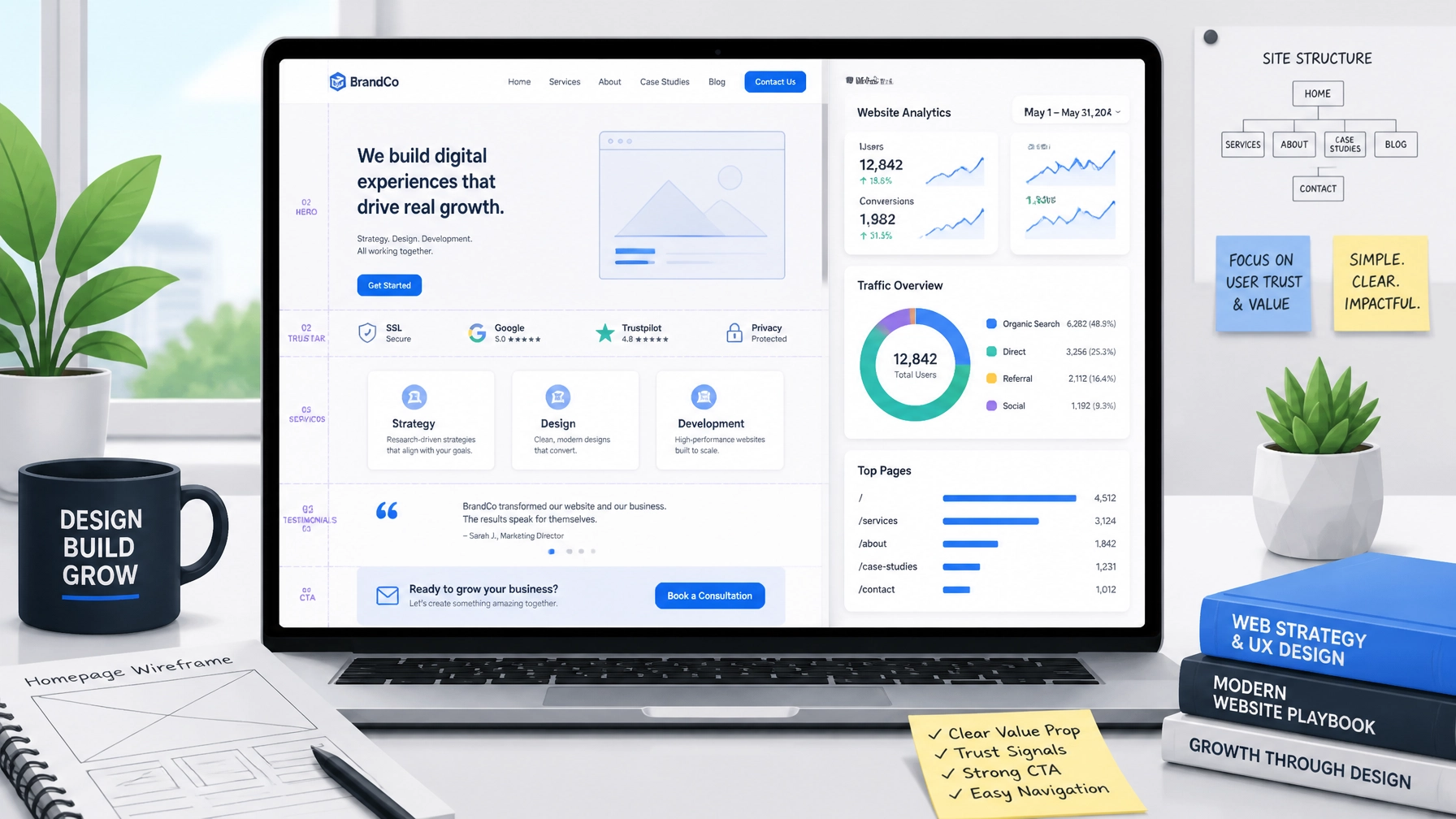
For decades, your interaction with the digital world has been defined by the “click.” You browse a website, you find a search bar, you type a query, and you filter through results. This is a passive experience: the software waits for you to tell it exactly what to do. However, as we move deeper into 2026, this paradigm is dissolving. We are entering the era of Agentic UX and Zero-UI, where the interface doesn’t just wait for your input; it understands your intent and executes on your behalf.
The shift is fundamental. It moves from a “tool-based” economy, where you use software to perform a task, to an “agent-based” economy, where software acts as an autonomous partner. For business owners and marketers, this isn’t just a technical update; it’s a total reimagining of how customers discover, interact with, and purchase from your brand.
From Passive Tools to Active Agents
In the traditional digital experience, the burden of “doing” is on the user. If you want to book a specialized medical appointment, you search for clinics, compare reviews, check calendars, and fill out forms. In an agentic ecosystem, you simply state your goal: “Find a local chiropractor with five-star reviews who can see me this Thursday afternoon.”
Agentic UX refers to systems that don’t just provide information: they take action. These AI agents are becoming the primary interface between the user and the web. According to recent industry projections, roughly 40% of enterprise applications are expected to embed autonomous AI agents by the end of 2026. This means your website is no longer just a destination for humans; it’s a data source for agents.
This evolution is why a robust website strategy is more critical than ever. If your digital presence isn’t optimized for these “agentic crawlers,” your business effectively becomes invisible to the next generation of “searchers.”
“The design frontier has shifted from pixels to logic and from static success states to probabilistic confidence thresholds.” : Industry Research Note, 2026.
Zero-UI: The Disappearing Interface
Zero-UI doesn’t mean there are no screens; it means the screen is no longer the primary focus. It is the move toward “ambient computing,” where technology is integrated so seamlessly into our environment that we don’t have to think about “using” it.

Think about how you currently use a smart speaker or a gesture-controlled device. You aren’t navigating menus; you are expressing intent. In a Zero-UI world, the “interface” is whatever is most convenient at that moment: voice, a glance at a smartwatch, or even a system that anticipates your needs before you express them.
For local businesses, this creates a massive opportunity in the realm of local SEO. When an AI agent is tasked with finding a service, it doesn’t look at a flashy homepage first. It looks for structured data, real-time availability, and verified reputation signals. The “interface” the customer sees might just be a simple confirmation: “I’ve booked your 3:00 PM appointment at the clinic on Main Street.”
Comparing Traditional vs. Agentic UX
To understand how to adapt your business, it helps to see the structural differences in how users interact with digital platforms.
| Feature | Traditional UX (2020-2024) | Agentic UX & Zero-UI (2026+) |
|---|---|---|
| User Role | Active Operator (Browsing/Searching) | Goal Setter (Delegating) |
| Interface | Screen-Based (Buttons/Menus) | Multi-modal (Voice/Ambient/Intent) |
| Logic | Deterministic (If X, then Y) | Probabilistic (Intent-matching) |
| Efficiency | Measured by “Time on Site” | Measured by “Outcome Speed” |
| Navigation | Linear paths and funnels | Dynamic, non-linear goal fulfillment |
Explainable AI (XAI): The New Currency of Trust
As we give more autonomy to AI agents, a new challenge arises: trust. If an agent makes a decision for you: like choosing a contractor or managing a marketing budget: you need to know why it made that choice. This is where Explainable AI (XAI) becomes a core component of the user experience.

Modern UX design must now include “confidence interfaces.” Instead of just a “Buy” button, an agentic system might show you a 92% confidence rating that a specific service provider is the best fit for your budget and timeline. It provides a transparent reasoning layer that allows the human to intervene or “pull the brake” if the logic doesn’t hold up.
At Trust Media, we believe transparency is the foundation of any digital marketing effort. As these emerging technologies evolve, businesses that provide clear, structured, and “explainable” information will win the trust of both the AI agents and the humans who use them.
Business Adaptation: Designing for Intent
How do you prepare your business for a world where people stop “visiting” your website and start “sending” their agents? Here’s how you can shift your strategy:
- Prioritize Structured Data: Ensure your website uses schema markup and clean data structures. AI agents need to read your services, prices, and hours without having to “guess” by looking at images.
- Focus on Speed to Outcome: In an agentic world, “Time on Site” is a vanity metric. The goal is to help the agent complete the user’s task as quickly as possible.
- Optimize for Natural Intent: Stop focusing solely on keywords. Start focusing on the “jobs to be done.” What is the ultimate goal of your customer? Your content should answer that goal directly.
- Embrace Multi-modal Visibility: Your brand needs to be accessible via voice search, map interfaces, and AI-driven aggregators, not just Google’s traditional blue links.

The Human-Agent Ecosystem
Ultimately, the rise of Agentic UX doesn’t replace the human; it elevates them. By removing the friction of repetitive digital tasks: the “pixel pushing” of daily life: we free ourselves to focus on higher-level decision-making.
Your business is no longer competing just on the beauty of its website. It is competing on its ability to integrate into the user’s life seamlessly. Whether you are a local service provider or a national brand, the goal remains the same: building trust through clarity and execution.
The era of the pixel is fading. The era of intent is here.
What exactly is Agentic UX compared to a chatbot?
A chatbot is a conversational tool that answers questions. Agentic UX refers to a system that can take actions, such as booking an appointment, processing a payment, or coordinating between two different apps to fulfill a specific goal you’ve set.
Does Zero-UI mean I don’t need a website anymore?
Not at all. Your website becomes the “brain” or the data repository that the Zero-UI interfaces and AI agents pull from. Instead of designing it only for human eyes, you must now design it to be “machine-readable” and highly structured.
How does this affect my Local SEO?
It makes it more important. AI agents rely heavily on verified signals like Google Business Profiles, structured local schema, and consistent NAP (Name, Address, Phone) data. If an agent can’t verify your location or services instantly, it will skip you for a competitor who has better data.
What is “Override Latency” in UX?
This is a new metric that measures how quickly and easily a human can take control back from an AI agent. Good Agentic UX ensures that if the AI is moving in the wrong direction, the human can intervene with zero friction.
Will AI agents eventually replace search engines?
Search engines are evolving into “Answer and Action Engines.” We are moving away from a list of links toward a single, actionable result or a completed task. Traditional search will likely coexist with agentic fulfillment for several years, but the trend is leaning toward the latter.