For years, the standard monthly meeting with a digital marketing agency for small business followed a predictable script. We’d pull up a dashboard, look at the last 30 days of clicks, and nod at the green “up” arrows. It was comfortable, it was safe, and in 2026, it’s officially obsolete.
The problem with historical data isn’t that it’s wrong, it’s that it tells you where you’ve been, not where you’re going. If you’re only reacting to last month’s performance, you’re essentially driving a car by looking solely through the rearview mirror. As we navigate a landscape dominated by AI-driven search and fluctuating consumer intent, the businesses that win aren’t the ones with the most data; they’re the ones with the best foresight.
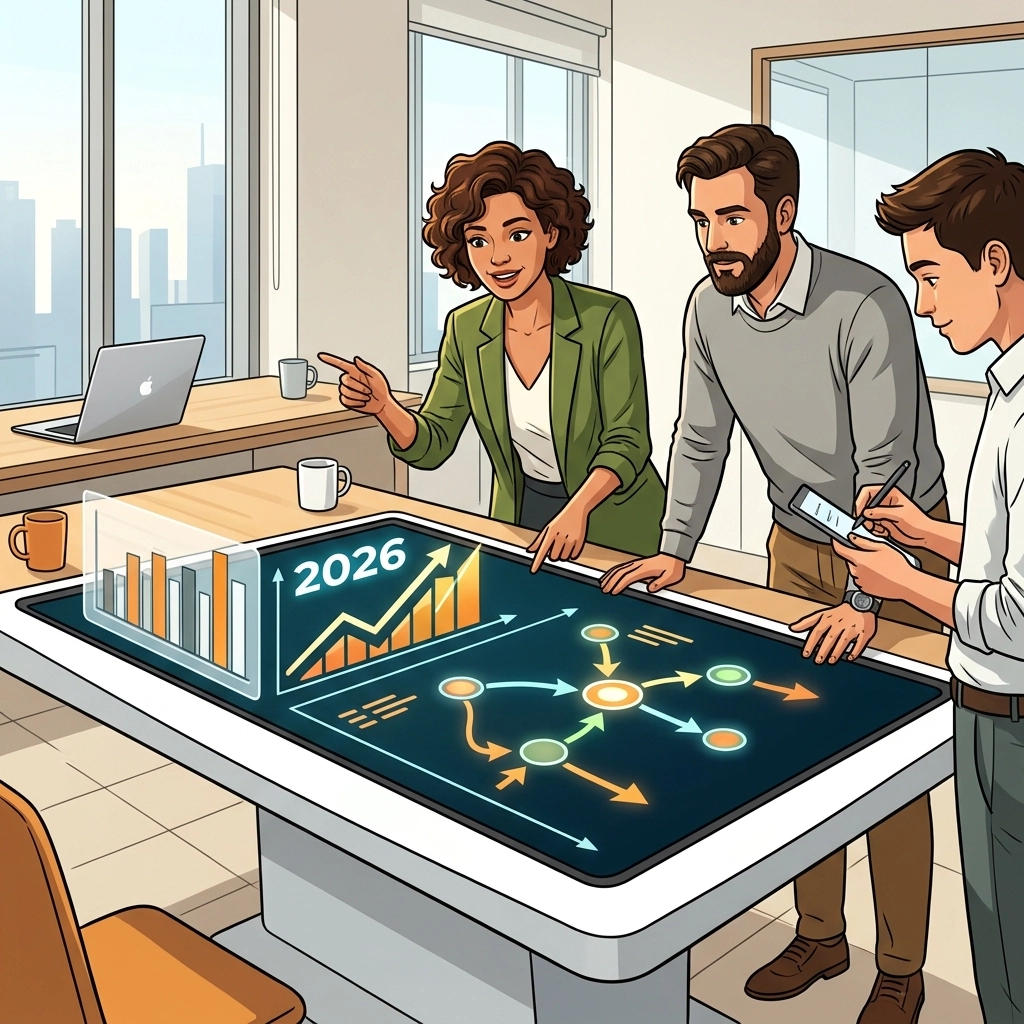
Today, analytics has shifted from a “reporting” function to a “predictive” engine. We’re moving beyond the simple click to understand the “assistive” journey, how a user interacts with your brand across platforms before they ever hit your site.
The Death of the Monthly Post-Mortem
Historically, analytics was treated like an autopsy. You’d wait until the end of the month to see why a campaign failed or why your local SEO audit showed a dip in rankings. By the time you had the answer, the opportunity to fix it had already passed.
In 2026, the pace of the market doesn’t allow for that delay. Real-time data integration is now the baseline. We’re looking at demand shifts as they happen. If a sudden heatwave is predicted for next week, a HVAC contractor shouldn’t be looking at last month’s lead volume; they should be scaling their Google Ads spend now based on the predicted surge in search volume.
This is where the shift from descriptive to predictive becomes tangible. You aren’t just seeing that people searched for “AC repair”; you’re seeing the probability of those searches increasing based on environmental and behavioral variables.
Comparing the Eras: Past vs. Future
To understand why this matters for your bottom line, let’s look at how the approach to data has evolved over the last few years.
| Feature | Descriptive Analytics (The Past) | Predictive Insights (2026) |
|---|---|---|
| Primary Question | “What happened last month?” | “What is likely to happen next week?” |
| Data Focus | Clicks, Impressions, CTR | Intent, Probability, Lifetime Value |
| Action Level | Reactive (Fixing what broke) | Preemptive (Capitalizing on trends) |
| Customer View | Single-touch attribution | The “Assistive” journey across platforms |
| Tools | Static Dashboards | AI Agents & Real-time Models |
The Rise of the Assistive Journey
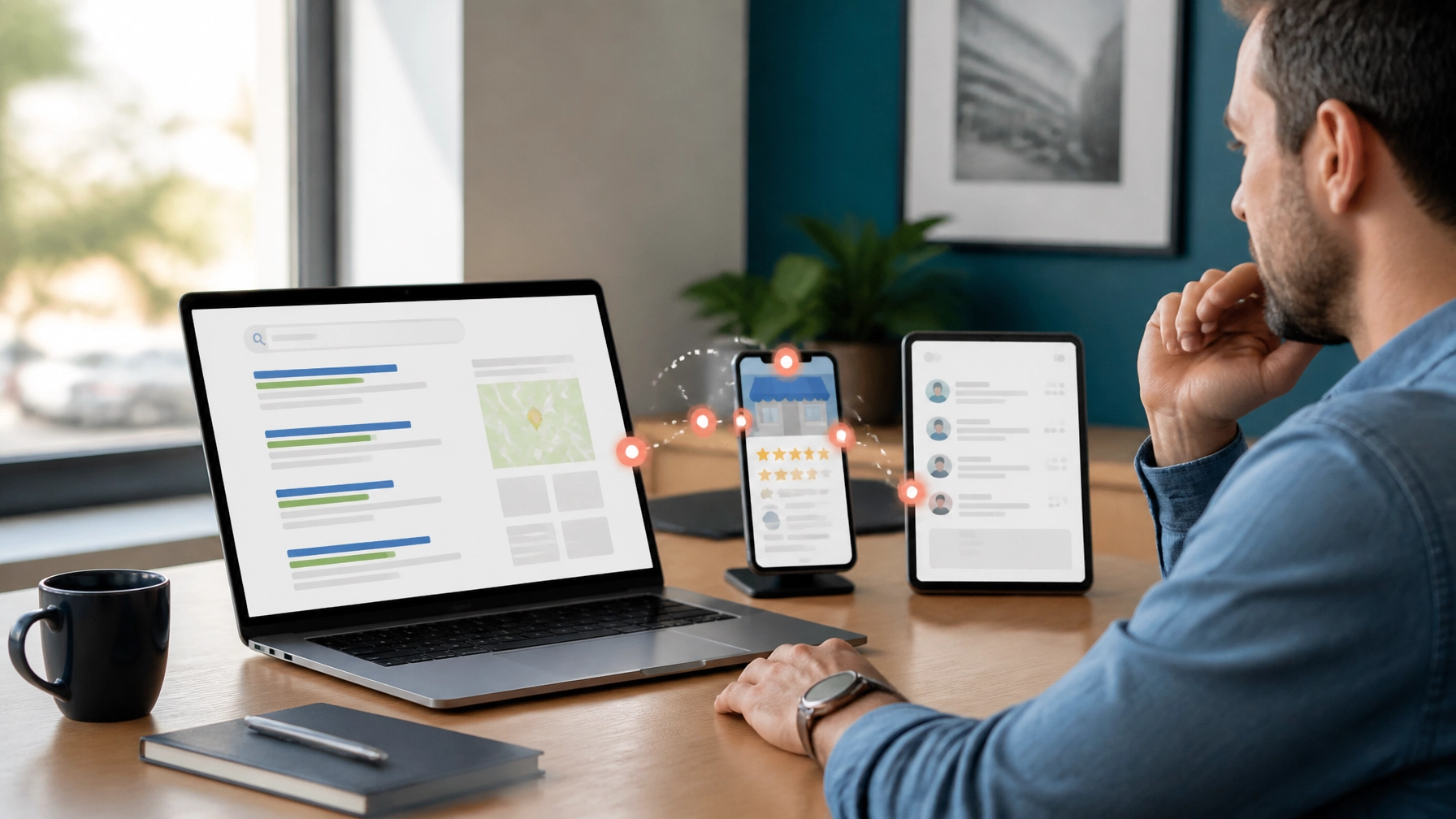
We’ve moved far beyond the linear funnel where someone sees an ad and buys a product. In 2026, the journey is “assistive.” A customer might see your brand in an AI Overview, check your Google Maps SEO ranking while driving, and then interact with a brand-neutral comparison tool before finally calling you.
Traditional analytics struggles to track this. However, predictive models use machine learning to identify patterns in these disparate touchpoints. They can tell us which “micro-moments” actually contribute to a conversion. This is why a modern local SEO audit now focuses on visibility within AI-driven environments as much as traditional search results.
“Organizations are transitioning from reporting historical data to enabling faster, more confident decision-making through predictive models that surpass traditional forecasting in accuracy.” , Industry Research on the $100B Predictive Analytics Market Shift.
Leveraging Agentic AI for Faster Decisions
One of the biggest breakthroughs we’ve seen recently is the integration of autonomous agents into the analytics stack. We recently discussed The Rise of Agentic AI, and its impact on data is profound.
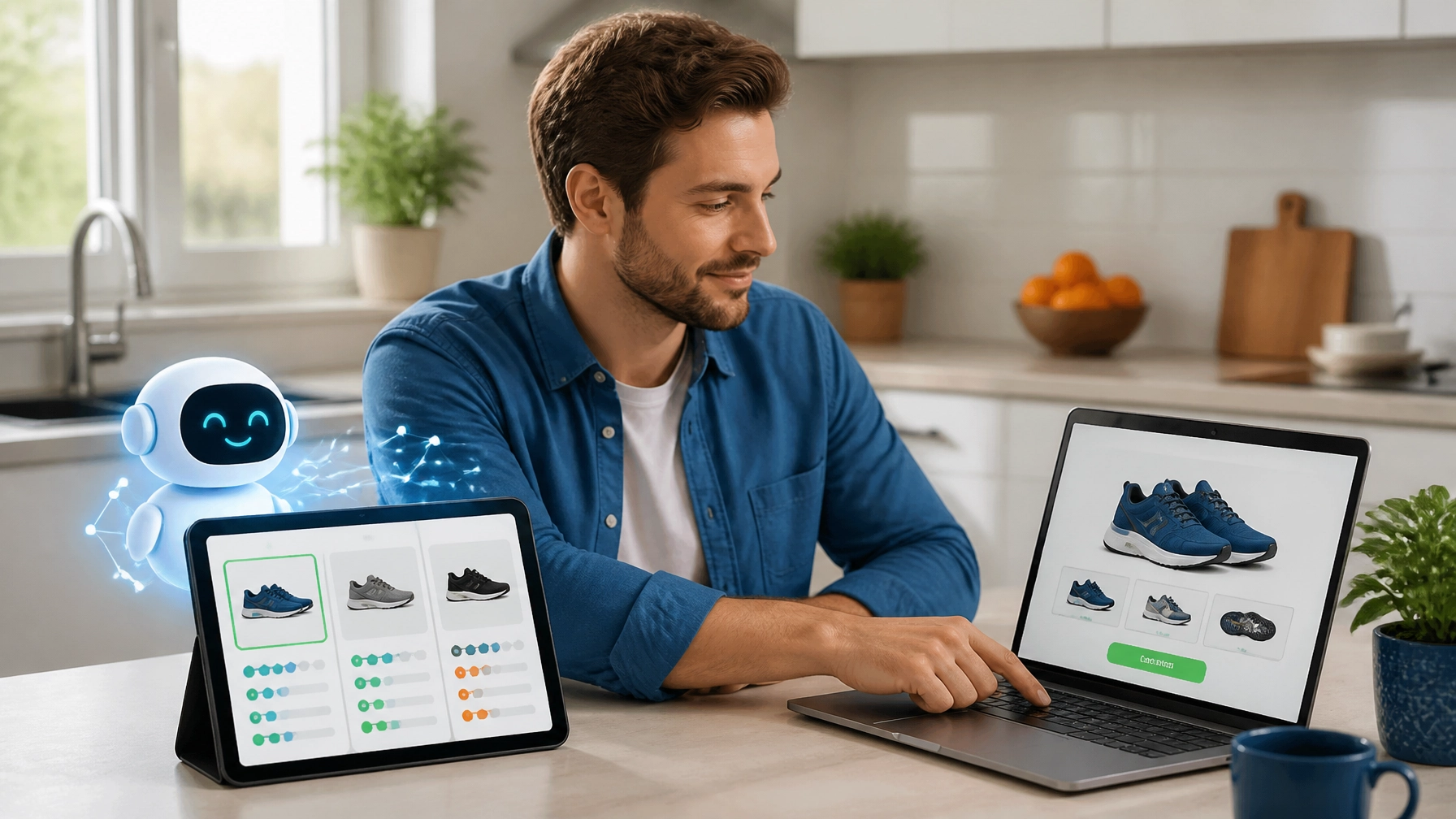
Instead of a human analyst spending ten hours a week pulling reports to find a trend, an AI agent monitors your data streams 24/7. It can identify a drop in your Google Maps SEO performance in real-time and automatically adjust your bidding strategy or alert the team to update your business citations. This level of automation means your digital marketing agency for small business can spend less time “reporting” and more time “strategizing.”
Predictive Insights for Local Businesses
If you’re running a local service business, like a dental practice or a construction firm, you might think “predictive analytics” sounds like something only Fortune 500 companies need. That couldn’t be further from the truth.
In fact, predictive insights are often more impactful for local businesses because your margins for error are smaller. Consider these scenarios:
- Staffing Optimization: For a dental clinic, predictive data can forecast “no-show” probabilities based on historical weather patterns, local events, or even the time of day the appointment was booked. This allows for better scheduling and follow-up sequences.
- Inventory & Supply: A contractor can use predictive insights to see a rising trend in specific kitchen renovation styles in their zip code, allowing them to secure materials before prices spike or supplies run low.
- Ad Spend Efficiency: Instead of a flat monthly budget, your agency can use predictive modeling to push more budget into the 48-hour window before a predicted storm or local event when intent is highest.
Understanding Intent Over Traffic
In the old days, we wanted “more traffic.” In 2026, we want “higher intent.” A thousand clicks from people just “browsing” is a waste of your budget.
Predictive analytics allows us to assign a “propensity score” to different types of traffic. By analyzing behavioral data, how long they linger on a specific service page, whether they interact with your chat bot, or if they’ve visited your GBP profile multiple times, we can predict who is actually ready to book. This is the core of lead intelligence, where data-driven insights double your ROI by focusing your efforts on the leads that matter.
The Bottom Line
The shift toward predictive insights isn’t just a technical upgrade; it’s a competitive necessity. As AI continues to automate the basic elements of search and advertising, the “human” advantage lies in how we use data to stay two steps ahead of the consumer.
If your current reporting feels like a history lesson, it’s time to change the conversation. Your analytics should be telling you what to do tomorrow, not just what you did yesterday.
How do I start using predictive analytics if I’m a small business?
You don’t need a team of data scientists. Most modern platforms like Google Ads and GA4 have “Predictive Audiences” built-in. Start by enabling these features and working with an agency that prioritizes “Outcome-Based” reporting over “Activity-Based” reporting.
Is predictive data always 100% accurate?
No, it’s about probability, not certainty. However, a 70% accurate prediction of a trend is infinitely more valuable than a 100% accurate report of a missed opportunity from three weeks ago.
How does this affect my Google Maps SEO?
Predictive insights help you understand when people are searching for your services. By knowing your peak “intent” hours, you can ensure your profile is updated with timely posts, fresh photos, and active engagement during those high-probability windows to maximize your visibility.
Do I still need a traditional local SEO audit?
Yes, but the scope has changed. A 2026 audit looks at your technical foundation (to ensure AI can crawl your site) and your predictive readiness. It’s less about “keyword density” and more about “intent signals” and “entity authority.”
Will AI agents replace my marketing manager?
They replace the tasks, not the person. AI agents handle the data crunching and real-time monitoring, allowing your marketing manager to focus on creative strategy, brand positioning, and high-level decision-making that AI still can’t replicate.