For years, e-commerce scaling followed a predictable, if expensive, formula: pour money into ads, drive traffic to a landing page, and hope your checkout flow was smooth enough to capture a 3% conversion rate. But as we move through 2026, that “spray and pray” model has become a relic of the past. The rising cost of customer acquisition and the sheer noise of the digital marketplace have forced a shift.
To scale today, you cannot just react to what your customers are doing; you have to know what they are going to do before they even realize it themselves. This is the era of predictive AI: a shift from analyzing historical data to projecting future intent. By leveraging these tools, your brand can move beyond the simple transaction and build a self-sustaining growth engine rooted in deep relevance and operational efficiency.
The Death of Reactive Marketing
In the traditional model, marketing was reactive. A customer visited your site, looked at a pair of hiking boots, and then you “chased” them around the internet with retargeting ads for those same boots. It was better than nothing, but it was often late, annoying, and inefficient.
Predictive AI changes the timeline. Instead of looking at the last click, these systems analyze thousands of data points: everything from local weather patterns and social sentiment to micro-behaviors on your site: to predict when a customer is entering a buying window. This allows you to reach them with the right offer at the exact moment their intent peaks, often before they’ve even started a formal search.
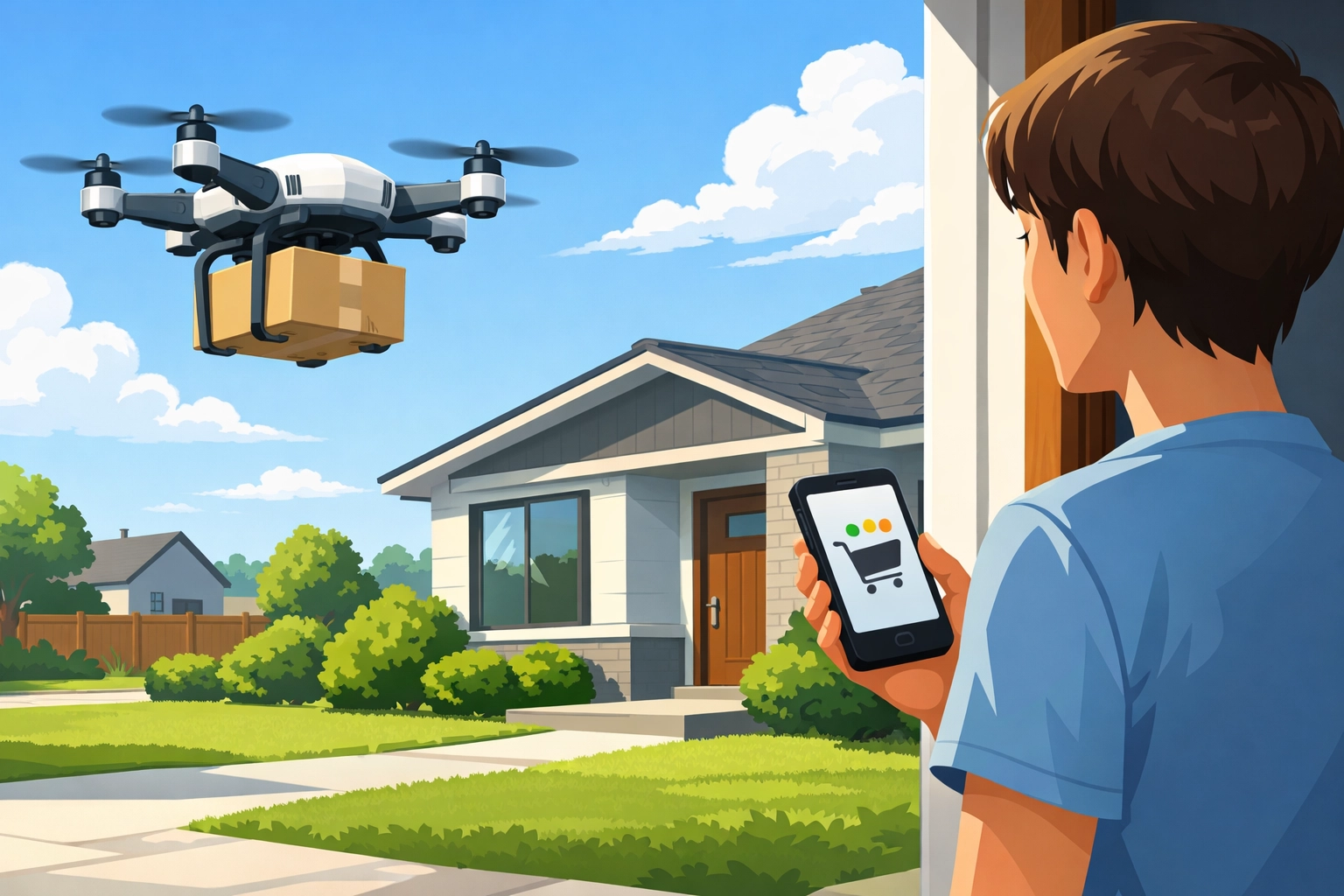
A landscape cartoon-style illustration showing a futuristic delivery drone carrying a package toward a house where a person is just thinking about the product, with “AI Anticipation” glowing in the background.
This shift is critical because the way users find products has fundamentally changed. We are seeing a massive move toward “agentic” shopping, where AI assistants do the browsing for the consumer.
“According to eMarketer 2026 projections, one-quarter of shoppers are expected to utilize AI-powered chatbots for their primary shopping journey, with nearly 33% of U.S. consumers willing to let an AI assistant make autonomous purchases on their behalf.”
If your brand isn’t optimized for these predictive signals, you aren’t just losing out on clicks: you’re becoming invisible to the digital assistants that now control a significant portion of the market share.
Predictive vs. Behavioral: Understanding the Difference
While many brands claim to use “data-driven” marketing, most are still stuck in behavioral segmentation. They group people by what they did in the past. Predictive AI groups people by what they are likely to do in the future.
To help visualize how this changes your strategy, look at the table below:
| Feature | Behavioral Segmentation (Old Way) | Predictive Modeling (2026 Standard) |
|---|---|---|
| Data Focus | Past purchases and page views. | Real-time intent, weather, and social trends. |
| Timing | Triggered after an action occurs. | Triggered before the intent peaks. |
| Messaging | “You looked at this, come back.” | “We thought you might need this today.” |
| Goal | Conversion of the current session. | Maximizing long-term Customer Lifetime Value (LTV). |
| Inventory | Reactive restocking based on low levels. | Proactive stocking based on forecasted demand. |
By moving toward predictive modeling, you stop treating every visitor like a stranger and start treating them like a recurring relationship. This is where the new ROI: behavioral insights truly comes into play: it’s about understanding the “why” behind the “what” to build a more resilient brand.
Scaling Without the Ad Spend Headache
One of the biggest hurdles to scaling an e-commerce brand has always been the “ad spend ceiling.” Eventually, your cost per acquisition (CAC) rises so high that it eats your margins. Predictive AI offers a way out of this trap by focusing on retention and high-intent discovery.
When you use AI to predict demand, you can optimize your AI-driven Google Ads to focus only on the segments most likely to convert. This “zero-waste” approach ensures that your budget is never spent on “window shoppers” who have a low probability of buying.
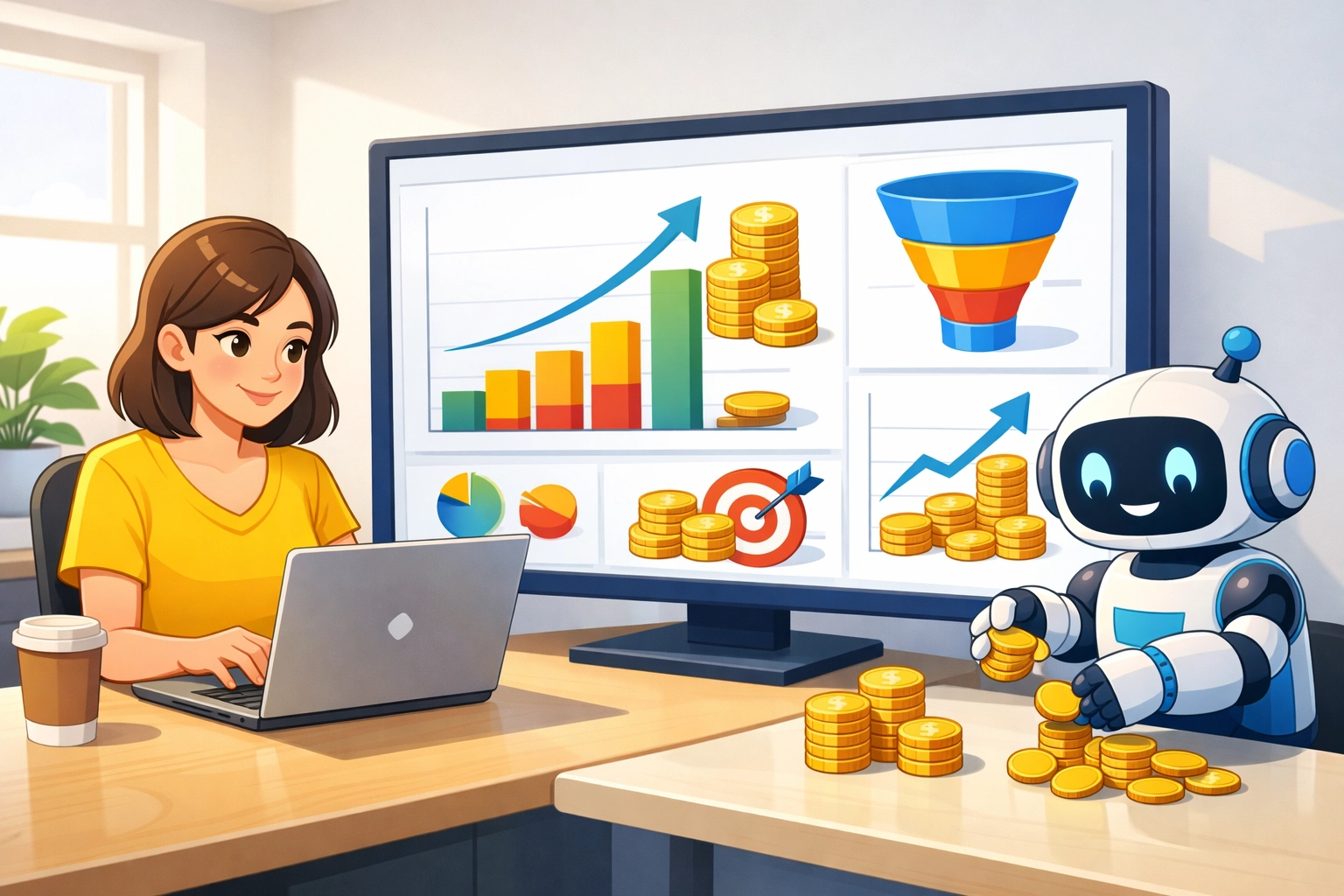
A landscape cartoon-style scene depicting a shop owner sitting at a high-tech dashboard, watching a graph grow steadily while a robot filters out “wasteful” ad coins into a golden vault.
Furthermore, predictive AI helps you solve the “silent killer” of e-commerce scaling: inventory mismanagement. There is nothing more expensive than having capital tied up in slow-moving stock or, conversely, losing sales because a high-demand item is out of stock. Modern AI tools analyze local events and global supply chain shifts to tell you exactly what to stock and where.
Hyper-Personalization as a Revenue Driver
Personalization used to mean putting the customer’s first name in an email. In 2026, that’s just the bare minimum. Hyper-personalization means the entire shopping experience: from the homepage layout to the product recommendations and the post-purchase follow-up: is unique to that individual.
Retailers who lead in this space aren’t just seeing incremental gains; they are seeing a total transformation of their bottom line.
“Mailchimp’s data-driven era reports indicate that hyper-personalization can lead to a 40% increase in revenue for retailers who successfully implement predictive modeling over traditional demographic targeting.”
This level of detail creates a “frictionless” experience. When your website can anticipate that a customer is likely to need a refill on a product they bought three months ago, and you present them with a one-click reorder option via a personalized AI chat interface, the “sale” happens almost automatically.

A landscape cartoon-style image of a customer walking through a digital “storefront” that changes its displays in real-time to show exactly what they like, with a friendly AI robot greeting them by name.
Leveraging Conversational Commerce
The rise of conversational commerce is perhaps the most visible aspect of predictive AI. We’ve moved past the “dumb” chatbots that could only answer “Where is my order?” and into the era of AI Shopping Assistants. These agents act as personal stylists or consultants, guiding the customer through complex choices.
For example, if you sell high-end skincare, your AI assistant can analyze a customer’s past concerns, the current UV index in their city, and their recent travel history to suggest a specific SPF routine. This isn’t just selling a product; it’s providing a service. This service-based approach builds the kind of brand loyalty that prevents customers from price-shopping you against Amazon.
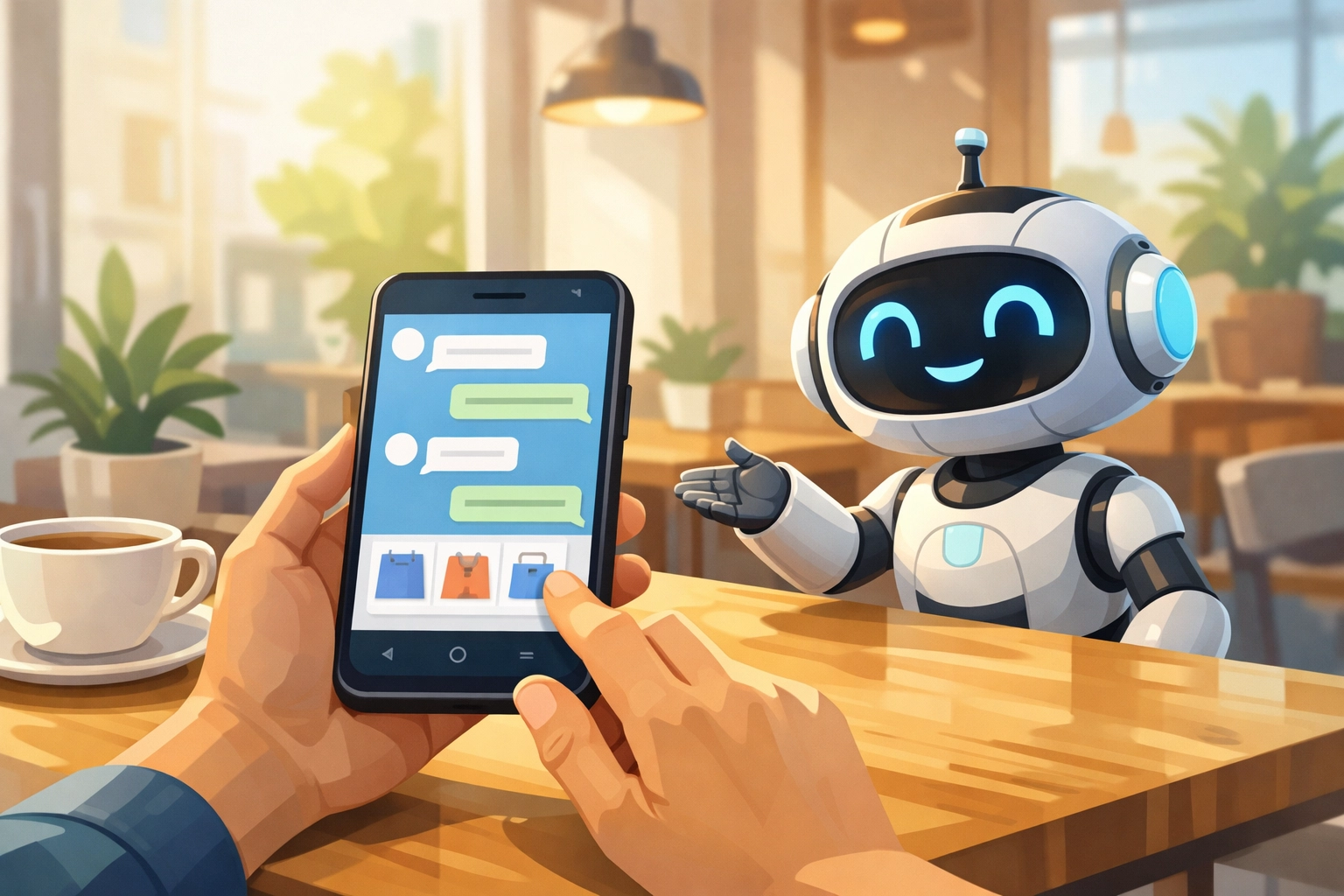
A landscape cartoon-style illustration of a person chatting with a stylish robot on their smartphone, with speech bubbles showing the robot suggesting products based on a “Sunny Weekend” forecast.
Preparing Your Brand for the Future
Scaling in 2026 requires a “data-first” mindset. It means moving your operations into environments that can talk to AI agents. Whether you are choosing between Shopify vs. WooCommerce or building a custom headless setup, your infrastructure must be able to export clean, LLM-ready data.
If your product descriptions are vague or your data is siloed in different apps, AI agents won’t be able to recommend your brand. Scaling today is about becoming the most “readable” and “predictable” brand in your niche.
Q&A
How does predictive AI help with customer retention?
Predictive AI identifies “churn signals”: such as a decrease in app logins or a change in purchase frequency: before the customer actually leaves. This allows you to trigger personalized “win-back” offers or check-in messages that address their specific needs, keeping them in your ecosystem.
Is predictive AI too expensive for small e-commerce brands?
Not anymore. While custom-built models used to be the domain of giants like Amazon, most modern e-commerce platforms now have AI integrations. The “cost” is more about the time spent organizing your data and ensuring your product feed is optimized than it is about high licensing fees.
What is the first step to implementing predictive personalization?
The first step is data consolidation. You cannot predict the future if your data is scattered across three different spreadsheets and five different apps. Ensure your email marketing, sales data, and website analytics are all feeding into a single “source of truth.”
Will AI shopping agents replace my website entirely?
While agents will handle a large portion of the discovery and transaction phase, your website remains your “brand home.” It’s where you establish your voice, host your deep-form content, and provide the high-quality data that these agents need to function. Think of your site as the library and the AI agent as the librarian.
Does predictive AI require a lot of traffic to work?
While more data generally leads to better predictions, even small brands can benefit. Many AI tools use “transfer learning,” which applies broad consumer trends to your specific store’s data, allowing you to get insights even with a smaller sample size.