The digital landscape has moved far beyond the days of simple keyword matching. If you’re still thinking about SEO as a way to rank a website for human eyes only, you’re already behind. By 2026, the “searcher” is often no longer a human browsing a list of links, but an AI agent acting on their behalf. This shift toward agentic AI: autonomous systems that don’t just answer questions but execute tasks: is fundamentally rewriting the rules of local discovery.
For local businesses, from dental practices to emergency plumbing services, this means your online presence must be “machine-readable” and “action-ready.” When an AI agent is tasked with “booking the best-rated emergency plumber within 5 miles who is available right now,” it doesn’t care about your flashy homepage animation. It cares about your data.
The Rise of Agentic AI: From Searchers to Doers
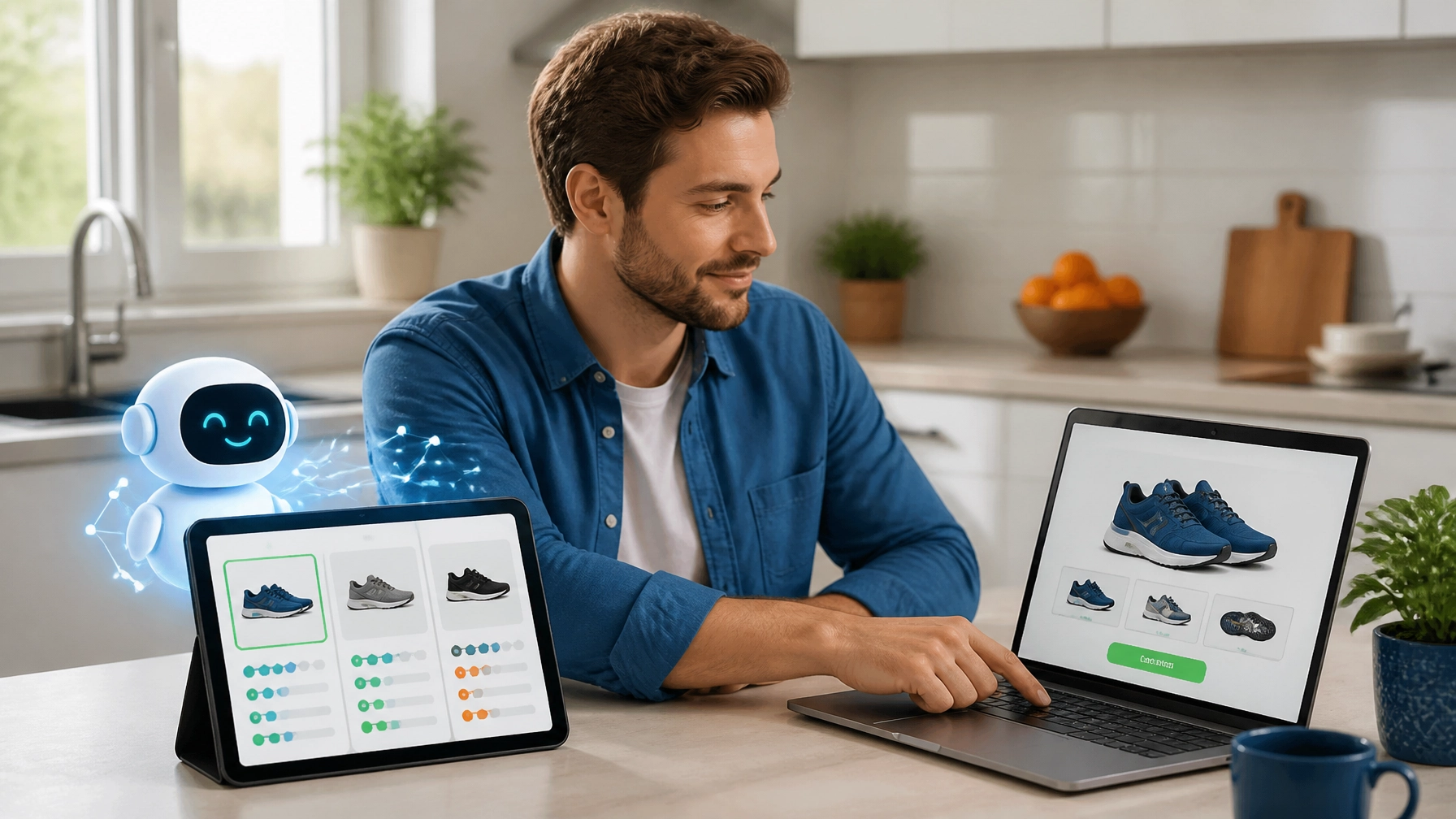
In the past, we used chatbots to get information. You’d ask, “Who is a good dentist near me?” and the bot would give you a list. In 2026, we use Agentic AI. You tell your personal AI assistant, “I chipped a tooth; get me an appointment this afternoon with someone who takes my insurance,” and the agent goes to work.
These agents navigate the web, interact with APIs, and scan Google Business Profiles to make a decision and finalize a transaction without the user ever seeing a search engine results page (SERP). This is a massive shift in how we think about local SEO for plumbers or hvac contractors. If your business data isn’t structured to be parsed by these agents, you simply don’t exist in their world.
“By 2026, the majority of marketing interactions will be run by autonomous agents rather than static campaigns, shifting the focus from capturing attention to enabling execution.” : Netcore Agentic Predictions 2026 Report
This transition is exactly why The End of Ad Waste: How Agentic AI is Revolutionizing Local Digital Advertising in 2026 has become such a critical roadmap for our clients. We aren’t just bidding on keywords anymore; we are optimizing for agent preference.
Google Maps SEO and the Machine-Readable Business
In this new era, google business profile optimization is no longer optional: it is the foundation of your digital identity. AI agents rely heavily on the Google Maps ecosystem to verify location, real-time availability, and sentiment.
When an agent performs a search, it looks for specific “proof points.” It checks your live inventory, your current booking calendar, and the specific context of your reviews. For example, local seo for hvac companies now requires more than just a list of services. It requires real-time data feeds that tell an agent exactly how many technicians are on the road and what their current estimated time of arrival (ETA) is.

A landscape cartoon-style illustration showing an autonomous AI agent (a friendly robot character) scanning digital “data cubes” representing local businesses like a dentist office and a repair shop, while a human looks on from the background.
To win in google maps seo, your profile needs to be a “living” document. This involves:
- Real-time API integrations: Connecting your scheduling software directly to your profile.
- Contextual Review Management: Ensuring reviews mention specific services (e.g., “fixed my leak in an hour”) because agents filter by specific capabilities.
- High-Fidelity Visuals: Agents now “see” images to verify the quality of work or the cleanliness of a clinic.
The Role of Augmented Reality (AR) in Local Discovery
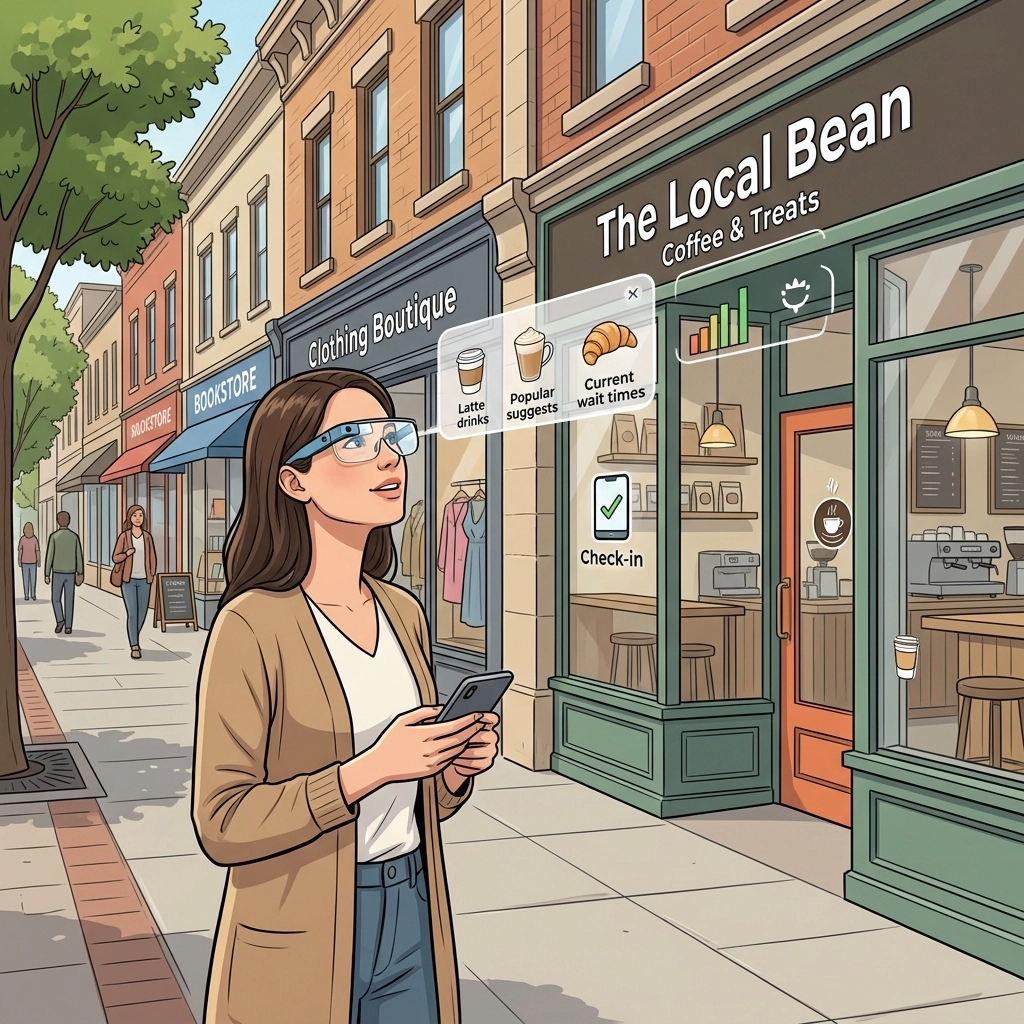
While AI agents handle the “finding and booking,” Augmented Reality is taking over the “experiencing.” In 2026, local search often happens through AR glasses or smartphone overlays. Imagine walking down a street and seeing digital overlays on storefronts that show real-time ratings, wait times, or even 3D models of products inside.
For a retail shop or a local service provider, this physical-digital blend is a game changer. If you are focused on web design that works, you must consider how your brand assets translate into an AR environment. It’s no longer just about a 2D screen; it’s about how your business looks when someone “scans” your building with their glasses.
Comparison: Traditional Search vs. Agentic Discovery
| Feature | Traditional Local SEO (2024) | Agentic & AR Search (2026) |
|---|---|---|
| Primary Goal | Ranking #1 on Google Search | Becoming the “Chosen Agent Option” |
| User Journey | Click -> Browse -> Contact | Task -> Agent Execution -> Booking |
| Content Focus | Keywords and Long-form Blogs | Structured Data and Real-time APIs |
| Trust Factor | Star Rating Average | Contextual Sentiment & Proof of Work |
| Visuals | Static Photos | 3D Assets & AR Overlays |
In practice, this means that seo for dentists is shifting toward a model where the “experience” starts before the patient even walks in. Through AR, a patient could take a virtual tour of the office or see a 3D visualization of a procedure while sitting in their living room.
Why Technical UX is the New Local SEO
We’ve moved past the point where “user experience” only refers to how easy a site is to navigate. Today, UX includes how well your data is structured for external systems. If your site has high friction: slow load times or confusing booking widgets: agents will skip you. They are programmed to find the path of least resistance for the user.
This is why we often tell our clients that conversion by design is the new SEO. If an AI agent can’t verify your prices or your availability in milliseconds, it will move to the next competitor who has a more optimized technical infrastructure.

A landscape cartoon-style illustration showing a “digital bridge” connecting a local business’s website to an AI assistant, with data flowing smoothly across the bridge while “bad data” rocks block the path for other competitors.
The Human Element: Reviews and Micro-Influencers
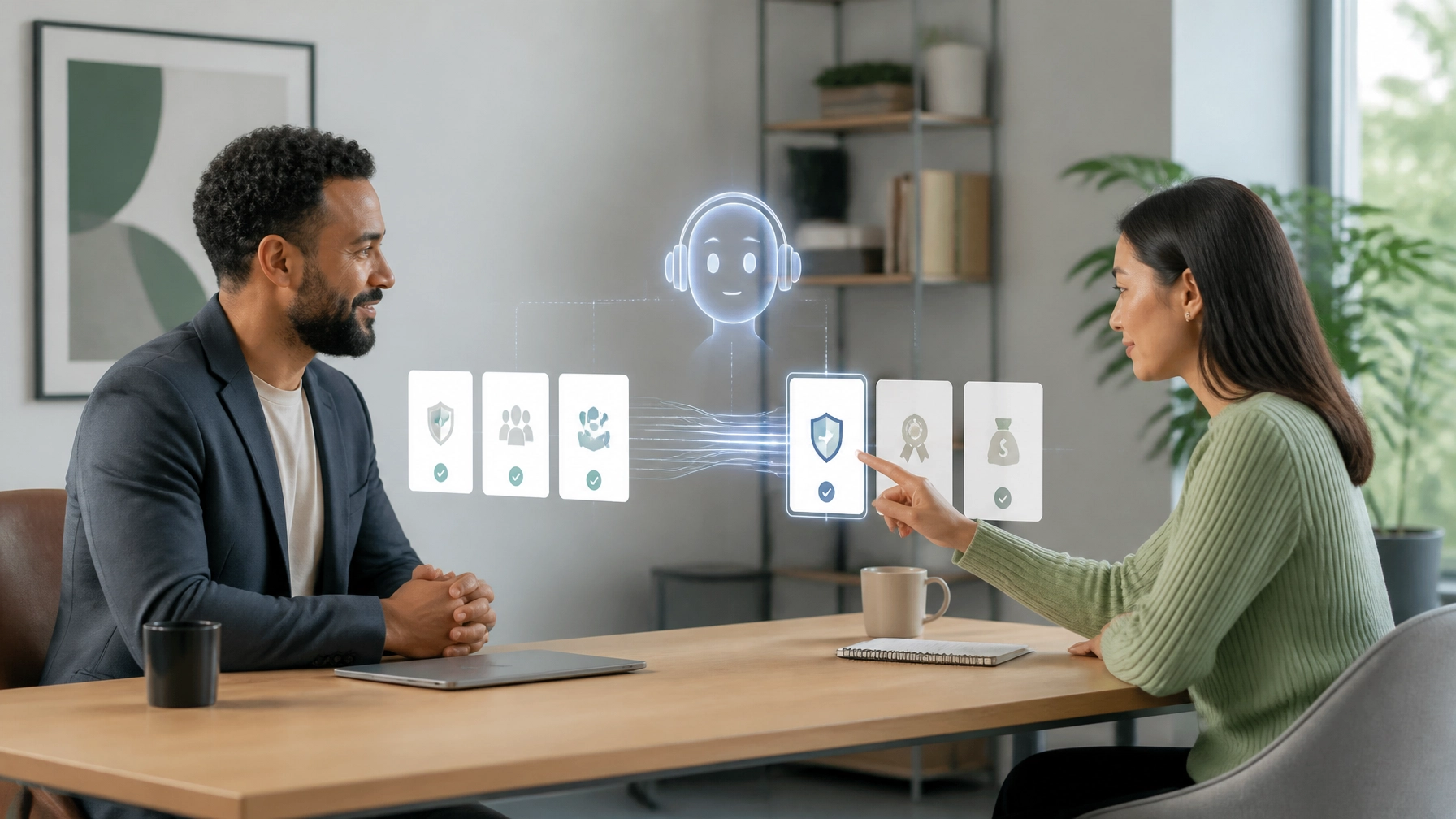
Even in a world run by agents, human trust remains the ultimate currency. AI agents use “sentiment analysis” to weigh the validity of your business. They look for authentic, high-quality mentions of your brand across the web.
This is where The Micro-Influencer Revolution plays a vital role. When local influencers mention your HVAC service or your dental clinic, it creates a “social signal” that AI agents pick up on. It’s not just about a backlink; it’s about a digital footprint that proves you are a trusted local authority.
For local seo for plumbers, this might mean having a local “home improvement” influencer do a quick video on how your team saved their basement from a flood. These authentic stories provide the “data” that agents use to confirm you aren’t just a bot-generated listing, but a real, reliable service provider.
Implementing an Agentic Strategy for Your Business
If you want to stay ahead of the curve, you need to stop thinking about SEO as a monthly “to-do” list and start thinking about it as an ecosystem of data. Here’s how to start:
- Audit Your Schema Markup: Ensure your website uses the most advanced Schema.org vocabularies for your specific industry.
- Activate Real-Time Booking: If you are a service professional, you must have an API-based booking system that mirrors your actual availability.
- Optimize for Voice and Intent: Write content that answers the specific “task-oriented” questions an agent would ask.
- Invest in 3D/AR Assets: If you have a physical location, ensure your “digital twin” on Google Maps is accurate and high-quality.
The future of local search is fast, autonomous, and deeply integrated into our physical reality. By focusing on google business profile optimization and embracing the shift toward agentic AI, you aren’t just ranking: you’re becoming an indispensable part of your customer’s life.
What is the difference between a chatbot and an AI agent?
A chatbot is designed to provide information and converse with a user. An AI agent is designed to execute tasks, such as booking an appointment, purchasing a product, or navigating a complex workflow, often autonomously.
How does AR affect my local Google ranking?
While AR doesn’t directly change your “rank” in a traditional list, it significantly affects your visibility in the “Discovery” layer of search. As more users move to AR-enabled devices, businesses with 3D assets and optimized local data will be the ones that appear in the user’s field of vision.
Is traditional SEO for dentists or plumbers dead?
Not dead, but evolved. Keywords still matter because agents use them to understand what you do, but the focus has shifted from “winning the click” to “winning the data check” that happens before a human even sees your name.
Do I need a special app for my customers to use AR?
In 2026, most AR discovery is “web-based” or integrated directly into mobile operating systems and Google Maps. You don’t necessarily need your own app; you just need to provide the 3D data and optimized profiles that these platforms use.
How do AI agents handle reviews?
Agents don’t just look at the star rating. They perform deep sentiment analysis to understand the quality and relevance of the reviews. They look for specific mentions of tools, expertise, and reliability to ensure the business matches the user’s specific request.